

Delicate Skink Embryos Hatch Early When Eggs Disturbed, Revealing New Reptile Awareness
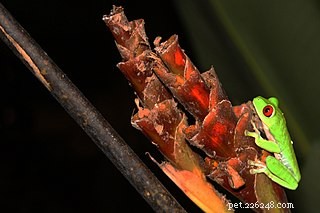
Herpetologists studying Australia’s Delicate Skink (Lampropholis delicata) discovered, quite by accident, that this species’ embryos somehow sense danger when their eggs are disturbed. In response, the tiny lizards erupt en masse – even if they are not quite ready to hatch! Also employed by Red-Eyed Treefrog tadpoles (Agalychnis callidryas, please see photo) this unique strategy is just one of many new discoveries indicating that reptile and amphibian embryos are more aware of their environments than we imagined (the embryos of some turtles even seek heat within the egg – please see article linked below). The fact that the Delicate Skink is a very common species, and that the discovery was made in a park near Sydney, Australia, also shows the value of studying animals that are near-at-hand – all hold secrets!

Uploaded to Wikipedia Commons by Peter Woodard
Natural History
The Delicate Skink is a small, greenish-brown lizard that flashes iridescence in sunlight. This characteristic is responsible for its alternative common name, Rainbow Skink. Native to eastern Australia and Tasmania, it is often found in gardens, city parks and similar habitats. Aspirin-sized eggs deposited in flower pots and nursery soil may be responsible for the populations now established on New Zealand and Hawaii (where it has been dubbed the Plague Skink).
A Calculated Risk
Hatching early is risky, as premature young are smaller, and therefore less likely to survive, than those that remain within the egg throughout the normal incubation period. However, when a wasp (in the case of Red-Eyed Treefrogs) or snake grabs an egg, the fate of the entire clutch may be sealed. So it seems worthwhile to chance a mass escape – even if swimming and running abilities are not quite up to par. A search with various crocodilians and turtles indicates that embryos communicate with one another and synchronize their hatching time.
The fact that the entire clutch of Delicate Skink eggs hatches at once may also indicate that some form of communication is being used. Sudden, simultaneous hatching serves to confuse predators…but we have yet to learn how this is managed.
An Unexpected Discovery…and more to come
When herpetologists from Australia’s Monash University first witnessed this phenomenon, they found it hard to tell exactly what was happening. In the course of measuring eggs, tiny Delicate Skinks burst forth, fled in all directions, and sought cover. Further studies revealed that the unexpected hatching was not merely coincidental. Handling the eggs sent danger signals, apparently via vibration, to the youngsters within. (Red-Eyed Treefrog eggs are attached to leaves overhanging a pond. When under attack, tadpoles burst from their eggs, fall into the water, and swim off).
Uploaded to Wikipedia Commons by Charlesjsharp
It is not known whether other of the Delicate Skink’s 10 relatives, collectively known as Sun Skinks, share this amazing survival strategy. This exciting discovery shows just how much remains unknown about even the commonest creatures. One thing is certain – a great many surprises await those interested in reptile and amphibian reproductive behavior!
- When Do German Shepherd Puppies Lose Their Baby Teeth?
- Expert Guide: How to Hatch Bearded Dragon Eggs Safely and Successfully
- Expert Guide to Caring for Baby Lovebirds: Feeding, Temperature, and Hand‑Raising Tips
- When Will My Turtle Lay Eggs? Key Signs and Care Tips
- When Is It Safe to Handle Newborn Rabbits? A Care Guide
- How Quickly Baby Rabbits Grow Their First Fur Coat
- When and How Puppies Lose Their Baby Teeth: A Complete Guide