

Guide to Caring for Native American Amphibian Pets: Frogs, Toads & Salamanders
Downloaded to Wikipedia by Camazine
This article covers the care of several native amphibians that live in close proximity to people. As a result, they sometimes wind up in yards, basements, window wells and other such places. Most are also seen in pet stores. While they can make interesting, long-lived pets, all have specific needs that must be met if they are to thrive. The following information will give you an idea of what is involved caring for amphibians as pets; please see the articles linked below for more detailed information, and post any questions you may have. If you find an injured animal, or wish to learn how to become a wildlife rehabilitator, please see this article.
It is important to bear in mind that captive-born specimens make far better pets than wild individuals, and that many species are protected by law.
Eastern Newt, Notophthalmus viridescens
This brightly-colored amphibian inhabits weedy ponds and swamps, and is active by day. A variety of uniquely-marked subspecies have been recognized. Most populations enter a land-dwelling phase, during which time they become reddish-orange in color and are known as efts. Efts feed upon tiny insects, and are more difficult to care for than the aquatic adults (newts).
Newts can be kept in small aquariums equipped with simple filters and half-filled with de-chlorinated, room temperature water. Turtle basking platforms and live or plastic plants serve well as resting places.
ReptoMin Food Sticks can make up most of your newt’s diet. Freeze-dried shrimp, live blackworms, and various frozen tropical fish foods should also be provided.
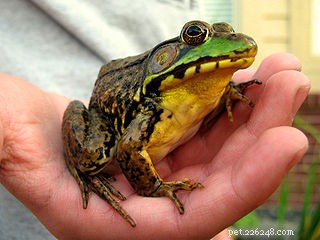
American Bullfrogs and Green Frogs, Lithobates catesbeianus, L. clamitans
These well-known frogs are always found near water, and even occur in ponds within Manhattan and other bustling urban areas.
Adult Bullfrogs require an aquarium of at least 20 gallons in size; a 10-15 gallon tank will suit a Green Frog. The aquarium should be half-filled with de-chlorinated, room-temperature water and equipped with a resting spot (cork bark or a turtle raft) and floating live or plastic plants. A filter and partial weekly water changes are essential.
Both require a varied diet comprised of earthworms, crickets and other insects, and minnows (please see the article below for information on collecting insects). Powdered calcium and vitamin supplements are important, especially for growing youngsters. Many will accept canned insects from feeding tongs.
Uploaded to Wikipedia Commons by Dustykid
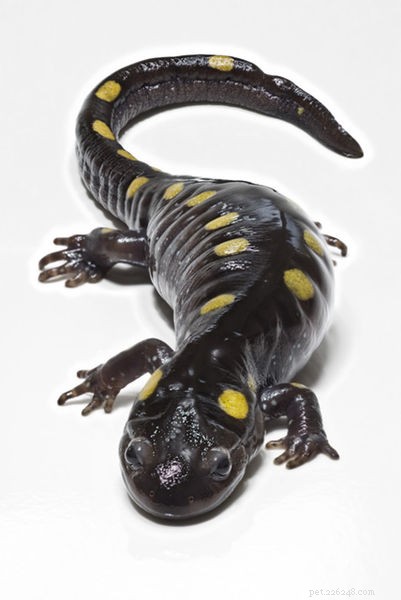
Spotted Salamander, Ambystoma maculatum
This large, boldly-marked salamander spends most of its life below-ground in woodlands, but is often seen when migrating to breeding ponds in early spring.
A 10 gallon aquarium stocked with damp sphagnum moss, a shallow bowl of de-chlorinated water, and a plastic cave makes a good Spotted Salamander home. They prefer temperatures of 60-72 F, and so should be kept in basements or cool rooms during hot weather.
Earthworms and crickets powdered with reptile calcium/vitamin supplements can form the bulk of their diet, with additional (and important) variety being supplied by sow bugs, beetle grubs and other invertebrates.
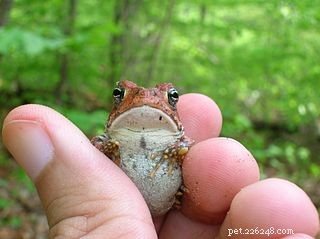
American and Fowler’s Toads, Anaxyrus americanus, A. woodhousei fowleri
Toads of most species make personable, long-lived pets that tame down quickly, become active by day, and will even feed from your hand.
Downloaded to Wikipedia Commons by TheAlphaWolf
American and Fowler’s Toads, and similar species, can be kept and fed as described above for Spotted Salamanders, but can tolerate warmer temperatures.
Health Considerations
Salmonella bacteria, commonly present in reptile and amphibian digestive tracts, can cause severe illnesses in people. Handling an animal will not cause an infection, as the bacteria must be ingested. Salmonella infections are easy to avoid via the use of proper hygiene. Please speak with your family doctor and see the article below for further details.
Amphibians manufacture skin toxins that can be irritating or dangerous if they enter wounds, eyes, or the mouth.
All wild-caught animals play host to a variety of internal and external parasites, and should be seen by an experienced veterinarian. Please post below if you need help in locating a veterinarian.
- What Do Chipmunks Eat? A Complete Guide for Wild & Pet Diets
- Dart Frog Diet: Wild Food Habits and Ideal Pet Nutrition
- Finch Nutrition Demystified: What They Eat in the Wild and as Pets
- Ferret Nutrition: Wild Food Habits & Pet Feeding Guide
- Skinks in the Wild and as Pets: A Guide to Their Natural and Domestic Diets
- Tree Frog Nutrition: What They Eat in the Wild and in Captivity
- What Do Toads Eat? A Guide to Wild and Pet Toad Diets