

The Spider‑Tailored Horned Viper: How It Deceives Birds with a Fleshy Lure
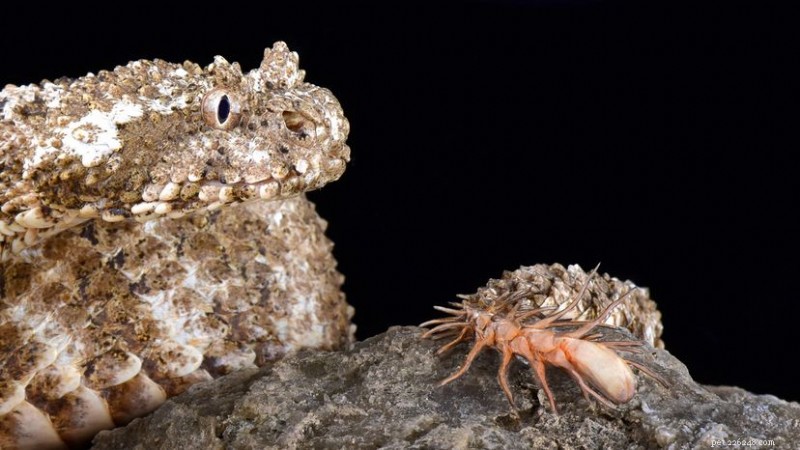
Photograph credit: reptiles4all / Shutterstock
The spider‑tailed horned viper is one of the most visually striking reptiles in the world. With a tail tip that resembles a spider and horned protuberances on its head, it’s easy to picture this venomous snake.
Beyond its eye‑catching appearance, the species is notable for its sophisticated hunting strategy—a fact that even earned it a tongue‑in‑cheek rename in the children’s book The World’s Most Atrocious Animals, where author Philip Bunting swapped its scientific name from Pseudocerastes urarachnoides to the whimsical Sssneakeus ssswindleus.
Characteristics of the Spider‑Tailed Viper
First described in 2006, the spider‑tailed viper’s tail mimics a spider’s shape. When scientists first encountered it in the 1970s, the animal was thought to be a mutation until the discovery of other horned vipers confirmed it was a distinct species.
While it shares many traits with other members of the Pseudocerastes genus, the spider‑tailed viper is unmistakable because of its elaborate tail ornamentation and pronounced horned head.
Adults measure between 19.6 inches (50 cm) and 25.6 inches (65 cm) in total length, and they typically weigh about one pound (0.45 kg). The snake’s gray or tan dorsal coloration and scale pattern provide excellent camouflage in its rocky habitat.
Persian Horned Viper
Although similar in size, the spider‑tailed viper is a distinct species from the Persian horned viper—also called the false horned viper—another Pseudocerastes member that lacks the spider‑like tail.
The horned adder (also in the Pseudocerastes genus) also bears horns but, like the Persian horned viper, does not feature the tail lure.
Natural History
Endemic to the Zagros Mountains of western Iran and eastern Iraq, the spider‑tailed horned viper inhabits cliffs and rugged terrain. The species is diurnal and highly venomous, relying on its potent venom to subdue prey.
Diet and Hunting Strategy
Like the green tree python, the spider‑tailed viper is an ambush predator that relies on stealth and deception. Its tail, a fleshy lure that moves in a spider‑like motion, attracts unsuspecting birds. As Sami Bayly explains in A Curious Collection of Dangerous Creatures, "It’s not actually a mutated spider on this viper’s tail; it’s an evolutionary adaptation that acts as a fleshy lure to attract prey. The snake mimics the movements of a spider, wiggling its tail and moving the ‘legs.’ When a bird comes close to peck at the ‘spider,’ the viper springs out and catches its meal."
While the lure is effective against migrating insectivorous birds, local bird populations have learned to avoid the tail’s deceptive movements. Consequently, toads may constitute a significant portion of the viper’s diet, as suggested by recent venom studies.
"It is noteworthy that the venom had strong procoagulant activity on the toad plasma. This result was unexpected as toad plasma demonstrated generally low reactivity and P. urarachnoides is said to feed exclusively on birds... As the diet of juvenile P. urarachnoides is largely unknown, toads may form an important part of their diet. Future studies assessing the venom composition of juvenile snakes in parallel with their ecology are required." The researchers note in Extensive Variation in the Activities of Pseudocerastes and Eristicophis Viper Venoms Suggests Divergent Envenoming Strategies Are Used for Prey Capture.
- Eliminate Dog Urine Odor: Proven Tips for a Fresh Home
- Irish Setter: A Powerful, Energetic Gun Dog with Deep Heritage
- Mastering Cat Petting: The Right Way to Keep Your Feline Happy
- When Your Dog Craves Constant Attention: Causes, Consequences, and Solutions
- Relieve Your Dog’s Allergies at Home: Trusted Remedies for Comfort
- Discover 104 Charming Pet Snail Names to Enrich Your Snail Care Experience
- Why Your Dog Cried When You Came Home – The Science Behind Their Excitement