

Choosing the Best Substrate for Your Tarantula: A Comprehensive Guide
Tarantula keeping has come a long way since its early days.
We now have more species available, new types of cages and a better understanding of tarantula husbandry than ever before. In terms of keeping tarantulas, one of the most hotly-contested subjects is that of tarantula substrates.
Each have their own strengths and weaknesses but what really is best?
Contents
- 1 Best Tarantula Substrates
- 1.1 Coco Fibre (Coir)
- 1.2 Vermiculite & Perlite
- 1.3 Potting Compost
- 1.4 Moss
- 2 Bad Tarantula Substrates
- 2.1 Bark Chips
- 2.2 Corn Cob Granules
- 2.3 Sand
- 2.4 Gravel
- 3 Conclusion: What Is the Best Tarantula Substrate?
Best Tarantula Substrates
Let’s start with the good substrates; the ones I strongly suggest that you focus your time on. Use one or more of these (in combination) and you shouldn’t go too far wrong…
Coco Fibre (Coir)
Coco fibre, also known as coir, is an eco-friendly product which has long been popular with gardeners.
This product looks and behaves quite like compost, but comes from renewable resources (unlike peat moss).
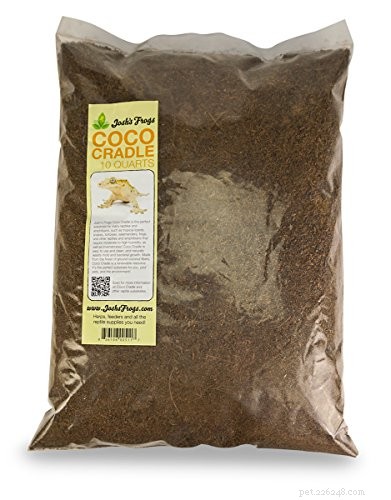 Josh's Frogs Coco Cradle (10 liters)
- ECO-FRIENDLY ORGANIC and 100% BIODEGRADABLE unlike some reptile substrates that are contributing to deforestation and then go to the landfill
- INCREASES HUMIDITY for animals that need moderate to high humidity
- ABSORBENT composition allows it to soak up messes and odors, leaving a cleaner habitat for your pet
These are simply soaked in water for a few minutes, whereupon they will absorb water and expand. Simply drain away any excess water and use in your tarantula cage.
Strengths
- Looks great
- Easily stored in brick form
- Excellent for digging species
- Good water absorbency
Weaknesses
- Not the cheapest substrate available
- Takes up to 30 minutes to fully expand so not ideal for a quick clean-out
Vermiculite & Perlite
These two products are inert mineral compounds, capable of absorbing huge amounts of water.
When I first started keeping tarantulas back in the early nineties (I kid you not) vermiculite was considered the “ultimate” tarantula substrate.
These days things have moved on rather, with many keepers believing that their pets dislike standing on it.
While vermiculite still certainly has its place, it is now more commonly used as a mixer – such as with potting compost.
Sale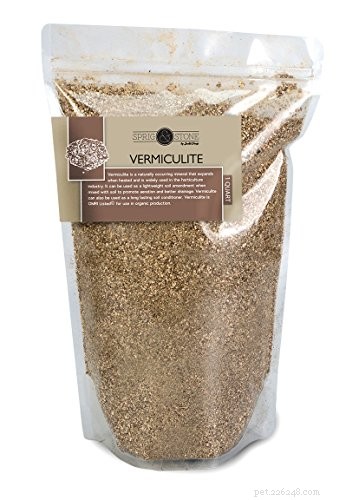 Josh's Frogs Sprig & Stone Vermiculite (1 Quart)
- Allows better drainage & aeration when mixed with soil
- Great soil conditioner
- Ultimate incubation media for many reptile species
Using it in this way the substrate isn’t unpleasant to stand on and yet helps to retain moisture in the cage.
Related: Reptiles Good For HandlingStrengths
- Absorbs plenty of water
- Rarely if ever attracts mould
- Very light
- Freely available from garden centers
Weaknesses
- Looks pretty unsightly
- Some tarantulas don’t seem to like it
Potting Compost
Potting compost is another popular substrate which is available cheaply from most garden centers. It looks attractive and provides excellent opportunities to burrow for those species so inclined.
The only real downside I have found while using it is that some composts dry out quite quickly – hence why some people choose to mix in some vermiculite.
Strengths
- Cheap to buy
- Easy to source
- Looks good
- Ideal for burrowing
Weaknesses
- Can be heavy
- May attract mould
- Avoid composts with added chemicals (fertilizers etc.)
- Avoid composts with large chunks in them
Moss
Moss can be bought in compacted blocks from many reptile stores, soaked in water and then used as a tarantula substrate.
Sale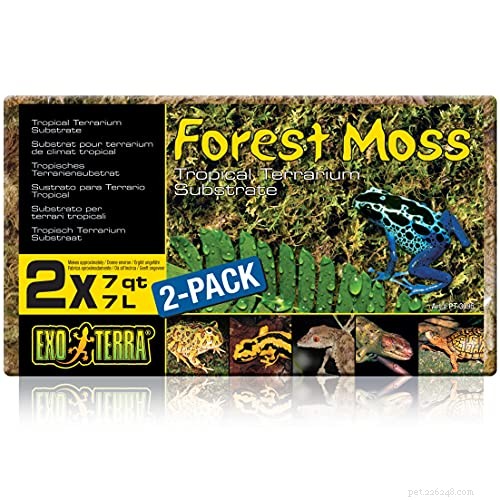 Exo Terra Forest Plume Moss, 7 Quarts, 2-Pack
- Completely natural forest moss (no dyes or chemicals)
- Great for use in humidifying shelters
- Excellent for use as egg-laying and incubation medium
The good thing about moss is that it can look really smart in a tarantula cage and is excellent at absorbing water.
On the downside, of course, moss doesn’t allow your tarantula to burrow which for some species can be a handicap.
Strengths
- Looks awesome – rainforest setup anyone?
- Absorbs loads of moisture
- Lightweight
Weaknesses
- Useless for burrowing species
Want some inspiration? Check out this collection of exotic pet set-ups I’ve been gathering to see just what’s possible with a little time and effort…
Follow Keeping Exotic Pets’s board Reptile Enclosures & Terraniums on Pinterest.
Bad Tarantula Substrates
So that’s the winners out of the way.
However while it would be impossible to ever list every bad choice of substrate, it does make sense to list some of the more common suggestions seen so that you can understand why they should be avoided…
Bark Chips
Bark chips come in a range of forms. There are fine dark chipping often sold as “rainforest bark” in reptile shops and there are lighter chippings such as beech which is popular among snake keepers.
Related: How to Handle TarantulasAll of these options though have a number of weaknesses.
Not only do they absorb very little moisture but they’re also highly likely to go mouldy and start rotting in the warm and humid environment that tarantulas need.
Added to that the fact that they aren’t ideal for burrowing, these substrates generally have very little application for tarantula keepers.
Corn Cob Granules
Corn cob granules may be environmentally sound, and popular with reptile owners with desert-type reptiles, but once again these granules tend to rapidly go mouldy and need to be constantly removed and replaced. Not an ideal substrate.
Sand
Sand isn’t necessarily the worst substrate out there, but tends to be very heavy and doesn’t make for very good water retention.
Gravel
Tarantulas seem to dislike standing on gravel and will spend much of their time trying to climb up the walls of their cage away from it. This can lead to damage if the spider falls so should be avoided.
While it doesn’t tend to go mouldy, for obvious reasons it is next to hopeless for retaining moisture in the cage.
Conclusion: What Is the Best Tarantula Substrate?
Personally after keeping literally thousands of tarantulas over the years I believe that the very best substrate for tarantulas is coir.
It is light, friable, excellent at retaining moisture and just looks great. As a second choice I would opt for potting compost combined with some vermiculite to retain moisture (3:1 ratio or there abouts).
On top of this I often (but not always) use small amounts of moss just to decorate the cage. As I’m very into naturalistic setups for my exotic pets,
I love nothing more than to buy a new Exo Terra and spend some hours with bags of moss, bark, wood and so on to turn it into the semblance of a tropical rainforest.

Tarantula substrate pictures c/o The_Gut, Furryscaly & @TripDawg 
- Crystal vs Clumping Cat Litter: Which Option Keeps Your Cat Happy and Your Home Fresh?
- Choosing Between Clumping and Non‑Clumping Cat Litter: A Practical Guide for Cat Owners
- Choosing the Best Tarantula Pet: A Guide to Species, Sources, and Care
- Top Tarantula Heaters: Expert Guide to Optimal Heating
- Corn Snake vs. Ball Python: Which Pet Snake Is Right for You?
- Top Substrates for Bearded Dragons: Clean, Safe, and Natural
- The Top 10 Tarantula Species Ideal for Beginner Pet Keepers