

Curly Hair Tarantula (Tliltocatl albopilosus) Care Guide for Beginners
The Curly Hair Tarantula, Latin name Tliltocatl albopilosum, is considered one of the very best species for beginners.
The Curly Hair tarantula is slow-moving and docile, particularly as an adult. It is therefore easily handled.
Growing to a legspan of some 5 – 6 inches, it has only modest requirements in captivity.
The common name of this spider comes from the “fluffy” appearance it develops over time.
The Curly Hair tarantula is typically covered in curly gold or tan-coloured hairs, over a plain brown background. While it may not be the most colourful species of tarantula in the pet trade, it does have a certain appeal with it’s unusual, “blow dried” appearance.
Read on for my full Curly Hair tarantula care sheet…
Contents
- 1 Wild Habitat of Tliltocatl albopilosus
- 2 Curly Hair Tarantula Enclosures
- 3 Curly Hair Tarantula Cage Decor
- 4 Heating & Temperature
- 5 Water & Humidity
- 6 Tliltocatl albopilosus Food & Feeding
- 7 Handling & Temperament
Wild Habitat of Tliltocatl albopilosus
Originally described by Valerio as recently as 1980, this Central American species may be found along the Atlantic side of Honduras, Nicaragua and northern Costa Rica.
It is considered endangered in the wild. As a result, specimens available in the pet trade are almost exclusively captive bred. Hopefully this legal protection will help with their conservation.
Some disagreement exists within the hobby as to the true identity of the spider typically sold as the “Curly Hair Tarantula”. Specimens from different parts of Central America seem to vary widely in their appearance. Whether these are variants of one species, or are truly separate species remains to be agreed.
The result of this taxonomic uncertainty means that you may well see additional words used to describe specimens, such as “hobby form” “Nicaragua” or “true form”. From a hobbyists perspective this shouldn’t be a concern. However, if you have plans to breed this species then it makes sense to ensure all your breeding stock confirms to one specific locality.
Important Taxonomic Update: The tarantula now being sold as “Tliltocatl albopilosus” was, not so long ago, known as Brachypelma albopilosum. A taxonomic update has not only moved this tarantula into a new genus, but has meant swapping “albopilosum” for “albopiluosus“. Consequently, should you see mentions of “Brachypelma albopilosum” or “Brachypelma albopilosus” on forums and in older books then rest assured these are the same spider.
Curly Hair Tarantula Enclosures
Curly Hair tarantulas are quite an easy species to care for in captivity, requiring only a modicum of experience to keep and even breed. As with all exotic pets, successful care begins with getting their housing right.
An adult Curly Hair tarantula should be kept in a cage of 8 inches x 8 inches (20cm x 20cm) at an absolute minimum, though I would suggest a 12 inch x 12 inch cage would be even more suitable. As terrestrial tarantulas height is less of a concern, though there should be sufficient depth in the enclosure to allow burrowing.
 REPTIZOO Glass Mini Reptile Terrarium 8 Gallon, Small Reptile Tank Breeding Cage 12" x 12" x 12" for Leopard Gecko Tarantula Young Lizard Insects, Top Screen Ventilation & Feeding
- 【Full Glass Tank 8 Gallon】Features with full view glass, this small Patent Design 8 gallon glass terrarium is convenient for feeding and having fun with your reptile or small animal pets.
- 【Compact Design & Top Feeding】Compact and flat-packed design mini reptile tank with top opening to prevent escape and easy feeding. With a transparent PVC tray in the bottom for holding water and substrate
- 【Thin Wire Net】The full screen top ventilation with thinner mesh wire allows more UVA UVB and infrared heat penetration.
A range of plastic or glass enclosures can be suitable for Curly Hair tarantulas, so long as they offer enough ventilation to prevent the build-up of mould. Even plastic shoeboxes can be used, if ventilation holes are added using a drill or soldering iron.
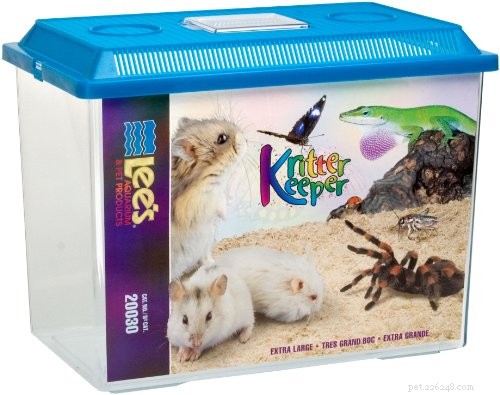 Lee's Kritter Keeper, X-Large Rectangle w/Lid(Assorted colors)
- Rectangular Kritter Keepers have self-locking lids with hinged viewer/ feeder windows
- Capacity: 5.90 GAlarge. Size: 15 3/4-inch large by 9 3/8-inch width by 12 1/2-inch height
- Kritter Keepers have well-ventilated lids in assorted colors
Personally I use Exo Terra or ReptiZoo terrariums for the majority of my adult tarantulas, including my Curly Hair tarantulas. Made from glass, with front-opening doors for ease of access it makes a perfect cage for Tliltocatl albopilosus.
Related: What Do Baby Tarantulas Eat? What To Feed Tarantula Slings?Curly Hair Tarantula Cage Decor
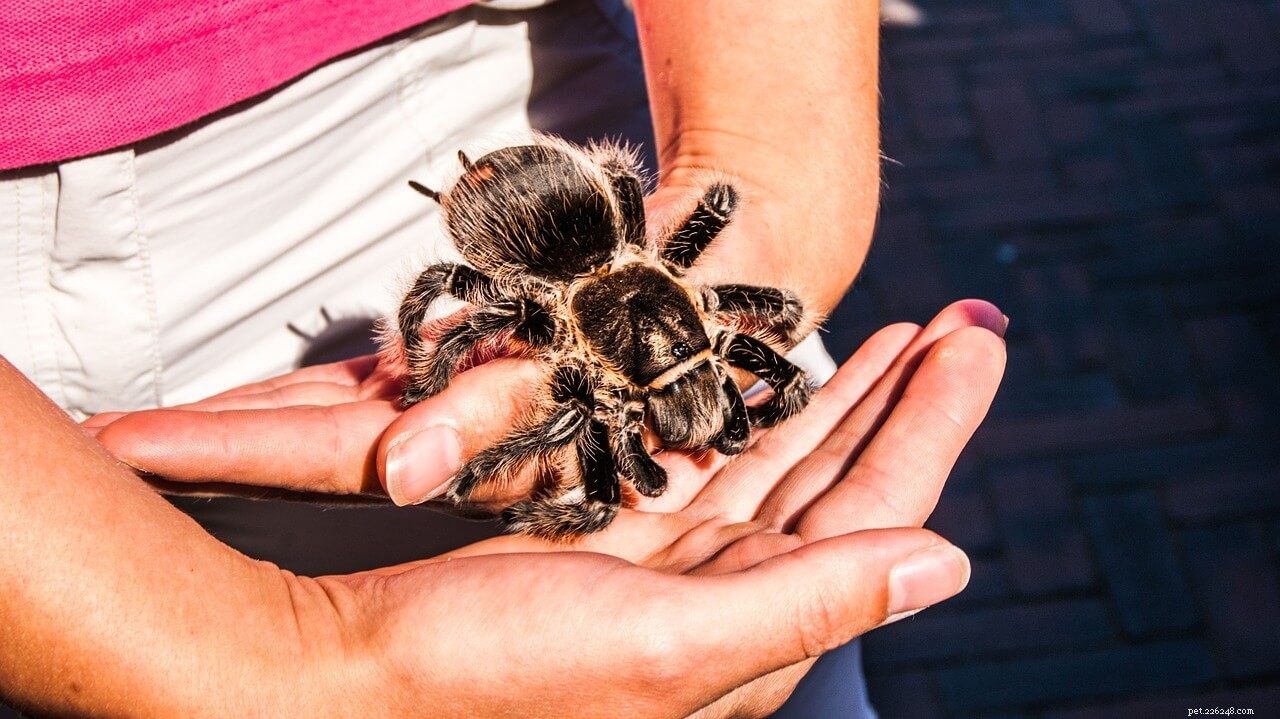
Tliltocatl albopilosus can make a great first tarantula, especially for those who want a spider they can watch. Curly Hair tarantulas tend to spend more time out in the open than many other species, and can be surprisingly active, especially in the evening.
All the same, while these tarantulas seem quite comfortable in the open, it is still a good idea to provide a suitable hide for them and enough substrate for burrowing in.
A range of substrates may be used for this species, though my own personal preferences are for coconut fibre or potting compost. If you’re not planning to let your spider burrow then just an inch or so of substrate will be enough. A depth of some 6 inches or more is preferable for burrowing situations.
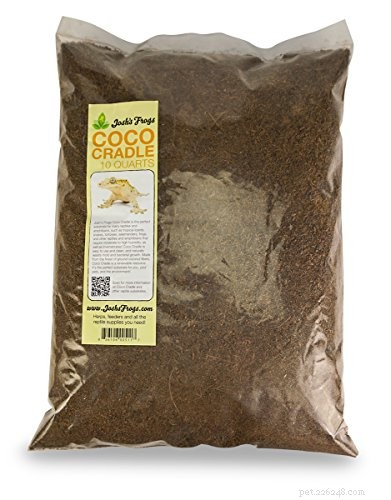 Josh's Frogs Coco Cradle (10 liters)
- ECO-FRIENDLY ORGANIC and 100% BIODEGRADABLE unlike some reptile substrates that are contributing to deforestation and then go to the landfill
- INCREASES HUMIDITY for animals that need moderate to high humidity
- ABSORBENT composition allows it to soak up messes and odors, leaving a cleaner habitat for your pet
Most appropriately-sized reptile hides will be suitable for Curly Hair tarantulas. Possibly the most popular option is a piece of curved cork bark, though resin reptile hides may also be used, as can plastic plant pots laid on their side and partially buried.
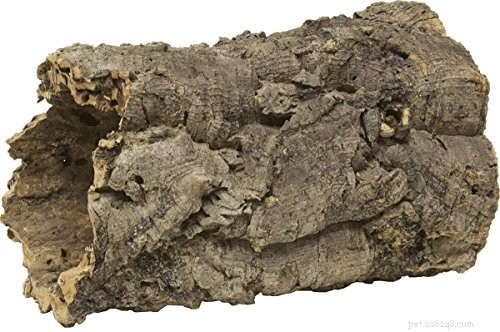 Zoo Med Natural Cork Bark, Round, Medium
- Safe for all reptiles, amphibians, and arachnids (i.e. tarantulas).
- Can be easily cut to any desired length or shape
- All natural green" product"
Heating & Temperature
Curly Hair tarantulas like a warm environment. A temperature of around 70 to 78 degrees Fahrenheit (20 to 25 degrees C) works well.
Ensuring the cage is sited away from windows and sources of direct sunlight to prevent the risk of overheating in summer.
Related: Can Tarantulas Climb Walls?Water & Humidity
All juvenile and adult specimens should be provided with an open yet shallow water dish. Those sold for small mammals tend to work well. The water should be changed regularly, and the bowl itself sterilized in boiling water or reptile-safe detergent once a week.
For spiderlings and tiny specimens a water bowl isn’t really practical, so instead I gently mist one side of the tub, so that the tarantula can drink from the water droplets. Under these circumstances ensure the tub is allowed to dry out between mistings to prevent overly-moist conditions.
Tliltocatl albopilosus Food & Feeding
Over the years, Curly Hair tarantulas have developed a reputation for being slow growing animals.
It has been reported that males take 8-12 moults to reach sexual maturity, while females take some 9-13. Feeding your spider on a regular basis will speed up this growth, ensuring that even a youngster soon reaches impressive proportions.
In light of this, a good rule of thumb would be twice-weekly feeding for youngsters, migrating to once a week for adults. All the same, it is wise to use this only as a guide, and to adapt it based on your spider’s behaviour.
If your tarantula always seems to be hungry, and lunges onto it’s food instantly, then feeding larger prey items, or offering them more frequently might be advisable. The opposite is also true; a spider that pays very little attention to food that has been put in their cage can have their feeding schedule reduced to accommodate this.
Note that like all tarantulas, Curly Hairs will cease feeding some time before a moult. Live feeder insects should not be left in the cage with a moulting tarantula as they can cause issues.
Should your spider refuse food several times in a row then it is likely that a moult is approaching. Under these circumstances it can be wise to hold off feeding until the moult has been successfully completed.
All the standard feeder insects are suitable for Tliltocatl albopilosus. They will eat, among other things, crickets, locusts, roaches and mealworms. The feeder insects should be selected based on the size of your tarantula; most Curly Hairs will readily take insects up to their own body length.
Larger specimens can of course be given a number of smaller insects instead, depending on personal preference and local supplies.
Handling & Temperament
Tliltocatl albopilosus is one of the best tarantulas for handling. It is docile and slow-moving, a very rarely shows its fangs or tries to bite, which means that even children can handle this species safely (with appropriate supervision).
Note, however, that Curly Hair tarantulas do possess the potentially irritating urticating hairs. In truth, it seems that it is less likely to kick off these hairs than many other species, but all the same it pays to take precautions.
Your Curly Hair can be gently coaxed onto a flat hand and lifted gently out of their cage. Here you should aim to keep them at arms reach to avoid the risk of urticating hairs getting into the face.
Many Curly Hairs are so relaxed that they will just sit there calmly on the hand – barely even walking. Once safely replaced in their cage, be sure to wash your hands thoroughly for the sake of hygiene.
Photos c/o wwarby & davidricardoabrenica 
- Pterinopelma sazimai: Comprehensive Care Guide for the Brazilian Blue Tarantula
- Comprehensive Care Guide for the Mexican Red Rump Tarantula (Tliltocatl vagans)
- Ephebopus murinus (Skeleton Tarantula) Care Guide – Expert Tips & Maintenance
- Expert Care Guide for the Greenbottle Blue Tarantula (Chromatopelma cyaneopubescens)
- Singapore Blue Tarantula (Omothymus violaceopes): Expert Care & Maintenance Guide
- Honduran Curly Hair Tarantula: The Ideal Beginner Pet & Care Guide
- Caring for a Curly Hair Tarantula: A Comprehensive Guide