

Guinea Pig Nutrition 101: A Practical Feeding Guide for a Healthy, Happy Pet
As a proud piggie parent, it is both your duty and privilege to oversee your guinea’s nutrition and keep them healthy, happy, and well-fed. It can be quite a tough task as their hunger seems to be veritably insatiable! If you’ve had cavies for a while, you’ve undoubtedly noticed from the start that your little ones have a serious appetite. Day-in and day-out (and sometimes, throughout the night, as well), your fluffy friends spend a sizable chunk of time eating, snacking, munching and crunching, and simply enjoying the varied buffet they’re served. Between the fruits and veggies, the hay and pellets, the lettuce and… well, anything else they can nibble on… guinea pigs are truly big-time eaters.
Table of Contents
- The importance of monitoring food and maintaining a healthy meal plan
- Offering a nutritious, well-rounded diet
- Water
- Lettuce
- Vegetables
- Fruit
- Hay
- Food pellets
- Guinea pig feeding schedule
The importance of monitoring food and maintaining a healthy meal plan
Yet, it’s vital to measure and monitor their food to increase health and lower the chance of diseases. It’s not enough to feed your piggies, you must serve them a very specific diet. Sure, there are many options, but what should you keep in mind? Is it true they can eat herbs and grass? How much fruit should you feed them? What veggies should they eat? Should you choose the pellets with the dry fruit or the plain variety? Does it matter what hay they eat? Is there any food that can harm them?!
There’s a ton of brilliant questions with regards to feeding our piggy pals, and luckily, we have all the answers.
Offering a nutritious, well-rounded diet
First, let’s review the basic elements of a guinea pig diet. There are several must-feed items you’ll need to provide for your pet on a daily basis. They are:
- Water
- Lettuce
- Vegetables
- Fruit
- Hay
- Food pellets
When feeding your pets, you’ll want to stick to offering them fresh water, lettuce, vegetables, and fruit, though in careful moderation. In general, piggies tend to be picky with their meals, and they have been known to refuse food that isn’t fresh. Hay and pellets, on the other hand, have more of a shelf life. However, stick to well-known brands that have a reputation for supplying quality goods.
Now that we know what guinea pigs need to stay healthy and fit, let’s examine each item closer.
Water
Change the water in their cage every day, though it does depend largely on what you’re using to give your guineas water.
- Water dispenser: If you’ve opted for a water dispenser like me, you can safely avoid changing the water for a day, assuming you have a large-sized dispenser. To ensure your pets always have an adequate, fresh supply, check the dispenser every day. Personally, I like the design of our Choco Nose No Drip Water Bottle dispenser.
- Water bowl: Some guineas use water bowls that can get quite messy throughout the day. If this is the case in your home, change the water and rinse the bowl at least once a day. Fecal contamination is common since these little guys aren’t always litter trained, so mind that water bowl!
Lettuce
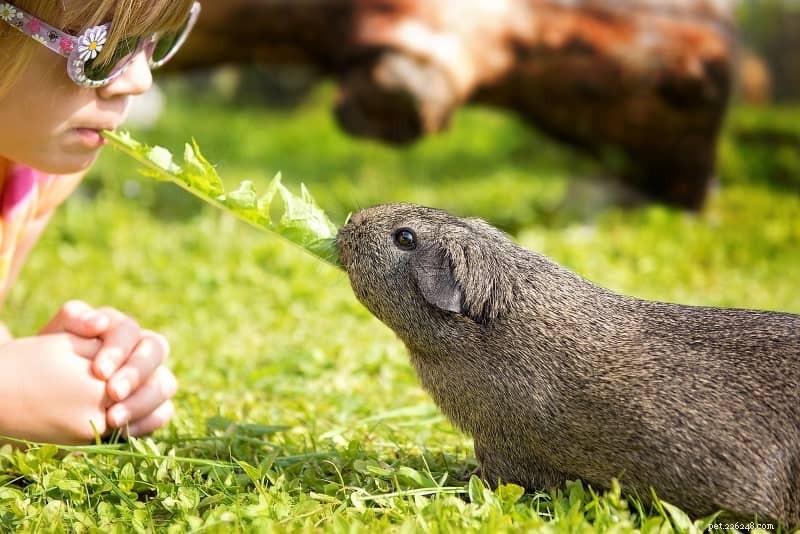
Our lovely, little fluffballs simply adore lettuce. To them, it’s like manna from heaven, and it forms the base of their fresh food menu. Hay and pellets are high in calcium while leafy greens are high in magnesium, which is what they use to break down calcium. If calcium isn’t absorbed properly, it forms deposits in the body such as bladder and kidney stones, causing health issues later on.
Guineas love a wide variety of leaves in their diet, so make sure to change the types of greens you feed them once in a while. Ideally, you’d be offering a different assortment every day, though you may find that your pets end up with favorites. According to Muffy’s vet, each guinea should have 1-1.5 cups of lettuce per day, spread throughout the day.
Here are a few fun flavors:
- Mixed greens
- Romaine
- Frisee/curly (red and green)
- Radicchio
- Spinach (limit due to oxalic acid)
- Arugula
- Kale
- Swiss chard (red and green)
- Dandelion leaves
For a special treat that can’t be beat, put your piggies “out to pasture.” Let them graze on fresh grass, but make sure what they’re eating is free from dangerous chemicals and pesticides. As a rule of thumb, if kids can safely roll around and play on it, it’s likely safe enough for piggies to eat. Though, do stay away from “pee spots” that are popular with dogs!
Danger alert! Not all lettuce is completely safe
Avoid this lettuce:
- Iceberg lettuce (high nitrate levels)
For the most part, leafy green varieties are safe, with one exception: iceberg lettuce. With its low nutritional value and high nitrate content, iceberg can be dangerous for guinea pigs since it often causes diarrhea and leads to dehydration.
Vegetables
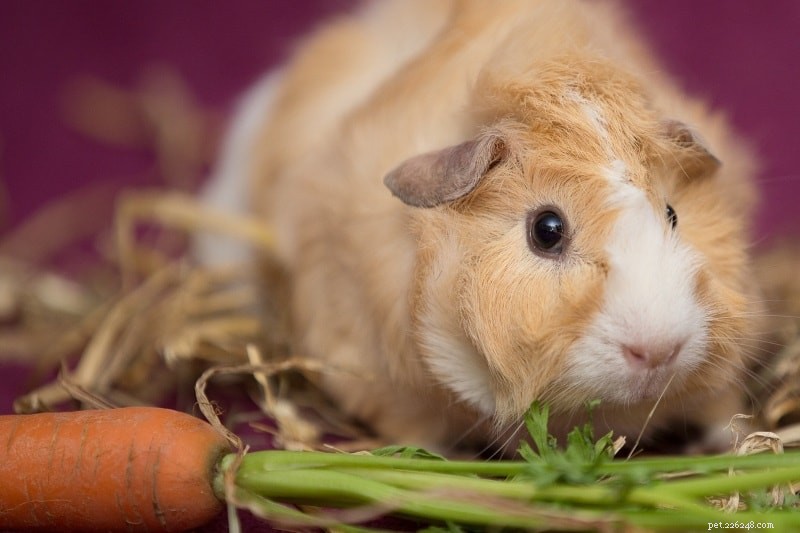
Yummy veggies have a long, impressive list of necessary nutrients, vitamins and minerals. It’s vital to a guinea’s health to have a colorful variety on a daily basis. Like humans, guinea pigs cannot generate Vitamin C. When there’s a lack of this vitamin in their diet, they can contract scurvy, a condition that causes them to become very sick and possibly die. Thus, it’s critical to get their daily requirement.
Again, according to Muffy’s vet, it’s important to think of providing a rainbow of vegetables since every veggie color provides different nutritional values. As such, each piggy should get up to 1 cup of mixed vegetables per day, ensuring they always have a small amount of veggies that have vitamin C.
Choose from among these yummy favs:
- Peppers (contain more vitamin C than an orange, any color)
- Cucumbers
- Tomatoes (avoid leaves and stems because those are poisonous)
- Carrots
- Broccoli (in moderation, too much may cause gas)
- Celery (it is recommended to remove celery strings as they are a choking hazard)
- Parsnip
- Zucchini
Danger alert! Not all vegetables are safe!
Avoid these dangerous vegetables:
- Potatoes (toxic)
- Rhubarb leaves (toxic)
- Chili peppers
Potatoes and their skins, along with rhubarb leaves, have toxins and are considered hazardous to guinea pigs.
See a more detailed list of dangerous plants on a Happy Cavy website.
Fruit
Fruit is also an essential part of your furry friend’s nutritional requirements. Even though they’re such a delicious food group that’s high in much-needed vitamins and minerals, it’s best to keep their rations to a minimum as they’re also high in sugar content. And so, they should be viewed more as a treat, keeping their portions to 3-4 servings per week.
Offer some of these popular piggy picks:
- Kiwi
- Apple (any color)
- Pear
- Banana
- Watermelon
- Grapes
- Melon
- Oranges
- Berries (such as strawberries, blueberries, or raspberries)
Hay
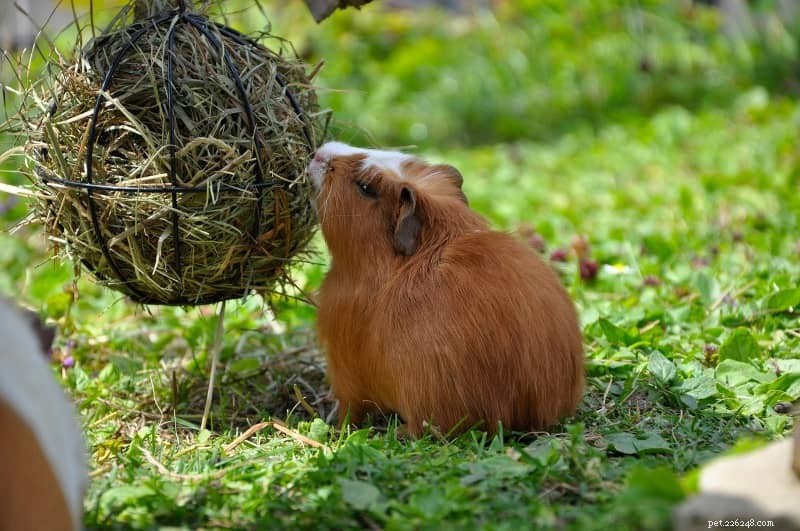
Not only do piggies love their hay, they need it to keep their teeth at bay! Aside from dental health, it’s also required to maintain an optimal digestive tract. Thus, without exception, guineas must have unlimited access to hay. Presently, Miss Muffy enjoys Standlee Premium Western Forage Timothy Hay.
When picking hay, select varieties that are soft and green. Pass on hay that’s yellow and hard as that’s not actually hay, it’s straw!
When choosing hay for your pet, there are many options available:
- Timothy hay (ideal for all pigs)
- Meadow hay (Muffy’s personal favorite!)
- Oat hay
- Alfalfa hay (high in calcium so not an “everyday hay”, can be used occasionally as a treat)
To spice things up a little, try adding a bit of dry grass like:
- Blue grass
- Brome grass
- Orchard grass
To keep their cage neat and clean, consider buying a hay wheel. We have a hay feeder, and it does an excellent job of keeping the hay nice and organized, while ensuring easy access.
Food pellets
Food pellets are an essential guinea food staple, and something they simply cannot do without. Guinea pellet manufacturers suggest different quantities, depending on the brand. However, the typical amount recommended is 1/8 of a cup of pellets per day, per piggy. At our piggy palace, we’re trying out Martin’s Little Friends, though I’ve heard excellent comments from friends about the Oxbow Animal Health Cavy.
As I’ve mentioned in one of my previous posts, I prefer to leave out a pellet bowl, and Muffy’s vet says it’s perfectly fine to do so. Although guineas do love to nibble on… well, everything… they rarely indulge. Once they’re full, they’re full, and they won’t stuff themselves to unconsciousness. As you’re the pet parent and know their personalities best, decide which approach you prefer.
Guinea pig feeding schedule
Looking for a little help in the feeding department? Check out this example feeding schedule to help make sure your little fluffy guys have a healthy nutrition plan. You can download this feeding schedule here.
*with fresh water, hay and pelletsBroccoli
Cucumber
Parsley
Lettuce mix
*Fruit Day!Tuesday
*with fresh water, hay and pelletsRed pepper
Carrots
Coriander
Lettuce mix (try endive!)Wednesday
*with fresh water, hay and pelletsParsnip
Celery
Parsley
Lettuce mix
Fruit Day!Thursday
*with fresh water, hay and pelletsZucchini
Cucumber
Broccoli
Lettuce mix (try radicchio!)Friday
*with fresh water, hay and pelletsGreen pepper
Carrots
Coriander
Lettuce mixSaturday
*with fresh water, hay and pelletsTomatoes
Cucumber
Parsley
Lettuce mix
Fruit Day!Sunday
*with fresh water, hay and pelletsCelery
Carrots
Coriander
Lettuce mix
What kind of feeding schedule do you have for your piggies?
Let us know in the comments!
- Ultimate Guinea Pig Care Guide: Expert Tips for Healthy, Happy Pets
- Comprehensive Guide to Caring for a Teddy Guinea Pig
- Essential Guide to Feeding Guinea Pigs: Healthy Diets & Safety Tips
- 100 Creative & Charming Names for Your Guinea Pig – Expert Tips
- Ultimate Guide to Caring for Your Guinea Pig
- Choosing the Perfect Guinea Pig Cage: Space, Comfort, and Social Needs
- Top Exercise Ideas to Keep Your Guinea Pig Healthy and Happy