

Top 5 Bedding Options for Healthy, Comfortable Rat Cages
Choosing what rat bedding to use in a cage is one of the most important decisions a rat owner makes. Rats live in really close contact with their bedding so it is vital that it is safe, comfortable and suited to their needs.
Why do rats need bedding?
There are three types of bedding that are needed in a rat cage:
- Substrate in the base of the cage, to line the cage, and give the rats something to dig in.
- Litter for toileting, to absorb urine and feces, and encourage good toilet habits. The most common option for this is an unscented 100% recycled paper cat litter, which is placed only in the litter trays so the rats get used to having toilet areas. Avoid mineral or wooden litters, and anything with added perfume.
- Nesting material for rats to use in lining their sleeping areas. Most people use paper kitchen towels (which are the same material as the paper nesting material sold in pet shops, but much cheaper), unscented toilet tissue (you can hang a whole roll in the cage and let the rats do the rest), ripped up newspaper with non-toxic ink, or cut up pieces of fleece fabric (for all fabric in a rat cage, chose something that doesn’t create long threads when cut or chewed, and remove any pieces that have holes a rat could get tangled in). My rats tear up their newspaper cage lining, because the Horde likes nothing better than to take control of their own cage.
The biggest decision is what type of bedding to use for substrate, so let’s take a look at the options.
Table of Contents
- Good bedding types for use as substrate
- A good loose substrate needs to be
- These are some of the loose substrate materials I regularly use as a bedding
- Wood-shavings – the good, the bad and the ugly
Good bedding types for use as substrate
Substrate has three roles:
- to protect the base of the cage from urine and feces;
- to make the rats comfortable so they are not always walking on metal or plastic;
- and to give rats something to dig in, because rats really love to have a good dig.
If you have a cage with a deep plastic base such as Kaytee Multi Level cage, then a suitable loose substrate can serve all three purposes. If you prefer a cage with a flat base such as the MidWest cage, then you can either build your own deeper tray, or use newspaper or fleece to line the cage, and provide a loose substrate in a tray or box for digging. I line my cage with newspaper as the rats enjoy tearing it up, and I find fleece gets smelly very quickly. However, it is a personal choice – the only important criteria are that it is safe and meets the rats’ needs.
A good loose substrate needs to be
- Low dust (look for something that states it has been dust extracted). Rats are really prone to respiratory diseases, and living on and digging in a dusty substrate will irritate the lining of their noses and lungs. For this reason, coarse bedding is often better than fine.
- Unscented. Bedding materials sold for small pet cages often have artificial scent added, or are made of a material with a strong natural smell, like pine shavings. The idea is to mask the smell of urine for the owners. However, both of these are a really bad idea for the rats. Again, this is because they are very sensitive to respiratory problems. When we smell a scent, what actually happens is that cells in our nose detect volatile chemicals which are given off by the source. That is as true of a natural smell as an artificial perfume. Just like dust, these chemicals can irritate a rat’s nose and lungs and make them more likely to get ill. Urine smells need to be dealt with by good hygiene, not covering them up.
- Physically safe. It is important that a rat can’t hurt itself on its bedding. Two things to look out for are any bedding with sharp pointy bits that could stab into a rat’s nose or eyes (straw for example can be too hard and sharp), and anything with long fibers that a rat could get their legs or neck tangled in.
- Non-toxic. Obviously, rats should never be bedded on anything that can make them ill if they eat it.
Having owned rats for nearly twenty years, I have tried a lot of different substrates, and I don’t have one particular favorite. In fact, I regularly use several different types to give my rats variety in their environment. I either change things up when I clean the cage, or I mix several types together in the digging box.
These are some of the loose substrate materials I regularly use as a bedding
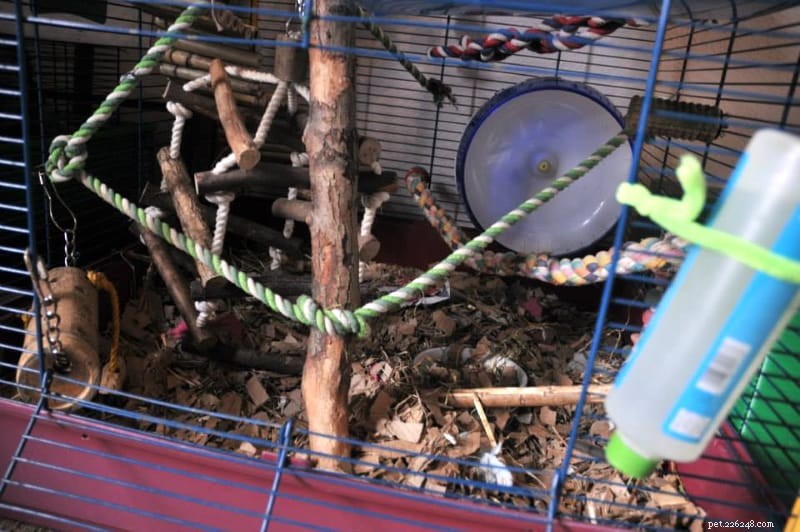
- Carefresh paper bedding (natural and unscented). This is a recycled paper bedding that comes in big fluffy pieces, and rats love digging in. It’s important to check you are buying the right product for you, as there are scented and colored options that I personally don’t use with rats.
- Cardboard bedding. Depending on the brand, this can come as shredded cardboard or cardboard squares. It is very popular in the UK rat fancy, and is great for digging. However, some people dislike the fact that glue is used in the cardboard manufacturing process.
- Shredded paper. This is a really cheap / free option if you have a shredder and access to lots of unwanted office paper. I often mix some into digging boxes. You should only use matt paper printed with non-toxic inks, and I have found it needs to be made via a cross cut shredder (so you get lots of short pieces). Long strips can be tangly, and are also more likely to have sharp edges. Shredded paper tends to compress down a lot, and doesn’t absorb urine well, so I mix it with one of the other beddings for better performance.
- Hemp bedding. This has become popular recently, as an all-natural alternative to wood-shavings. There are several brands depending on where you live – I find my locally available one a bit fine, and I tend to mix it with something coarser.
- Coconut husk bedding. This is a product designed for reptiles, but which has gained popularity among small animal owners as another natural alternative to wood-shavings. I am currently using a mid-sized version mixed with hemp in my main digging box. Some brands contain a lot of fibers, so it is worth looking closely at what you are buying and checking that they are suitable for rats.
Wood-shavings – the good, the bad and the ugly
For a long time, most small pets were bedded on wood-shavings, usually pine or cedar. You can still find these for sale in most pet shops, and people often use them as a cheap option. However, they are very controversial in the rat world. This is because the cheap options are frequently dusty, and the woods used contain phenols (the chemicals that give them their smell) which have been associated with respiratory disease and other health problems in rats.
I personally haven’t used wood-shavings for many years, but some people in the rat community still prefer them over paper-based beddings (which contain inks and chemicals from processing). An important thing to remember is that not all shavings are equal. A recent product that some rat owners have started using is a bedding designed for horses. These larger wood-shavings are fully dust-extracted and kiln dried, which is said to remove the phenols by heat treatment. I haven’t tried these (they are only available around here by the trailer load!) so can’t currently make a recommendation either way.
The important thing with any bedding is to think critically about its safety, and how it will suit your rats. Trial any new product in a small amount, and if you find your rats start sneezing on it, or are uncomfortable, then stop using it straight away, regardless of whether other owners like it. Rats, like people, are individuals and can be sensitive to different things.
What kind of bedding do you use or plan on using?
- Top 6 Premium Rat Cages: Expert Picks for Your Pet’s Ideal Habitat
- Enhance Your Rat's Home: Top Cage Accessories & Decorations for Comfort & Fun
- Top 7 Rat Toys That Keep Your Pets Entertained for Hours
- 10 Key Facts Every Rat Owner Should Know
- Are Pet Rats Smelly? 5 Expert Tips to Keep Their Cage Fresh
- Premium Hamster Bedding: Safe, Comfortable Choices for Happy Pets
- Optimal Cage Dimensions & Design for Sugar Gliders