

The Complete Rat Care Guide: 9 Essential Steps for Healthy, Happy Pets
Rats make great little pets – they’re sociable, intelligent and they will love to be your playmate. It can seem overwhelming at first, when you start researching about all the things you have to know to make your rats healthy and happy. But don’t worry, it’s not that hard once all the new info settles in. Read this pet rat care guide, implement the tips, and your rats will have no reason to complain!
Some general info you need to know about rats is:
- Rats usually live 2-3 years, so if you’re still thinking about adopting rats, make sure you can care for them for the next couple of years.
- They are nocturnal animals which means they are most active during the night, so don’t be surprised if you hear them running around the cage while you’re trying to sleep.
- Each rat has a different personality, likes and dislikes so one rat can be better at learning your tricks, another one might be more sociable etc.
- Make sure all electrical wires and other potentially dangerous things or toxic plants that rats might chew on are out of reach.
- The ideal temperature for rats is between 65 and 75 degrees Fahrenheit, so if it’s a very hot day it is best to have your air conditioner running. Temperatures above 90 will be a nightmare for the rats and those above 100 can even be fatal so make sure not to place the cage under the direct sunlight.
Table of Contents
- Rats need company
- What to feed your rats
- Choose healthy treats
- Making their living area comfortable
- The best types of cages for rats
- Where to place the cage
- Cleaning the cage
- Provide a hiding area
- Rat bedding
- Good rat bedding
- Paper pellet bedding
- Aspen
- Cloth bedding
- Not a good bedding choice
- Cedar and pine bedding
- Dusty types of cat litter
- Good rat bedding
- Entertaining your rats
- Socializing
- Out of the cage time
- Toys and accessories
- Search for the treats
- Training the rats
- How to handle your pet rat
- Common health issues
- Grooming
- Conclusion
Rats need company
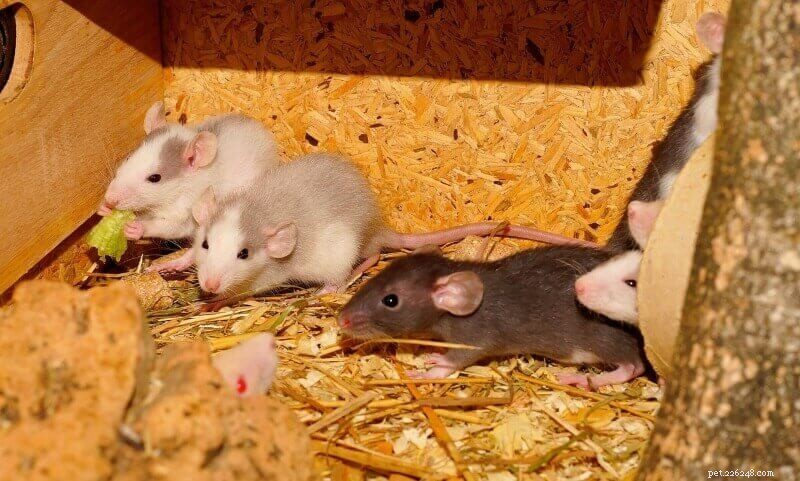
I can’t express this enough: you should get at least 2 or preferably more rats so they can keep each other company. As I mentioned above, rats are very sociable and they would feel extremely lonely, sad and bored without a companion rat. But make sure to get the same sex rats so you don’t end up with a bunch of baby rats running around.
What to feed your rats
Giving your rats high-quality food can help them live longer and happier lives.
When talking about the rat food, there are 2 options.
- you can purchase the rat food in the store
- or you can go with homemade food
A rat block or pellet, together with some fresh vegetables, fruits and some other fresh foods, will make a balanced diet for your rat.
Blocks or pellets will make sure that your rat eats all the seeds in them which ensures they get all the necessary nutrients. Most rats have less favorite seeds, so if you offer them regular seed mixes, they might eat only their favorite seeds and leave the rest. You can try with seed mix, and if they eat it all and are not picky, then you can feed them to seed mixes.
When you’re buying rat food, make sure to choose high-quality specially formulated rat diet, because many cheap rat food products lack in nutrition.
If you want to go homemade, which I never tried so I can’t really advise, here is a great post about homemade rat food.
When you are switching to a new rat food, you might notice that your rat only takes a bite or two and then stops eating. You might think that they don’t like the food or that they are not hungry, but the reason is probably something else. As rats don’t have a gag reflex, if they ate something bad for them, it could kill them, so they can sometimes be careful with the new food. When they realize the new food is OK, they will eat the rest.
Choose healthy treats
If you want to spice up your rats’ diet by adding treats, make sure that the treats you offer are healthy and have nutritional value. Rats love junk food just like us, but you should avoid those. When searching for healthy rat treats, make sure they are:
- sugar-free,
- organic
- low salt
- no artificial colors
Some of the things you can give your rats as treats are:
- pumpkin seeds – raw, unsalted
- large natural oats
- Cheerios organic and sugar-free
- brown rice
- cooked beans
- potato peels
- blackberries
- blueberries
- apples but without the seeds as seed are dangerous for the rats
- apricots
- banana
- chicken
- broccoli
- carrots
Take a look at this thorough list of the foods you rats can and cannot eat.
Making their living area comfortable
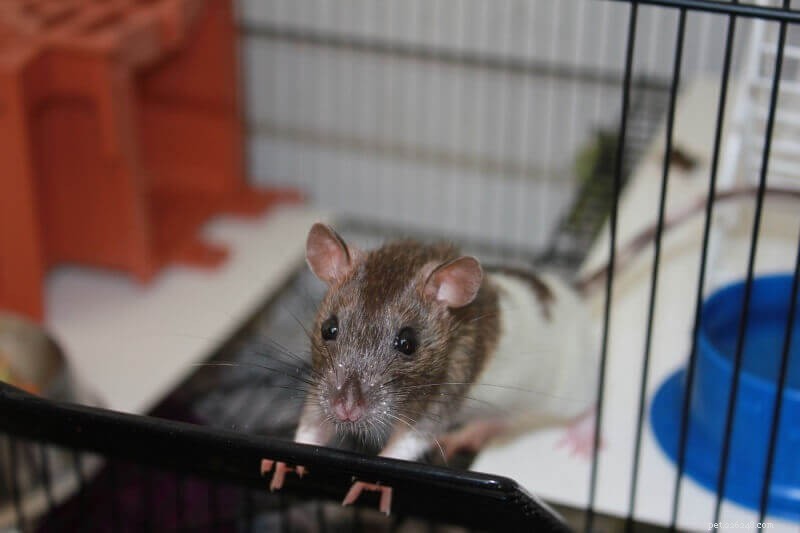
The best types of cages for rats
I’ve already written about the best types of rat cages so make sure to check that post too. But to explain here in short, here is what you should look after when getting a cage for your rats.
Bar spacing
- If you have baby rats, the bar spacing should be at least 1/2″ or less so that they can’t get out of the cage.
- If you have adult rats, the bar spacing should be at least 1″ so they can’t get through the bars.
Space
Rats love to have plenty of space to move around and play, so make sure to get a large enough cage. You can get a smaller cage if you have baby rats, but keep in mind that they will outgrow their cages in 3-4 months and they will need a new one. But the small cage will come in handy to put your rats in while you’re cleaning their large cage.
The minimum space in the cage per rat is 2 cubic feet per rat. So if you have 4 of them, their cage should be 8 cubic feet. You can take a look at this cage size calculator to see how large your rat cage should be.
Metal cage
I regularly see homemade rat cages on Pinterest that are made out of wooden closets or aquariums. But those are very unhealthy for the rats. You should consider metal cage only because they provide good ventilation. Rats are prone to respiratory issues, and unsuitable cages such as those made of wood or glass don’t provide enough ventilation. Also, wood easily soaks up the rat urine so it is hard to disinfect wooden cage.
Wooden, glass and plastic cages keep the dust and ammonia from the urine which irritates rat’s respiratory system. So I highly recommend a metal cage, for your rats’ sake.
One other thing, try to avoid the cages with wire mesh flooring as this can cause your rat’s feet to swallow aka to get booblefoot. It is best if the cage has a full floor to walk on.
Where to place the cage
As rats are nocturnal and do most of their sleeping during the day, it is good to have your cage somewhere where it’s not very noisy and crowded.
If you have other pets, put the cage somewhere where your pets will not be able to snif around the cage. The rats will feel unsafe if there’s a cat or a dog around them.
Cleaning the cage
You can see my guide on cleaning the rat cage here, but in short, here is what you need to know about cage cleaning.
You need to do some essential cleaning activities on a daily basis and those would be:
- replacing the litter with poop in it
- replacing the bedding where the rats were peeing and pooping
- remove leftover food
- replace the water
- check if there is any cloth item that needs to be washed
On a weekly basis, you should:
- thoroughly clean the cage with a pet-safe cleaning product – Dish soap is fine or you can use a cleaner designed for pet cages such as Nature’s Miracle Cage Cleaner
- wash the cloth items with un unscented and hypo-allergenic laundry detergent such as All Mighty Pacs Laundry Detergent
- disinfect the cage with a pet-safe spray such as ProVetLogic disinfectant by leaving the spray on for 10 minutes and then rinsing it thoroughly
Provide a hiding area
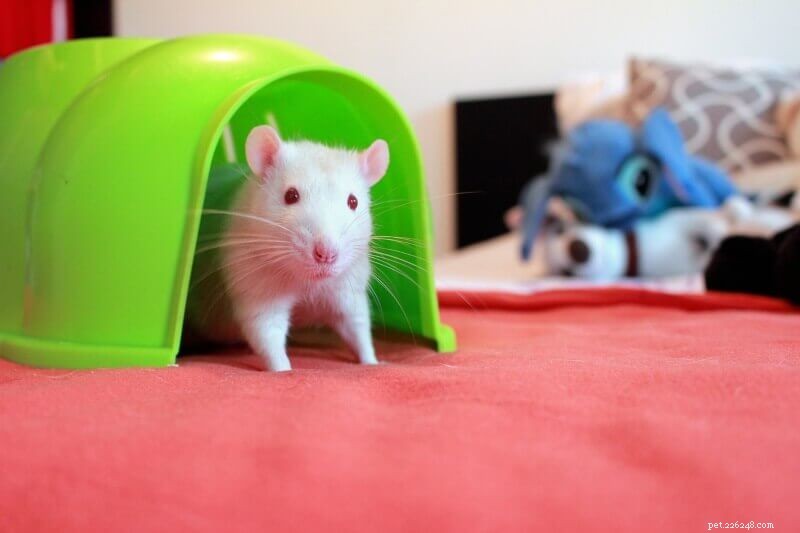
Rats like to have a private hiding place so you should put some kind of small rat house, a nest box or anything else where they can hide or go to sleep in their cage. There are many things you can buy as a hiding place for your rats or you can simply use a small cardboard box, an empty tissue box or similar.
This Kaytee Igloo Hideaway is a quite popular hiding place among rats and it looks pretty cool.
Rat bedding
Rat bedding is very important in keeping your rats happy and healthy. Some bedding options are very dusty, unhealthy and not suitable to use as a bedding. Here is the list of good bedding choices and bad bedding choices.
Good rat bedding
Here are healthy bedding options that I recommend.
Paper pellet bedding
You can buy paper bedding in the store or use the shredded paper you have at home but it would be best to use the paper that has no ink on it, or if it has ink, then it should be non-toxic ink. You can’t go wrong with Carefresh Complete Pet Bedding which is very effective in odor-control and dust-free.
Aspen
Aspen, unlike cedar and pine that I listed as a bad bedding choice bellow, has no toxic aromatic compounds that would harm the rats and it is safe to use as a bedding.
Cloth bedding
Most popular cloth bedding choice is fleese but you can also use old clothes. If you use cloth bedding, you will have to wash it with un unscented and hypo-allergenic laundry detergent such as the one I mentioned above (All Mighty Pacs Laundry Detergent).
Whichever bedding you choose for your rats, you should make sure to change it often. When the rats pee around the cage, ammonia and fecal bacteria start to build up which can hurt your rat’s respiratory system, and not to mention it starts to smell really bad.
Not a good bedding choice
The following bedding choices have shown to be unhealthy for the rats.
Cedar and pine bedding
Some people like to use this bedding because it has a strong scent that covers the odors of rat’s urine, but according to research, the aromatic compaunds found in this bedding can have a negative impact on the liver of small animals. The strong scents can also harm rat’s raspiratory tract.
Dusty types of cat litter
Inhaling dusty litter on a daily basis would be unhealthy for your rats.
Entertaining your rats
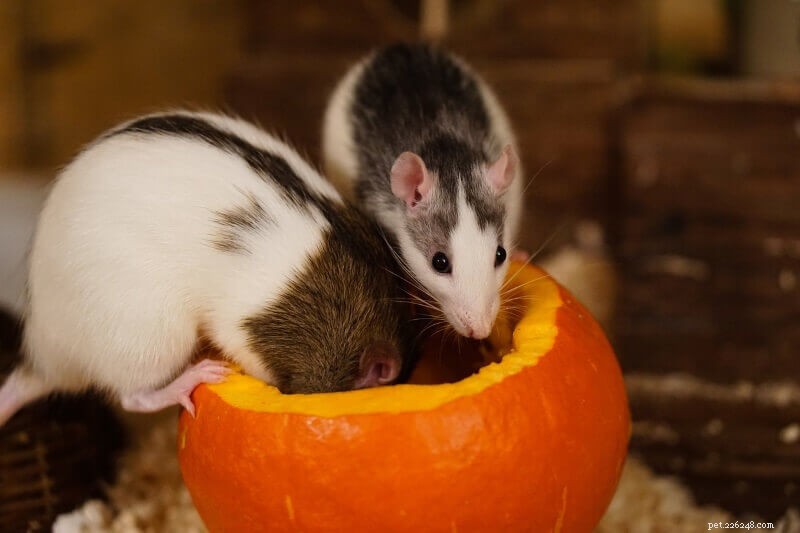
Rats, like any other pet, need something to keep them entertained throughout the day. They will not be happy if they are kept in cage all the time and if the cage is empty, with nothing to play with.
Socializing
As I mentioned previously, first and most important thing rats need to keep them satisfied is other rat(s) to make them company. In addition to the rat company, they need your company too. Spend some time playing and bonding with your rats every day. I suggest you spend at least 10 minutes with them, 2 times a day.
Out of the cage time
Other than that, your rats will need some playtime outside of their cages. Put your rats out of the cage for at least an hour a day so they can explore the room, play with you and other rats, sniff around and have fun! But don’t forget to close the windows and doors, because rats are skillful little rodents, so it wouldn’t take long for them to find a way out.
Toys and accessories
To make their time in the cage more fun, you can use different toys and accessories. Some of the things your rats would enjoy are:
- Tunnels – rats usually love to hide in tunnels in the wild, so they will love this
- Climbing toys – rats love to climb
- Exercise wheels – 11 inches in diameter wheel should be fine for rats, this will provide some exercise inside the cage
- Chewing toys – great to wore down their forever growing teeth
- Foraging toys – this provides mental stimulation they would usually get in the wild while searching for food
- Hammocks
- Ramps
Some of these toys can be made at home, so you don’t have to spend much money to provide a great playtime for your rats.
Search for the treats
One great idea to keep your rats mentally stimulated and entertained while they’re out of the cage is hiding the treats around the room. This will involve all their senses as if they are in the wild while searching for food.
Training the rats
Rats are very intelligent and they learn fast so you will probably have no issues training them. I will not go into detail about the rat training here, but here are some of the things you might want to teach your rats:
- How to use the toilet (see how to litter train your rats)
- Coming after you call their name
- Teaching them tricks such as to shake hands, clap etc.
I think you’ll best learn how to train your rats from the video so here is a useful rat training video that I love.
How to handle your pet rat
When you first get your new rats, it will take some time until they start trusting you and bonding with you. Don’t rush this and go slowly.
- First few days, let your rats alone so they can settle in their new home with no additional stress of being handled by an unfamiliar human being.
- After a few days, when the rats have got a bit used to their new home, you can start interacting with them. But you shouldn’t just go ahead and grab them because they still don’t know you and are probably scared of you. They will need some time to relax and realize you are not a threat. You can use treats to lure them out of the cage. Eating treats from your hand will be a positive experience for them which is the first step towards them seeing you as a good-guy, trusting you, and bonding with you.
- Now that your rats are comfortable enough to eat from your hand, you can try petting them. Let them smell your hand. Go slowly and keep your hand still so that sudden moves don’t scare them away. Rat use their teeth to explore things so it is possible your rat will nibble or bite you. You can show them that they shouldn’t do that by making “eep” noise – that is how rats usually tell each other when they don’t like something.
- When your rats are comfortable around your hands, you can gently pet them on the head, behind the ears or from the neck towards the back but avoid the area around the tail as it can be sensitive.
When your rats get to know you and trust you, you can pick them up and handle without any fuss. Here is a good video of how to pick up and handle your new rats. It will be easier for you to understand if you see it with your own eyes instead of me explaining with words.
Common health issues
Rats are prone to some illnesses such as tumors, respiratory diseases, bublefoot, Abscesses… You should check your rat for lumps from time to time and even though a lump can be benign and it doesn’t necessarily mean it is a tumor, you should get your rat checked out by the vet to make sure everything is fine.
If you notice any warning signs such as a sudden change in behavior, weird skin conditions, staining around the eyes or nose, bald patches etc. you should go visit a vet.
Grooming
Contrary to the popular belief, rats are actually very clean animals that love to groom themselves. They actually spend 30% of their wake time cleaning and grooming themselves. Since rats are such clean animals, there is no need to bathe them. Most rats don’t like water so bathing them would not be the most pleasant activity for them. If your rats get a bit smelly, you can use wet cotton pads to clean them up a bit.
Conclusion
I know this was a bunch of information coming at once. Let it settle in. You can come back tomorrow to check on it again and it will probably be much more clear to you.
I hope my guide helped you and have you all essential tips for pet rat care.
Let me know if you have any additional question in the comment!
- Breeding Pet Rats: Key Considerations for Health, Profit, and Responsibility
- Essential Guide to Caring for Your Pet Rat: Housing, Diet & Health
- Comprehensive Rabbit Care Guide: Health, Habits & Long-Term Happiness
- Comprehensive Guide to Feeding Your Pet Rat for Optimal Health
- Unlocking the Intelligence of Rats: Personality, Care, and Benefits as Pets
- Top Pet Rat Names: Clever & Endearing Choices
- Find the Best Vet in Columbus, OH: Comprehensive Guide