

Understanding Thrombocytopenia in Dogs: Causes, Symptoms, and Treatment
 In This Article
- What Is Thrombocytopenia in Dogs?
- Symptoms
- Causes
- Diagnosis
- Treatment
- Prognosis
- Prevention
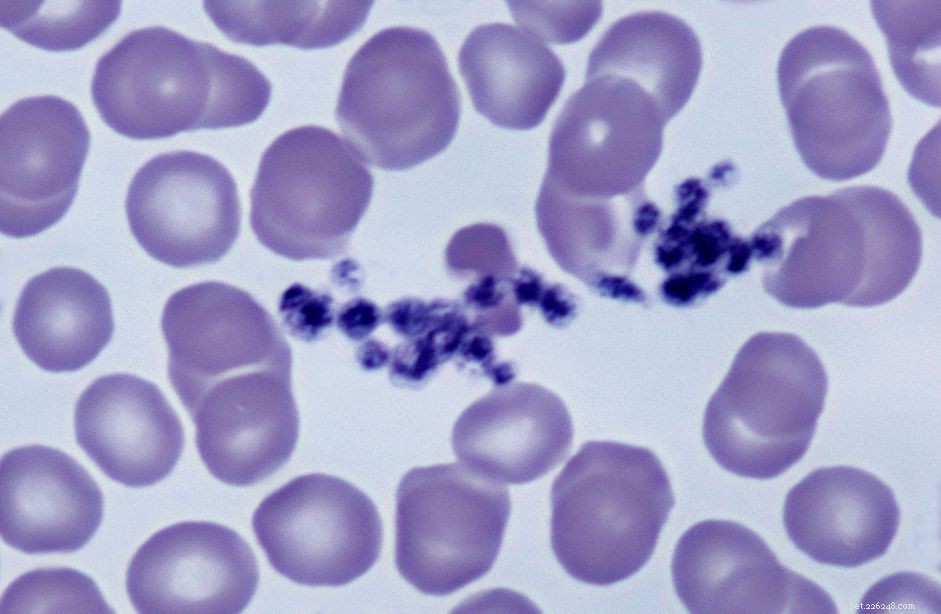
Thrombocytopenia can occur for a variety of reasons in dogs. It occurs when their platelet count is low. Platelets, also called thrombocytes, are the component of blood that clots together when there is an injury, thus stemming the flow of blood. Thrombocytopenia decreases the ability of the blood to clot, and can lead to spontaneous bruising or uncontrolled bleeding. There are many causes of thrombocytopenia in dogs.
What Is Thrombocytopenia in Dogs?
Thrombocytopenia occurs when a dog has a low number of platelets in its blood. Platelets are important for clotting, so if your dog does not have enough of them, it is at risk of sudden bleeding or bruising. It is a fairly common disease in dogs, occurring in as much as 5 percent of dogs admitted to veterinary hospitals.
While any dog may develop thrombocytopenia, it is most common in young-to-middle-aged dogs and smaller breeds.
Symptoms of Thrombocytopenia in Dogs
If the thrombocytopenia is mild, you might not see any symptoms and only discover your dog has the condition during a routine veterinary checkup or a workup for another health problem. However, if the condition is advanced, you may see the following signs:
Symptoms
- Spontaneous bleeding or hemorrhage
- Skin bruising
- Gum bruising
- Blood in feces
- Nose bleeds
- Black stool
- Blood in urine
- Blood in eye
Since thrombocytopenia affects a dog's blood clotting abilities, spontaneous bleeding and hemorrhage can occur. This may happen with or without any trauma.
Nose bleeds may also suddenly occur, and sometimes blood can be seen in the stool and urine of a dog with thrombocytopenia. Black stool is an indication that the blood has been digested and is from higher up in the digestive system, but red blood in the stool may also be seen.
Finally, large bruises called ecchymoses along with small bruising called petechiae can occur on the gums and skin of a dog with thrombocytopenia. All of these symptoms are caused by having decreased clotting of blood due to insufficient platelets.
Causes of Thrombocytopenia in Dogs
Thrombocytopenia can be caused by a number of diseases or issues in a dog:
- Immune-mediated: This is the most common cause of thrombocytopenia in dogs, and is often abbreviated as ITP. ITP is an autoimmune disease, meaning that the immune system is attacking and destroying platelets. In primary ITP, also called idiopathic ITP, the cause is unknown. In secondary ITP, an underlying health problem, such as cancer or tick infection, triggers the autoimmune response.
- Infections: Several diseases can cause thrombocytopenia, including canine distemper, parvovirus, ehrlichiosis, fungal infections, and bacterial infections.
- Cancer: Some forms of cancer, including leukemia and multiple myeloma, can cause platelet destruction.
- Genetics: Certain dog breeds are more predisposed to thrombocytopenia. Cavalier King Charles Spaniels and Greyhounds are more commonly affected than other breeds.
- Drug and vaccine reactions: Some medications, such as chemotherapeutics, certain antibiotics, and estrogen, can cause thrombocytopenia as a side effect.
- Enlarged spleen: Splenomegaly can result in thrombocytopenia since the spleen stores a large number of platelets.
- Rodenticide poisoning: If a dog accidentally eats some rodent poison that is designed to cause internal bleeding, thrombocytopenia may be seen alongside hemorrhage.
Diagnosing Thrombocytopenia in Dogs
In order to diagnose a dog with thrombocytopenia, a veterinarian will perform a complete blood count. This test shows how many platelets are present in the sample of blood. Typically, healthy dogs have platelet counts that are around 200,000/μL. Generally, when the number of platelets falls below 30,000/μL, symptoms of thrombocytopenia, such as bruising and nose bleeds, are seen. Other tests may be performed to discover the cause of the thrombocytopenia, including blood tests to look for infections, signs of organ failure, cancer, or toxins. Occasionally, your vet may want to do more advanced tests, such as ultrasound, x-rays, or bone marrow biopsies, to check for other causes of the thrombocytopenia.
Treatment for Thrombocytopenia in Dogs
The treatment for thrombocytopenia depends on the cause. Dogs with ITP generally require immunosuppressive drugs to keep their immune system from destroying platelets. Steroids, such as prednisone, are the most common drug used for this purpose. Most dogs will not have to remain on prednisone for life, but rather, can slowly taper down as their platelet counts rise to normal levels. This is important, because steroids have serious side effects, including weight gain, increased thirst and urination, and increased susceptibility to infections. You will need to work closely with your veterinarian during this time, and repeated blood tests will be required to check the dog's platelet levels.
Certain chemotherapy drugs temporarily increase the amount of platelets, as do intravenous immunoglobulins. These are sometimes prescribed for rapid treatment of the thrombocytopenia. If the dog has experienced serious blood loss, a transfusion might be required, as well.
If the thrombocytopenia is being caused by another condition, such as cancer or infection, then treatment of that condition should also help increase the dog's platelet count.
Prognosis for Thrombocytopenia in Dogs
Happily, around 80 percent of dogs diagnosed with ITP will recover. However, relapse is common, so your dog will require lifelong observation and frequent veterinary checkups. If the thrombocytopenia is caused by another condition, such as cancer, infection, or a toxin, then the prognosis depends on how successfully that other condition can be treated.
How to Prevent Thrombocytopenia in Dogs
Oftentimes, there is no way to prevent thrombocytopenia from occurring in dogs, since it is most commonly immune-mediated or caused by various diseases that are difficult to prevent. However, regular well-dog veterinary checkups can help undercover health issues, including thrombocytopenia, before they become too serious to treat.
- Glomerulonephritis in Dogs: Diagnosis, Management, and Prevention
- Understanding Anemia in Dogs: Causes, Symptoms, and Treatment
- Understanding and Managing High Blood Pressure in Dogs
- Babesia Infections in Dogs: Causes, Symptoms, and Treatment
- Dog Anemia: Causes, Symptoms & Early Detection
- How Dogs Donate Blood: A Guide to the Process and Impact
- Can Dogs Smell Blood? Exploring Their Remarkable Olfactory Ability