

Understanding Dog Seizures: Causes, Symptoms, and Effective Treatments
 In This Article
- What is a Seizure in a Dog?
- Symptoms
- Causes
- Diagnosing
- Treatment
- Prognosis
- Prevention
Seizures, which are sometimes referred to as convulsions or fits, can occur in dogs for many different reasons. A seizure occurs when the cerebral cortex, a part of the brain, functions in an abnormal way leading to unusual behaviors or movements. The cause of this malfunction may be the result of an abnormality located within the brain itself, or it could be the result of a disease or an injury that starts in another part of the body. Seizures can be a sign of serious health issues in your pet. If your dog experiences a seizure for the first time, make an appointment with your veterinarian as soon as possible.
What is a Seizure in a Dog?
Seizures are a symptom of a neurological disturbance in the dog's brain. There are many causes of seizures, ranging from fairly simple and easily treated to complex and without treatment, but basically, all cause a temporary disruption of the normal electrical impulses within the dog's brain, leading to a range of symptoms. A seizure can last a few seconds to several minutes. During this time, your dog might show only mild symptoms or might collapse and appear unconscious.
There are three basic types of seizures:
- Generalized (grand mal) seizures are the most common type in dogs. In a grand mal seizure, both sides of the brain are involved. Your dog will fall to the ground, may lose consciousness, possibly will urinate, defecate, or drool, and will have erratic muscle movements such as jerking limbs, stiffness, and abnormal head movements.
- Focal seizures (partial motor seizures) affect just one area in the brain. In this type of seizure, your dog may or may not lose consciousness. Typically, the dog will have abnormal movement in just one limb, or will make unusual facial movements, such as a chewing motion of the mouth.
- Psychomotor seizures (complex partial seizures) are the most subtle type of seizure. Your dog might hallucinate, become aggressive, or show an odd behavior, such sitting motionless while staring, or repetitive snapping or biting at the air.
True seizures have three phases:
- The first phase is the pre-ictal phase, or aura. It can last a few seconds up to several hours. During this phase, your dog might seem nervous, shy, or restless. Your dog might hide, shake or drool.
- The ictal phase can last seconds to minutes, and is the stage you are likeliest to notice. Depending on the type of seizure, your dog may fall down, lose consciousness, thrash or make abnormal limb movements, become stiff, display odd behaviors, or lose bowel and urinary control.
- The post-ictal phase can last minutes to hours. Your dog might seem confused, restless, or even blind during this phase. You might notice your dog pacing or drooling.
Symptoms of Seizures in Dogs
Because seizures have many causes, and can strike different parts of the brain, leading to different effects, there are many possible symptoms of this neurological disorder. Common symptoms include:
Symptoms
Falling to the ground
Loss of consciousness
Staring into space
Twitching or jerking limbs
Muscle stiffness
Running in circles
Unprovoked aggression
Drooling
Whining
Loss of bowel or bladder control
Strange repetitive movements, such as chewing or snapping
Causes of Seizures in Dogs
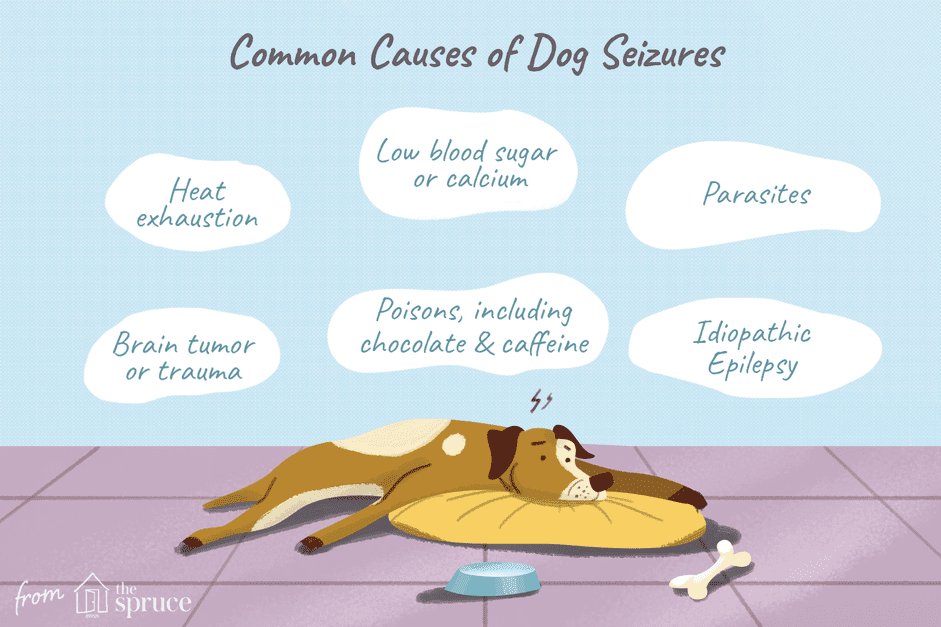
There are many causes of seizures in dogs. In a reactive seizure, the brain itself is healthy, but is affected by a metabolic condition, such as liver or kidney disease, or by a toxin your dog is exposed to or eats. Symptomatic seizures are caused by structural problems in the brain, such as stroke, inflammation, tumors, or congenital malformations. Idiopathic seizures have an unknown cause, and are the most common type of seizure in dogs. Typically, a dog with idiopathic seizures is diagnosed as having primary epilepsy.
Diagnosing Seizures in Dogs
Generally, if your dog has had a seizure, your veterinarian will run blood tests to look for any systemic issues or signs of infection, and will also look for signs of head trauma and exposure to toxins. If all of these tests are normal, and your dog displayed classic signs of seizure, the diagnosis will probably be primary epilepsy. Occasionally, particularly with a dog having frequent seizures, the veterinarian might want to run more complex tests, including MRIs, CT scans, or spinal fluid analysis.
Treatment of Seizures in Dogs
If your dog's seizures are caused by an underlying condition, such as metabolic disease, exposure to toxins, or tumors, then treatment of that condition should also prevent a recurrence of seizures. But if your dog is diagnosed with epilepsy, your veterinarian may recommend no treatment at all. Generally, veterinarians only recommend treatment for epilepsyif your dog has more than one seizure a month, has clusters of seizures very close together, or has very severe grand mal seizures that last a long time.
If treatment for epilepsy is required, your veterinarian will probably diagnose one or more anticonvulsant medications. The most common medications are phenobarbital, potassium bromide, zonisamide, and levetiracetam. Note that if your dog is started on an anticonvulsant medication, it will need to be continued for the remainder of your dog's life, as starting and then stopping these medications can trigger more frequent or severe seizures.
Prognosis for Dogs with Seizures
The prognosis for your dog depends on the cause of the seizures, as well as the frequency and severity of the seizure episodes. Most dogs with primary epilepsy severe enough to require treatment do well with medication; as much as 70 percent of these dogs will have few or no breakthrough seizures. However, for dogs that do not respond well to treatment, seizures can become frequent and severe enough to require euthanasia. This is particularly true for dogs that have frequent grand mal seizures lasting five minutes or more, which is called status epilepticus.
Prevention of Seizures in Dogs
Primary epilepsy, which is often genetic and more common in certain breeds of dogs, including schnauzers, basset hounds, collies, cocker spaniels, Labrador retrievers and golden retrievers, can't be prevented. However, you can help ward off seizures due to other causes by keeping your dog in good health, having regular veterinarian checkups to identify health problems before they turn serious, and taking steps to store any potentially toxic substances, such as cleaning supplies and antifreeze, in a spot where your dog has no access.
- Understanding Tularemia in Dogs: Symptoms, Prevention, and Treatment
- Understanding Canine Pancreatitis: Symptoms, Causes, and Treatment
- Understanding Lupus in Dogs: Causes, Symptoms, and Treatment Options
- Understanding Dog Epilepsy: Causes, Symptoms, and Care
- Impetigo in Dogs: Symptoms, Causes, Diagnosis, and Treatment Guide
- Understanding Dog Seizures: Causes, Symptoms, and Care
- Understanding Seizures in Dogs: Symptoms, Causes, and Care