

The Dottyback (Pseudochromis spp.): A Comprehensive Fish Species Profile
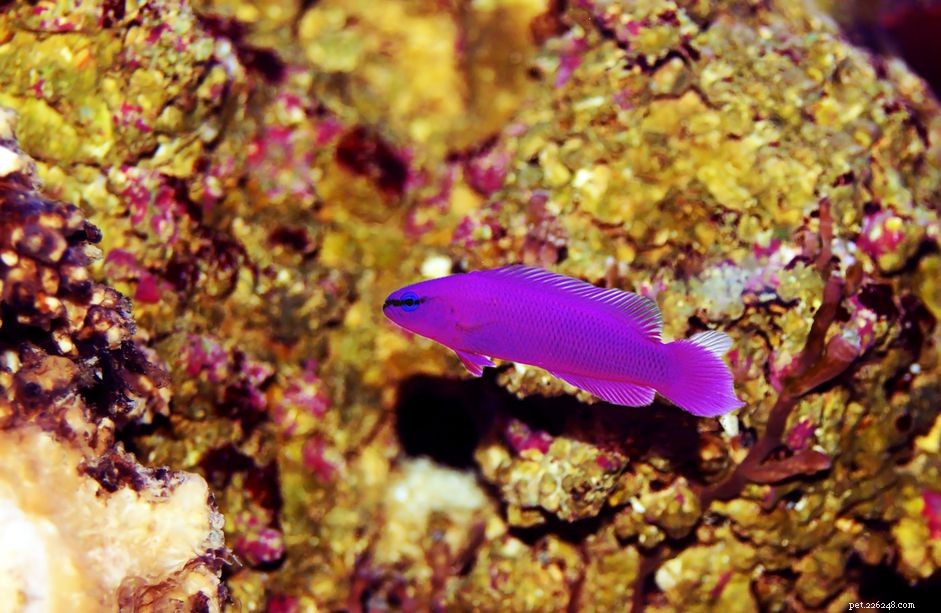
Dottybacks are a wide variety of small, brightly colored saltwater fishes. These fish may be small, but they can be aggressive and will fiercely defend their cave or crevice home. Dottybacks are hermaphrodite fish and employ various reproductive strategies.
Species Overview
Common Name: Dottyback
Scientific Name: Pseudochromis spp.
Adult Size: 3 inches
Life Expectancy: 5 to 7 years
Origin and Distribution
There are many species of Dottyback fishes native to Indo-Pacific coral reefs. Known for their vibrant coloration, dottyback fish are vivid additions to any reef or coral tank.
Many varieties of dottyback have been successfully captive-bred. Even crossbreeds are being seen that do very well in captivity. Always try to purchase captive-bred fish to limit those taken from wild populations.
Colors and Markings
All dottybacks have elongated bodies with various colorations. The Purple or Orchid Dottyback are most commonly known for their bright, vibrant purple color. The Indigo or Electric Indigo are captive hybrids with a bight blue stripe along their lateral midline mixed with white and black stripes. The Neon Dottyback and Purple Stripe Dottyback are a mix of bright colors, broken up both lengthwise and horizontal along the sides of your fish. No matter which species you choose, it will be a bright addition to your tank.
Tankmates
Dottybacks may be small, but they can be aggressive. They do well in many saltwater and reef community tanks, provided they have a hiding place to call their own. It is critical to provide your dottyback with a cave or crevice among the decor that they can defend.
You can add more than one dottyback to a system, but be sure that they do not overlap in territory add them at the same time so one is not more dominant than then other. Some good tankmates for dottybacks include semi-aggressive fish who are too big for small caves, such as the Flame Angelfish, and some species of Tang and Surgeonfish.
Dottyback Habitat and Care
Hiding places are key when adding dottybacks to your aquarium. If they have nowhere to hide, your fish will become stressed and more aggressive towards the other fish in your tank. Since they are not very big, small crevices and caves will suffice, provided there are no other small fish, such as damsel fish, competing for the same spot.
As with most community saltwater tanks, it is vital to provide good water quality. Choose a salt mixture that fits your tank's needs. If your tank does not have corals, you should be using a marine mix, not a coral or reef mix.
Dottyback Diet and Feeding
Since they are carnivores, dottybacks will require a diet rich in meaty products such as dried or frozen shrimp. Since most carnivore diets are frozen, they lose some of their vitamin content, especially water-soluble vitamins like Vitamin C. Complete carnivore pelleted diets are available to help supplement frozen carnivore diets.
As with many saltwater community tanks, a variable diet is key. Depending on the mix of species and diets in your system, you should range your diet towards the herbivore, omnivore or carnivore spectrum.
Gender Differences
Most dottybacks are hermaphrodites. Depending on your species, your fish may be simultaneously hermaphroditic, with both functioning male and female reproductive organs, protogynous hermaphrodites, born female and convert to male, or protandrous hermaphrodites, born male and convert to female.
The common Orchid Dottyback is an example of a protogynous species that starts as all female with the largest fish converting to male. This means that the largest fish in a group or pair will likely be a male.
Breeding the Dottyback
In order to successfully breed your dottyback, you should know which reproductive model your species follows. Be sure to provide them with an appropriate home and feed an appropriate diet. You will need at least two fish of the same species or you may want to breed in a group, known as a harem. Fish will lay eggs in their cave or crevice, with eggs hatching in approximately 4 days.
Larval fish will be easy prey for other fish in the tank, so be sure to breed your dottybacks in a separate breeding tank. It is critical to feed your dottyback larvae an appropriate diet in order to have proper development into fry.
More Pet Fish Species and Further Research
If you like dottybacks, and are interested in compatible saltwater species, check out:
- Convict Tang
- Emperor Angelfish
- Pinktail Triggerfish
- Koi Carp: Comprehensive Species Guide – Colors, Care, and Breeding
- Comet Goldfish: Complete Species Guide for Beginners
- Skunk Cory (Corydoras arcuatus): Essential Profile for Aquarists
- Clown Loach (Chromobotia macracanthus): Comprehensive Species Guide
- Oscar Fish (Cichlidae) – Comprehensive Species Profile
- Comprehensive Guppy Fish Guide: Origins, Care, & Breeding
- Swordtail Fish Profile: Characteristics, Care & Varieties