

Effective Treatment and Prevention of Dog Hot Spots
 In This Article
- What is a Hot Spot?
- Signs of Hot Spots
- Causes of Hot Spots
- Treatment
- How to Prevent Hot Spots
Hot spots are among the most common types of skin problems in dogs. These skin lesions typically occur as a result of a dog excessively licking, chewing, and scratching and are brought on by itching and inflammation. Early detection and proper treatment can prevent hot spots from becoming more serious.
What is a Hot Spot?
The term hot spot is used to describe a localized skin infection. Technically called acute moist dermatitis odisr pyotraumatic dermatitis, hot spots are often caused by scratching and chewing the skin due to itching. The self-trauma leads to a painful patch of red, swollen skin that may be oozing with discharge and matted with hair. Without treatment, more hot spots may develop as the dog continues to scratch and chew at other areas of itchy skin.
Signs of Hot Spots in Dogs
Signs of Hot Spots in Dogs
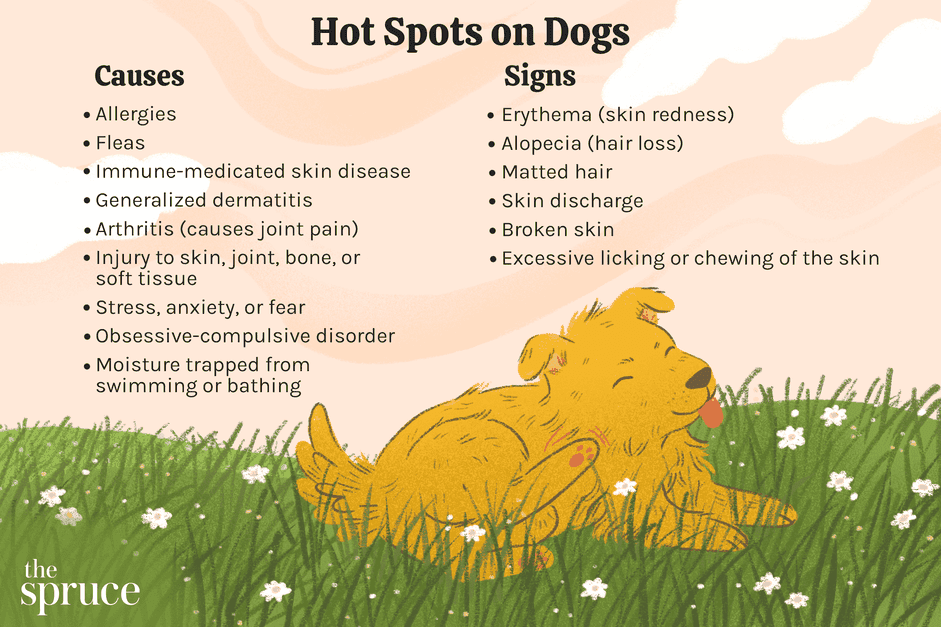
Erythema (skin redness)
Alopecia (hair loss)
Matted hair
Skin discharge
Broken skin
Excessive licking or chewing of the skin
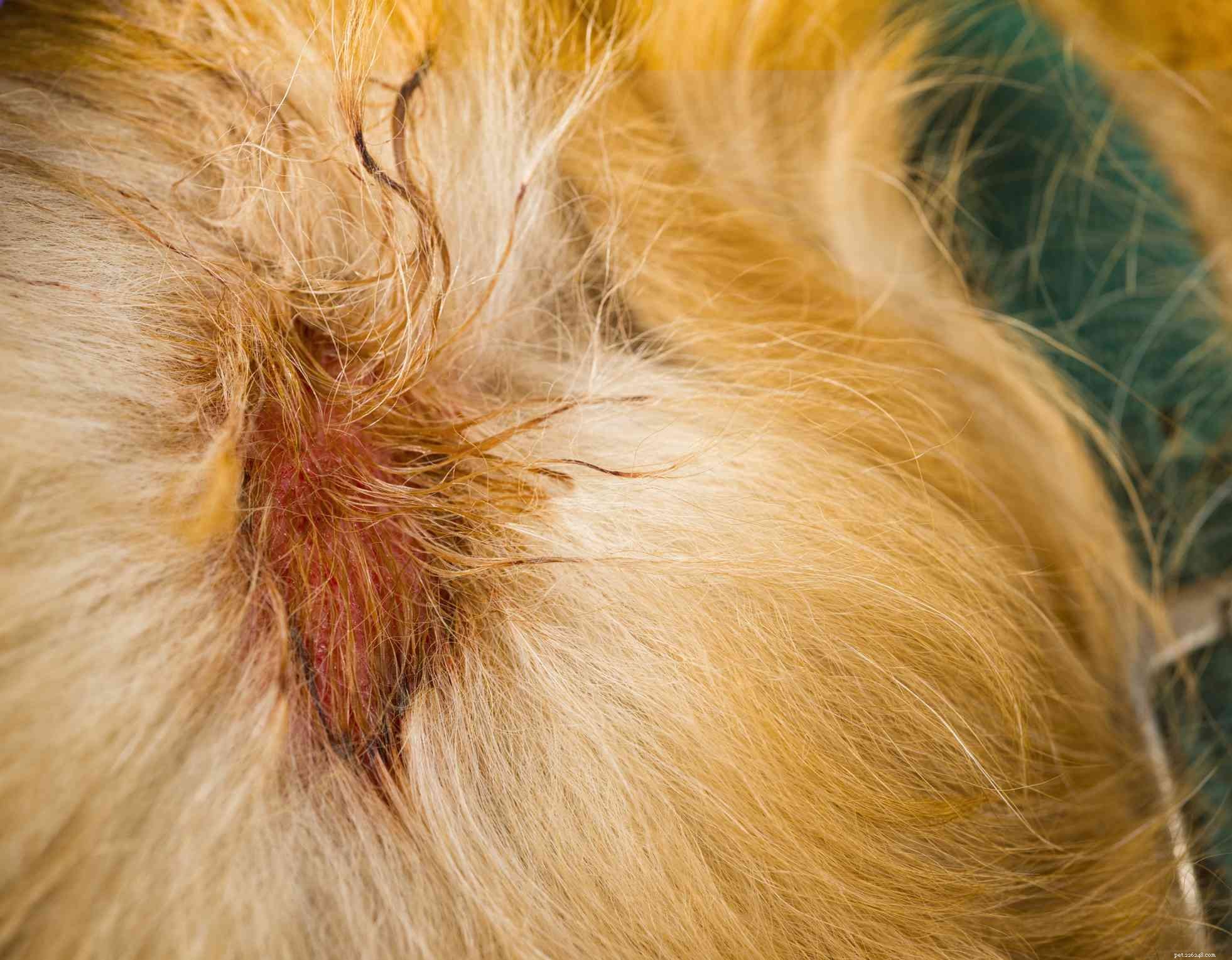
A hot spot often first appears as an area of matted fur or a patch of hair loss with red, irritated skin. The skin may have a shiny or scabby appearance and is often painful to the touch. Most hot spots are moist and may leak a clear or opaque discharge. Most owners notice over-grooming, scratching, licking, and chewing of the skin before the hot spot appears. Dogs typically continue to lick the hot spot due to itching or pain, causing further trauma to the skin.
Causes of Hot Spots in Dogs
Hot spots are typically caused by self-trauma, especially licking and chewing of the skin. Excessive grooming injures the skin, making it more susceptible to infection. Continued licking keeps the area moist, making it an optimum environment for bacteria to thrive and multiply. The hair may become matted over the skin, trapping in moisture and further promoting infection. Eventually, the skin becomes raw and painful.
In most cases, the reason for this over-grooming is itching or pain due to a skin problem. Dogs may also lick the skin over regions of internal pain, like joints. Less commonly, over-grooming is connected to a behavioral problem.
- Allergies
- External parasites, especially fleas
- Immune-medicated skin disease
- Generalized dermatitis
- Arthritis (causes joint pain)
- Injury to skin, joint, bone, or soft tissue
- Stress, anxiety, or fear
- Obsessive-compulsive disorder
- Moisture trapped from swimming or bathing
Dogs with long or thick hair are more likely to develop hot spots if moisture is trapped in their dense coats. These dogs should be thoroughly dried after bathing or swimming.
Treatment
Contact your veterinarian if you notice a hot spot on your dog. The can quickly become worse without treatment, leading to a deeper infection.
Your vet has the best tools and resources to treat hot spots quickly and effectively. Talk to your vet about any steps you can take at home to provide relief until you can get to the vet. You may be able to begin some treatment at home if your dog will tolerate it.
Hot spots are usually painful, so your dog may resist having the area touched. Use caution--pain may cause even the friendliest dog to bite unexpectedly. Go slowly and be gentle to prevent further stress to your dog. If your dog is too upset, then the job is best left to professionals. Some dogs will need to be sedated for the procedure. Here are the steps the veterinary team takes to begin treating hot spots:
- Hair is shaved from the wound with clippers, including the hair around the wound and any long hairs that can touch the wound.
- The area is cleansed with sterile saline and a mild antiseptic like chlorhexidine). The wound should be dabbed gently but not scrubbed.
- The wound is patted dry and left uncovered to air dry.
- An E-collar (cone that looks like a lampshade) or similar collar is placed on the dog to prevent licking and chewing.
Next, the veterinarian examines the clean wound and recommends medications as needed. Further treatment will depend on the severity of the hot spot and the rest of the dog's skin. Vets often use a combination of treatments:
- Topical ointments, sprays, wipes, or creams (may contain steroids, antibiotics, soothing ingredients)
- Antibiotics (oral or injected)
- Antipruritics (anti-itch drugs; usually given orally)
- Antiinflammatories (oral or injected)
Your vet may begin with injectable medication and send home topicals and oral medications to continue at home. Be sure to follow your vet's advice regarding home care and follow-up. Contact your vet if the wound is not healing or your dog shows signs of illness. Be sure to talk to your vet before starting any over-the-counter treatment or home remedy.
Warning
Never give your pet any pain medications, such as aspirin, unless advised by your vet. A vet will know the correct dosage and which dangerous side effects can result.
How to Prevent Hot Spots in Dogs
The best way to prevent hot spots in dogs is to address itching and skin inflammation as soon as it occurs. Dogs typically cause hot spots from licking and chewing itchy or uncomfortable areas of skin. You can prevent this trauma by stopping your dog from licking and chewing. Contact your veterinarian for assistance if your dog is scratching, licking, or chewing the skin. Place an E-collar or similar alternative on your dog to stop the licking until your vet can provide some relief.
- Treating Dry Skin in Dogs: Proven Tips & Remedies
- Treating Canine Pimples: Safe Solutions for Your Dog's Skin
- Effective Solutions for Treating Dry Skin in Dogs
- Effective Treatments for Dry Skin in Dogs: Causes, Symptoms, and Relief
- Effective Home Care for Dry Skin in Dogs: Quick Relief & Prevention
- Effective Pyoderma Treatment for Dogs: Diagnosis, Causes & Care
- Effective Strategies for Treating Dog Mange: A Comprehensive Guide