

Understanding Feline Seizures: Signs, Causes, and Effective Treatments

Seizures affect 1-2% of the feline population and occur as a result of abnormal electrical discharges in the brain. In response to the abnormal brain activity, the clinical manifestations often observed are the loss of voluntary function, drooling, facial twitching, shaking, rigid limbs, paddling/running movements, loss of bowel and urinary control, and the head arching back towards the spine. It's alarming to observe and confusing for your cat.
Keep reading to learn more about seizures in cats, and please seek veterinary care for your cat if it has a seizure.
Types of Seizures
A seizure describes one incident, however if a cat has had multiple seizures then your pet has epilepsy (recurrent seizures).
Seizures are characterized based upon cause:
- Idiopathic seizures-underlying cause is undetermined.
- Secondary epileptic seizure-due to a structural lesion in brain.
- Reactive epileptic seizure-brain reacts to systemic insult or physiological stresses.
To simplify seizures and epilepsy, the causes are due to a primary lesion in the brain (or idiopathic) or secondary-systemic disease or condition. Secondary epilepsy is common in cats, thus diagnostic tests will be required to determine the cause.
Symptoms of Seizures in Cats
Seizures are typically classified as
- Generalized with major activity (grand-mal seizures)
- Partial with mild motor manifestations (limb, facial, whisker twitching)
- Non-motor (tail chasing, floor licking, vocalizing)
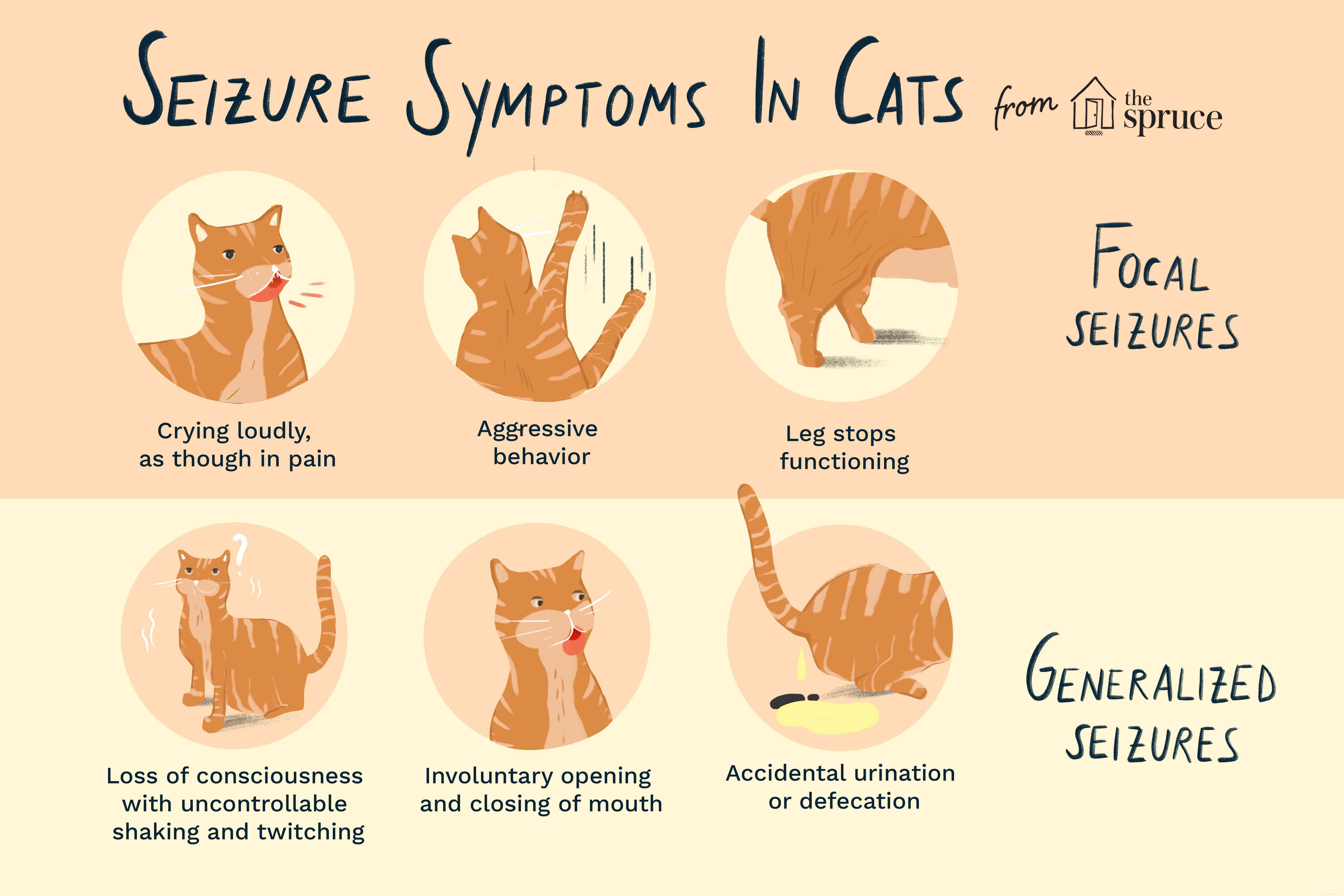
Focal seizures (partial and non-motor seizures) in cats produce symptoms that are different from generalized feline seizures. During a focal seizure, your cat may cry loudly as though it is in pain, behave in an aggressive fashion, even if it is not normally an aggressive cat, salivate or drool excessively, and exhibit other atypical behavior. Sometimes a cat will lose function of a leg, will appear to be chewing and staring off, or be unable to get up, but cats remain conscious during focal seizures. You might also see specific areas of your cat's body (eyelids, mouth, ears) flutter. Focal seizures can also turn into a generalized seizure.
A generalized (grand-mal) seizure causes your cat to lose consciousness during which it may fall over and start twitching and shaking uncontrollably. The severity and length of the seizure can vary greatly. The legs may move in a paddling fashion, as though your cat is trying to swim, or they may become rigid and straight. Your cat's mouth may also open and close involuntarily. Its head may arch back, it may start rolling on the floor until it hits a wall, and it may even urinate or defecate during a seizure.
Causes
The most common cause of seizures in cats is intracranial disease (primary central nervous disease) such as epilepsy, brain tumor, or inflammatory disease. Seizures in cats can be caused by genetic and/or structural abnormalities in the brain, or as a result of systemic disease (liver or kidney diseases).
Toxin exposure can lead to seizures in cats. Flea and tick medication, sprays, dips, and shampoos that contain pyrethrin can cause a cat to have a seizure. This chemical is often used in over-the-counter flea treatments, especially ones that are designed for dogs, it is toxic to cats. When exposed to pyrethroids, cats may initially have muscle tremors, stumble, and start seizing. Other chemical exposures may also affect a cat's nervous system and cause a seizure.
Another reason why a cat may have a seizure is due to head trauma. Cats that are hit by a car, fall from a balcony, or endure other types of injuries to their head can cause damage that results in a seizure. Various illnesses, including brain tumors, viruses, low blood sugar, and parasites can also be at fault for causing a cat to have a seizure.
Some cats can also have epilepsy which means there is no known underlying cause to the seizures.
Diagnosing Seizures in Cats
The success of the treatment is usually dependent on the cause of the seizure. Any animal that has a seizure should be seen and examined by a veterinarian to determine the cause of the seizure. To assist your veterinarian with determining the cause, be ready to provide:
- Age of onset of seizures
- Frequency and length of seizure
- Any associations prior to seizure activity (i.e. after eating, excitement, exposure to toxins or new medications)
- History of head trauma
If you suspect your cat is having a seizure, make sure you do what you can to prevent injury. You should avoid moving your cat if possible, but if they are in an unsafe place, use a blanket to pick them up to avoid being accidentally scratched or bitten while your cat is unaware of what is happening. Keep any other animals in the household away from your cat during a seizure and when it stops having a seizure, give your cat some space since it may be disoriented and scared. If you can, especially in the case of a focal seizure, record the event so you can show your vet.
If your cat has difficulty breathing or has more than one seizure in 24 hours, go to your veterinarian as soon as possible. Call your vet as soon as possible regardless. A prolonged seizure can increase body temperature to a dangerous level and deplete the brain of oxygen.
Once you arrive at the vet, the provider might take the following steps:
- Give medications to immediately stop the seizure if the cat is actively having a seizure.
- Perform a thorough exam and diagnostics (blood work) to rule out easily found causes of seizures.
- Recommend more advanced diagnostics like MRI or cerebral spinal fluid sampling and evaluation.
Treatment
If there is an unknown cause of the seizure, a cat may be treated with medications to manage the frequency and severity of the seizures. A single seizure of short duration may not require treatment but seizures that repeat at frequent intervals are usually treated with a long-term course of an anti-convulsant. Seizures that occur infrequently aren't usually prescribed long-term medications since there are side effects of these medications.
If the seizures are caused by a toxicity, that toxin will need to be removed from the body. This may involve bathing the cat if a topical flea medication was applied containing pyrethrin, causing the cat to vomit if it ate a toxin, or administering certain medications to counteract the effects of the toxin.
Your veterinarian will determine the best course of treatment for your cat.
- Understanding Cat Anorexia: Causes, Symptoms & Effective Treatments
- Cat Diarrhea: Causes, Symptoms, and Trusted Treatment Solutions
- Understanding Cat Coughing: Causes, Symptoms, and Effective Treatments
- Cat Constipation Explained: Causes, Symptoms, and Effective Treatments
- Cat Diarrhea: Causes, Symptoms & Effective Treatment Options
- Understanding Feline Colitis: Causes, Symptoms, and Effective Treatments
- Understanding Canine Seizures: Causes, Signs, and Effective Treatments