

Decoding Your Dog’s Body Language: A Practical Guide to Understanding Their Signals
Dogs communicate their emotions through subtle body cues—ears, eyes, mouth, posture, and tail—without using words. Understanding these signals can prevent fear, stress, and bites, while deepening the bond you share.
While humans often misinterpret a single cue, such as a wagging tail, a holistic approach reveals what a dog truly feels. This guide shows you how to read the full picture and respond appropriately.
Key Takeaways
- Read body language as a whole; avoid focusing on one sign.
- A wagging tail doesn’t always indicate happiness.
- Stress and fear signals appear before growling or biting.
- Early signs of discomfort can prevent escalation.
- Individual differences exist, but most dogs share core patterns.
Relaxed Dog Body Language
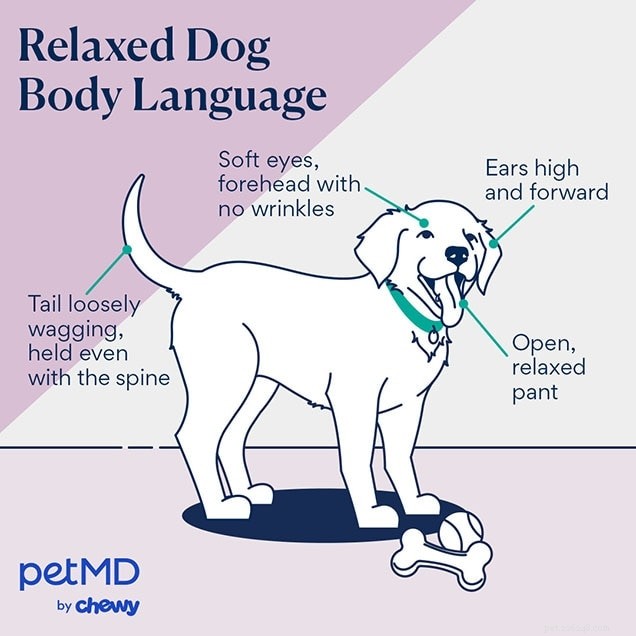
A relaxed dog is alert yet content, with a loose, wagging posture that signals happiness and engagement.
- Ears: Natural position—pointed ears stand straight; floppy ears hang slightly forward.
- Eyes: Soft, relaxed gaze; the forehead remains smooth.
- Mouth: Either closed without tension or open in a relaxed pant when active.
- Tail: Wide, sweeping wag that aligns with the spine; slightly higher when playing.
The overall posture is soft and wiggly, often exaggerated during play.
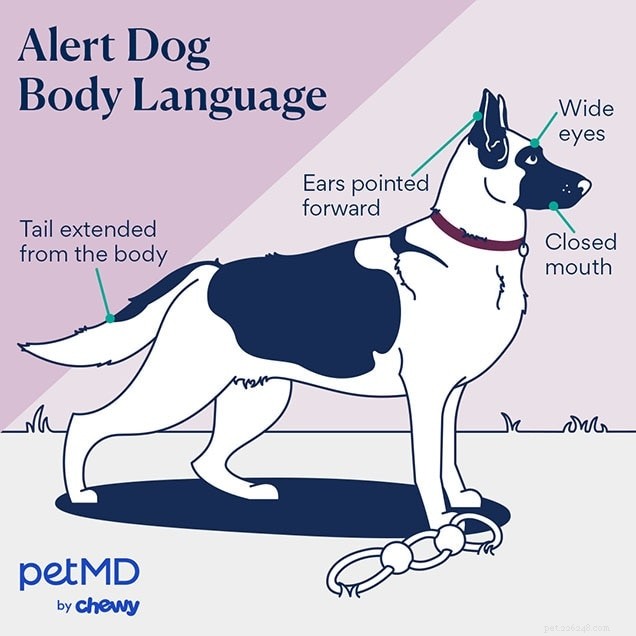
Alert Dog Body Language
Alert dogs assess their surroundings for potential cues.
- Ears: Perked up and pointed forward; check the base for floppy‑ear breeds.
- Eyes: Wide open, focused; the forehead stays relaxed.
- Mouth: Closed without tension around the lips.
- Tail: Extended and even with the spine, sometimes wagging slightly.
The dog’s weight is evenly distributed in a “ready” stance, poised to respond.
Stressed or Nervous Dog Body Language
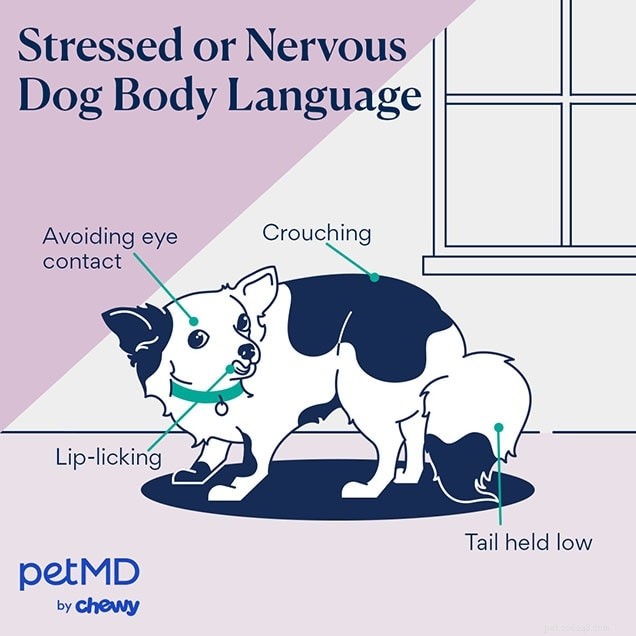
Stressed dogs share many postures with nervous dogs but often display calming signals—behaviors that self‑soothe or reduce tension.
Common calming signals:
- Looking away
- Turning away
- Moving in a curve
- Slow movements
- Yawning
- Freezing
- Lip licking
- Lip smacking
- Sniffing the ground
- Raising one paw
- Scratching
- Shaking off (after getting wet)
Stressed dogs may avoid eye contact, then glance quickly at the trigger. Distressed dogs may yawn exaggeratedly, sneeze, lick lips frequently, shake, or over‑groom.
Fearful Dog Body Language
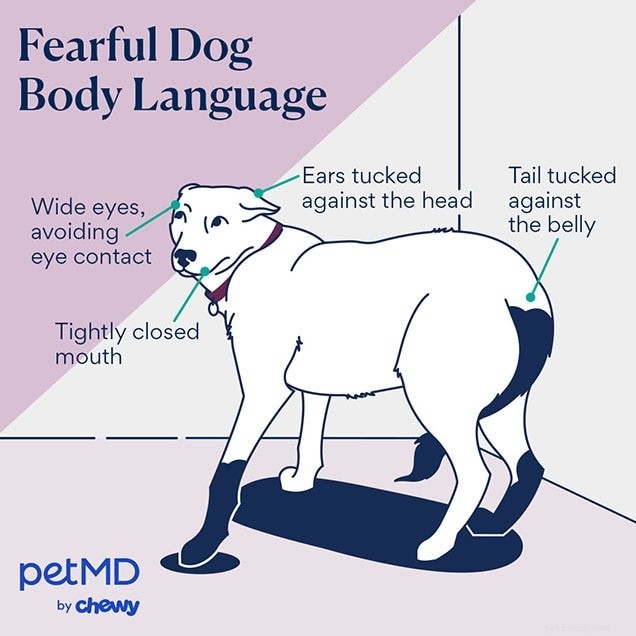
Fearful dogs exhibit stiff, low postures, often hunching and bringing their heads close to the ground.
- Ears: Tucked back against the head.
- Eyes: May glance away but still focus on the trigger; “whale eyes” can appear.
- Mouth: Tight closed with lips pulled back or panting without activity.
- Tail: Tucked against the belly; weight shifted back away from potential triggers.
Overall, the posture is stiff and low, and the dog may become more easily frightened.
Appeasement (Submissive) Dog Body Language
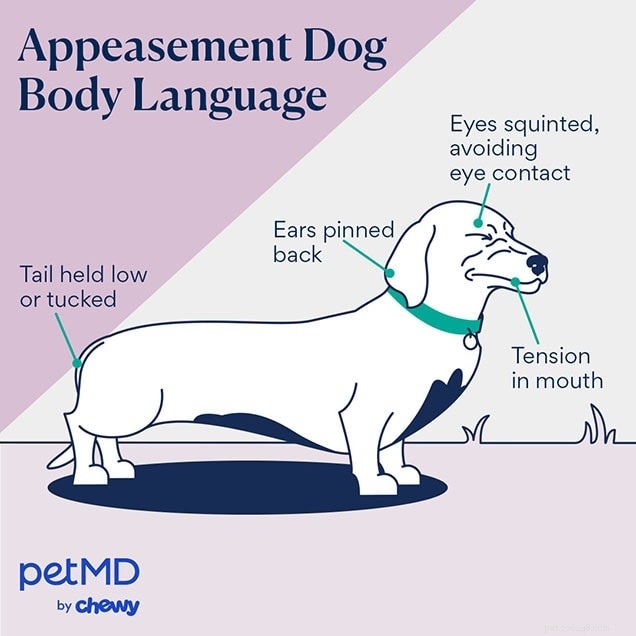
Appeasement gestures signal deference, not submission. Dogs appear smaller to reduce perceived threat.
- Ears: Pinned back.
- Eyes: Avoiding eye contact, often squinting.
- Mouth: Tension around the mouth; lips pulled back to expose teeth in an “appeasement grin”; frequent muzzle licking.
- Tail: Tucked or held low, wagging slowly and tightly.
- Other: May raise a front paw; movements are slow, weight shifted backward.
Aggressive Dog Body Language
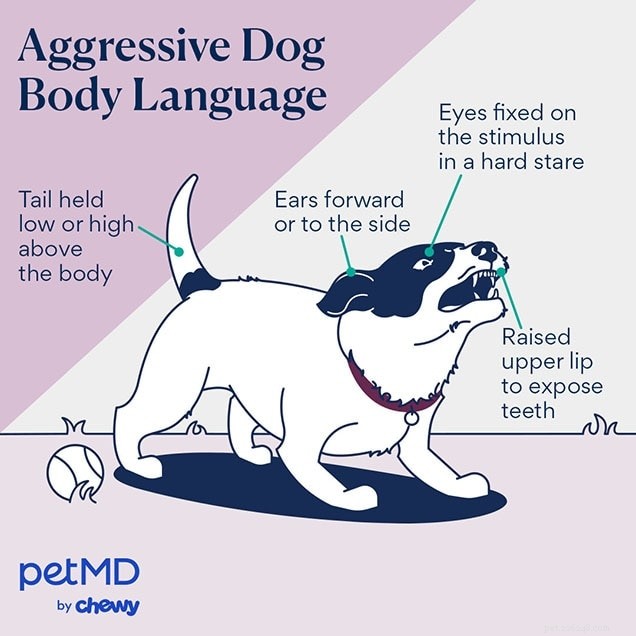
Aggression ranges from predatory to fear‑based. Aggressive body language signals readiness to react.
- Ears: Position varies with context: fearful dogs hold ears back; confident aggressors point ears forward or to the side.
- Eyes: Hard, unwavering stare; forehead wrinkles.
- Mouth: Tension; wrinkles or raised upper lip exposing teeth.
- Tail: Context matters: fearful dogs may hold tail low before aggression, raise it during the act; confident aggressors hold it high, possibly twitching in a tight wag.
- Posture: Rigid, tense; fur may rise (piloerection) along shoulders and base of the spine; weight shifts forward in a stiff “ready” stance.
By interpreting these signals as a whole, you can understand your dog’s true feelings and respond safely.

WRITTEN BY
Victoria Schade
PetMD Editorial
- Choosing the Right Pets for Your Kids: A Guide to Safe and Loving Companions
- Meet Duke: The Heartwarming Journey of a 6-Year-Old Rescue Ragdoll
- Debunking the 4 Biggest Myths About Raising Sheep
- Understanding Cat Bunting: Why Cats Rub Their Heads and What It Reveals About Their Mood
- The Secret of a Cat's Rough Tongue: Why It’s Essential for Grooming
- 11 Common Saltwater Aquarium Mistakes – Avoid Them Today
- Do Dogs Realize When You're Laughing at Them?