

Beyond a Flock: The Fascinating Collective Nouns That Define Bird Groups
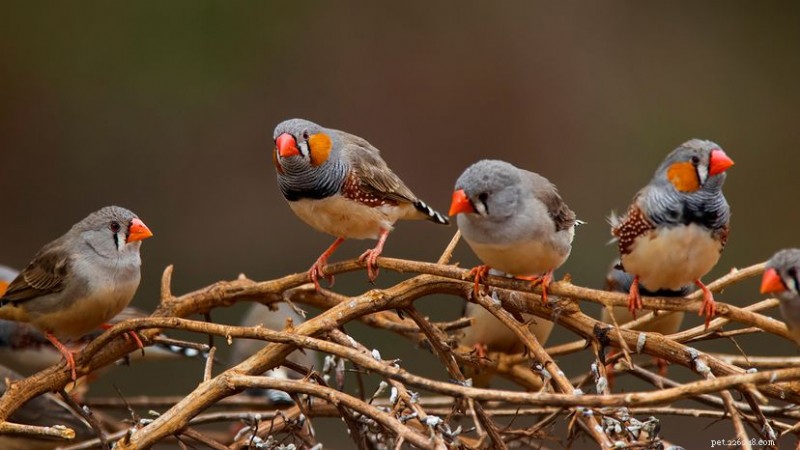
Have you ever wondered what you call a gathering of birds? While most people default to the generic “flock,” the English language boasts a colorful array of collective nouns that capture the unique characteristics of different species.
Common Collective Nouns for Birds
The term “flock” remains the go‑to label for many species in flight or foraging together, such as starlings, finches, pigeons, and sparrows. Yet, English offers many more evocative alternatives. For example, a group of crows is famously called a murder, while geese are referred to as a gaggle.
Other notable names include a murmuration of starlings, a parliament of owls, and a watch of nightingales. These terms not only describe the animals but also hint at their behavior or the myths that surround them.
Origins of These Group Names
Many of these descriptors date back to 15th‑century England and were popularized in “The Book of Saint Albans.” The book compiled poetic groupings for animals, primarily for entertainment rather than scientific accuracy.
Names like a “murder” of crows likely stem from cultural associations of crows with death and mischief. Similarly, a “conspiracy” or an “unkindness” of ravens reflects folklore more than ornithology. In contrast, terms such as a “colony” of seabirds or a “brood” of hatchlings have practical origins and are still used by birdwatchers and scientists today.
Some of the Strangest Bird Group Names
Here’s where the list gets truly creative:
- A wake of vultures (when they’re feeding)
- A trembling of finches
- A descent of woodpeckers
- A scold of jays
- A cast of falcons
- A charm of hummingbirds
- A conspiracy of ravens
- A mischief of magpies
- A plague of grackles
- A confusion of guinea fowl
- A lamentation of swans
- A quarrel of sparrows
While some of these names, such as a “plague” of grackles, are perfect for trivia, others have roots in literature or age‑old poetic tradition.
Do People Really Use These Group Names?
In everyday science and birdwatching circles, professionals prefer straightforward terms like flock, colony, or brood. The more colorful collective nouns appear primarily in literary works, classroom posters, and trivia games.
For instance, the phrase “murder of crows” is a common party or pub quiz favorite, whereas a “group of crows” is the more precise scientific choice. Similarly, the evocative “unkindness of ravens” survives in folklore and popular culture, thanks to its eerie resonance.
This article was produced using AI assistance and then meticulously fact‑checked and edited by a HowStuffWorks editor to ensure accuracy and credibility.
- Milksnake Care Guide: Raising Sinaloan Milksnakes & Related Species
- Pet Insurance 101: Do You Need It? Key Factors to Consider
- The Origin of Domestic Cats: Tracing Their Ancient Roots
- Rescue and Life‑Saving Surgery for Abandoned Kitten Spencer and Family
- 107 New York-Inspired Dog Names for Your Furry Friend
- Why Does My Cat Ignore Me When I Call? Expert Answers from a Veterinarian
- Understanding Cerebellar Hypoplasia in Dogs: Causes, Symptoms, and Care