

15 U.S. Hawk Species – Their Habitats, Diets, and Iconic Features
Hawks rank among North America’s most celebrated raptors, rivaling even the bald eagle in majesty and versatility. Thanks to the continent’s diverse climates, a wide range of hawk species thrive across the United States, each adapted to specific ecological niches.
Red‑Tailed Hawk
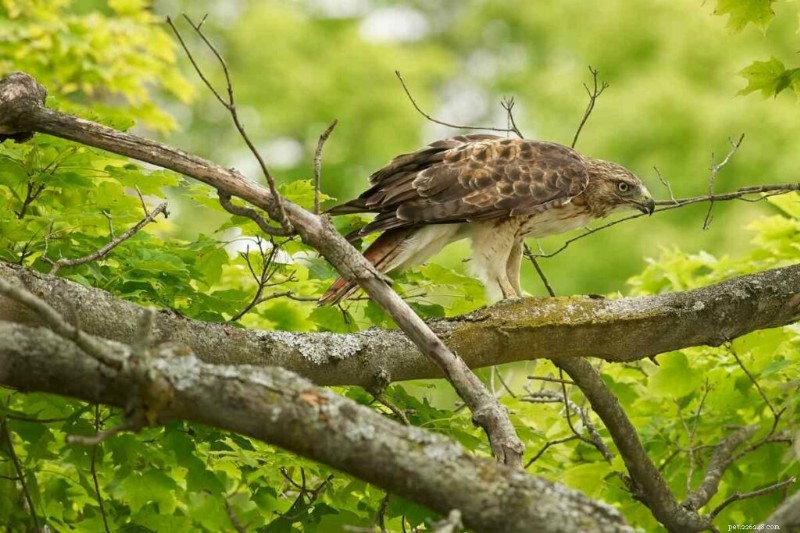
The Red‑Tailed Hawk is the most frequently encountered raptor in North America. With its unmistakable white chest and reddish tail, it dominates skies from open fields to suburban backyards. The bird relies on soaring thermals and tall perches—natural cliffs, mature trees, and even urban towers—to spot prey such as rodents, birds, snakes, and insects.
- Bats
- Snakes
- Squirrels
- Small rodents
- Rabbits
- Frogs
- Insects
- Birds
Red‑tailed hawks breed throughout the lower 48 states and can also be seen in Alaska during the nesting season.
Fun fact: The call of this species is often used in film to mimic a bald eagle’s quieter vocalization.
Red‑Shouldered Hawk
Characterized by its russet shoulders and barred chest, the Red‑Shouldered Hawk prefers wooded areas with an open canopy. It hunts by gliding silently from above and pouncing on small mammals or amphibians.
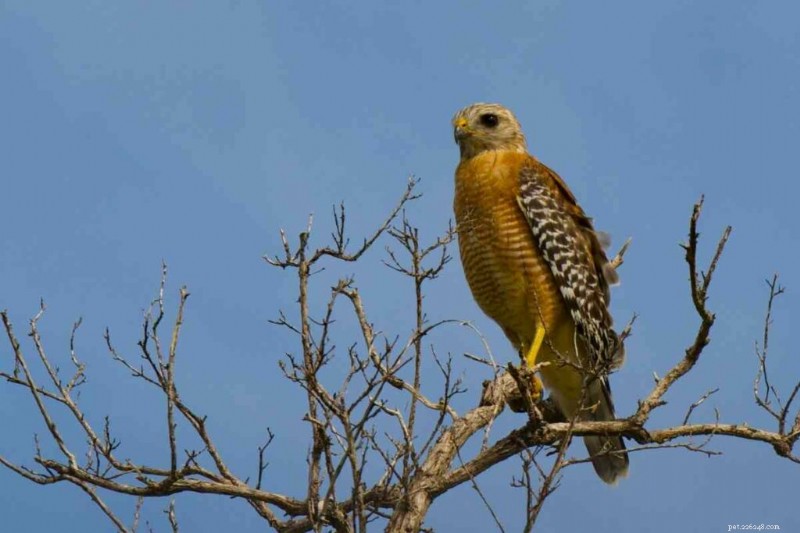
These raptors are year‑round residents of the American South and California’s coast, with winter sightings in eastern California and southwestern Oregon.
White‑tailed Hawk
Large and graceful, the White‑tailed Hawk is recognized by its pure white tail feathered with a black tip. It inhabits the grasslands of southern Texas and preys mainly on small mammals.
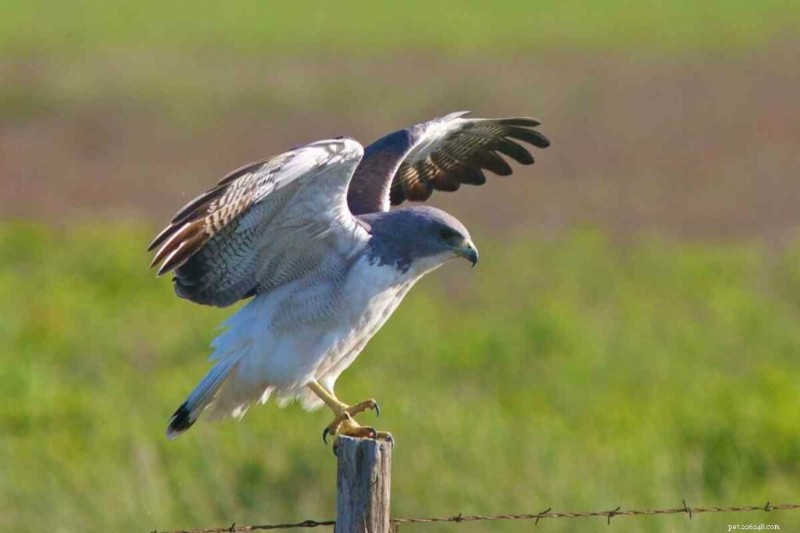
Its high‑pitched call ends with a series of “ke‑ke‑ke” notes, and it frequently re‑uses nesting sites, producing massive nests that can reach a meter in length.
Ferruginous Hawk
One of the largest hawks in North America, the Ferruginous Hawk sports feathered legs down to its claws—a rare trait shared only with the Rough‑Legged Hawk. The species appears in two color morphs: a light reddish‑brown form and a darker chocolate form.
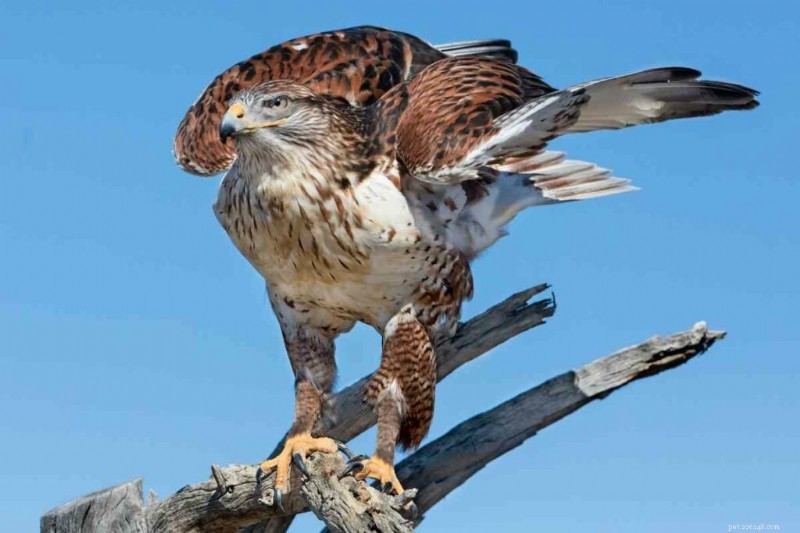
Its wide-ranging habitat includes deserts and open plains where it hunts prairie dogs and other small mammals.
Cooper’s Hawk
Medium‑sized with broad wings and a long tail, Cooper’s Hawk is distinguished by its speckled chest and amber eyes. Renowned for its agility, it often preys on songbirds, making it a familiar sight near feeders.
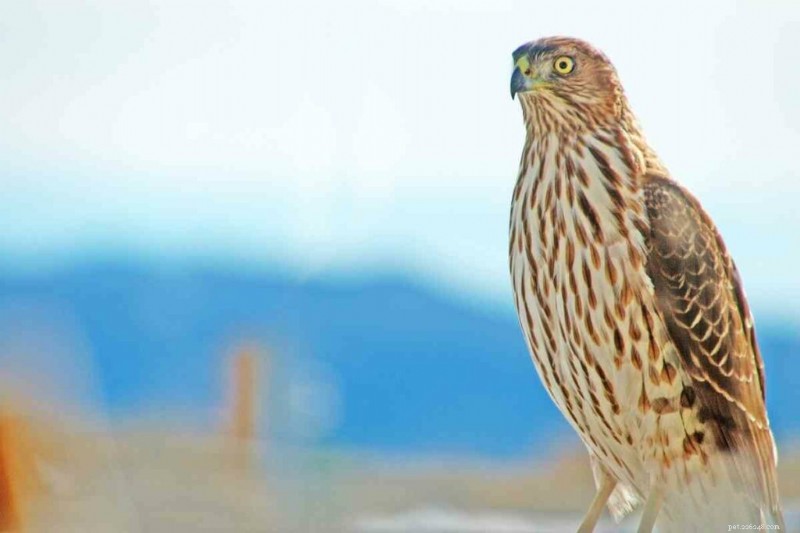
Urban expansion has spurred a noticeable population increase, and the bird is now common across all 48 lower states year‑round.
Sharp‑Shinned Hawk
Though small, this hawk is an impressive hunter. Females are larger than males and both exhibit a speckled orange chest that fades into a pale belly.
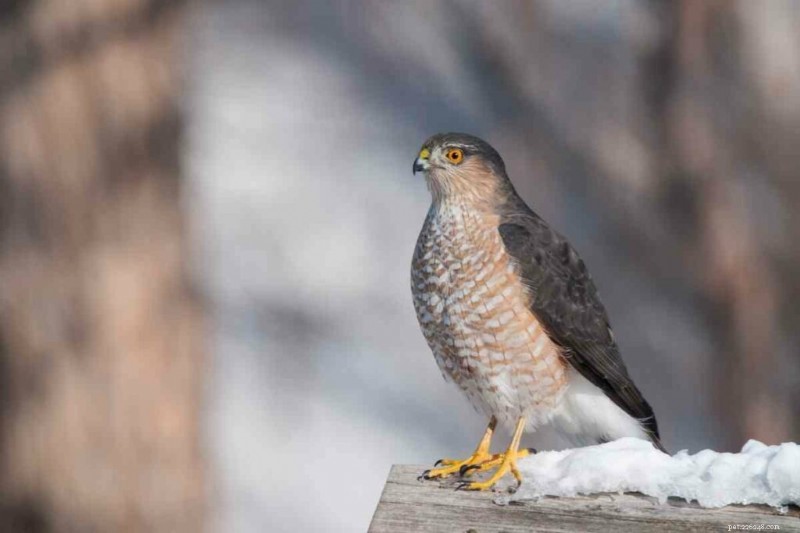
It breeds in the northern United States and migrates south for winter, often remaining year‑round in warmer areas. Its diet consists mainly of songbirds, which it catches mid‑air.
Short‑tailed Hawk
Primarily a tropical species, the Short‑tailed Hawk now inhabits Florida and the Mexico‑Arizona border. It rarely perches in open areas, making sightings uncommon.
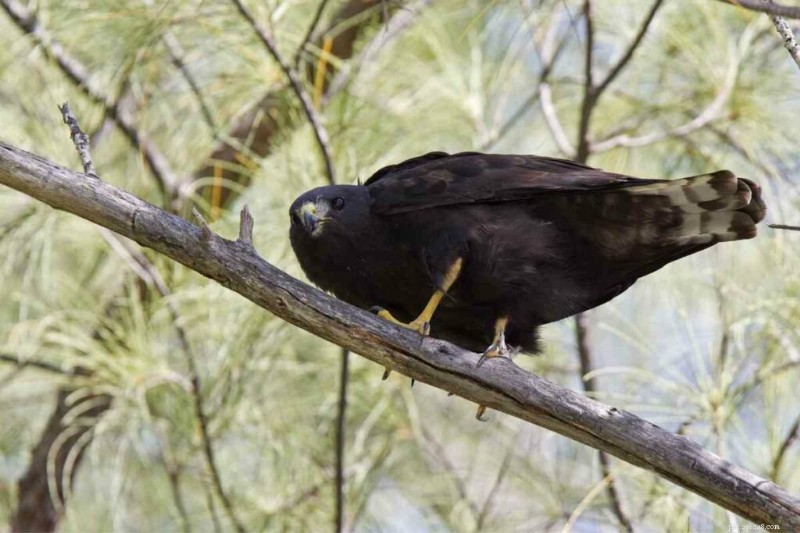
Unlike many Buteo hawks, it preys on small birds but has a lower hunting success rate. Its attack involves a brief pause in flight before diving straight to its target.
Zone‑tailed Hawk
With sleek gray‑black plumage, the Zone‑tailed Hawk is a distinctive presence in the Southern Western U.S. during breeding season.
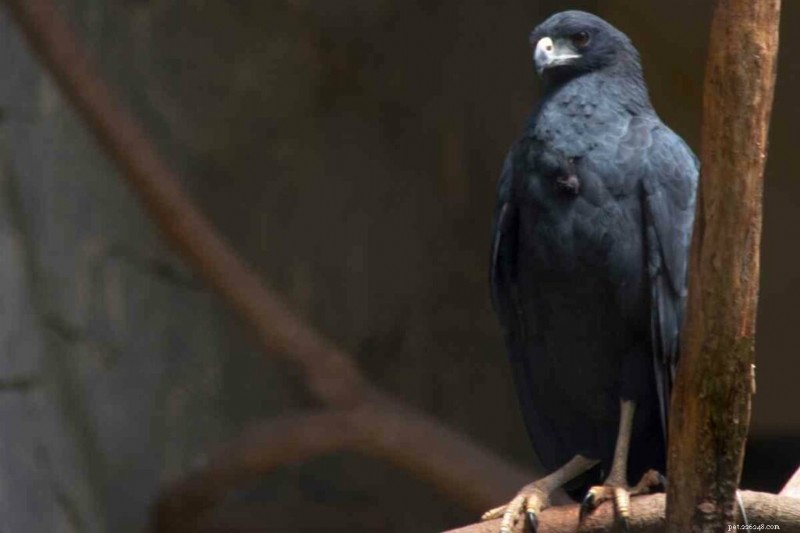
It prefers shrublands and wooded canyons, and its hunting strategy resembles that of the Turkey Vulture, allowing it to snatch unsuspecting prey. During mating displays, it performs dramatic dives and loops.
Northern Goshawk
This powerful raptor with blood‑colored eyes and a dark head is a rare sight in western U.S. and Alaska. It nests in towering coniferous trees and hunts within dense woodlands.
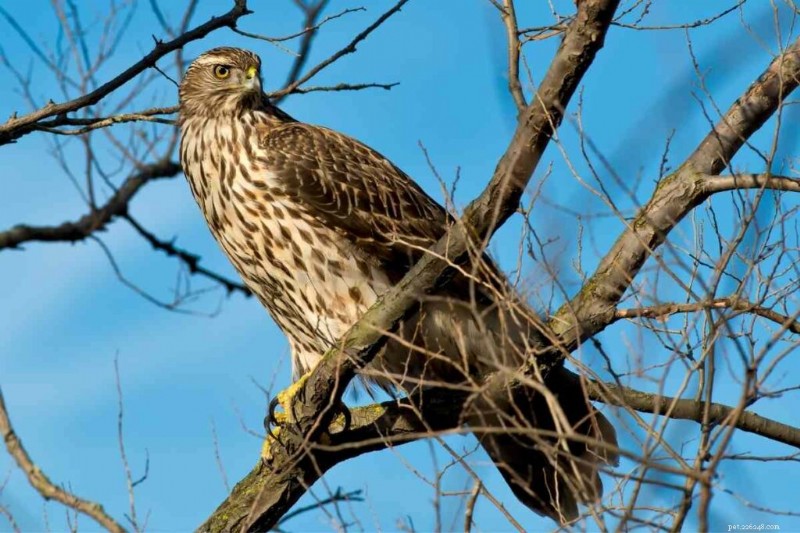
Highly territorial, it will aggressively defend its nest from any perceived threat—including humans.
Swainson’s Hawk
Swainson’s Hawk undertakes one of the longest migrations among U.S. raptors, traveling from Argentina to the U.S. west and eastern Alaska for breeding. In the breeding grounds, it hunts reptiles, rabbits, insects, and rodents.
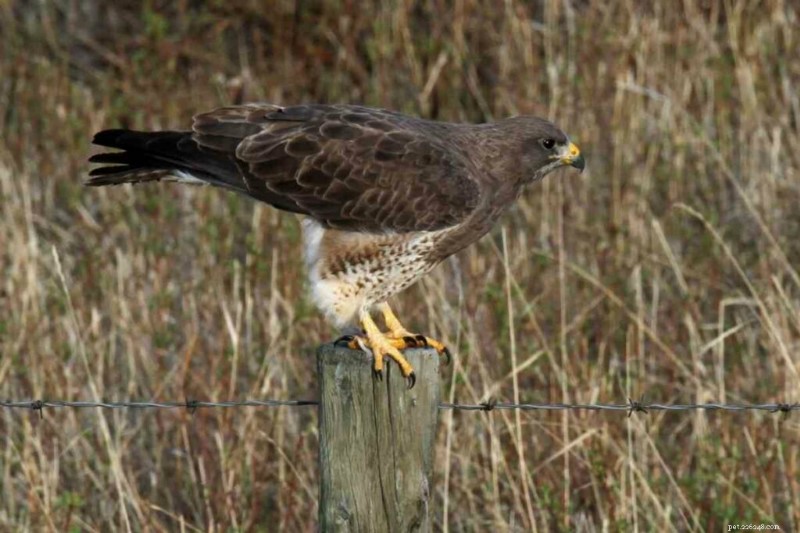
During fall, this species joins the grand migration of raptors across North America.
Harris’s Hawk
With long legs that resemble falconry, Harris’s Hawk is a southwestern U.S. resident known for hunting cooperatively. It ranks among the few non‑migratory raptors that live and feed in packs, with priority based on social hierarchy.
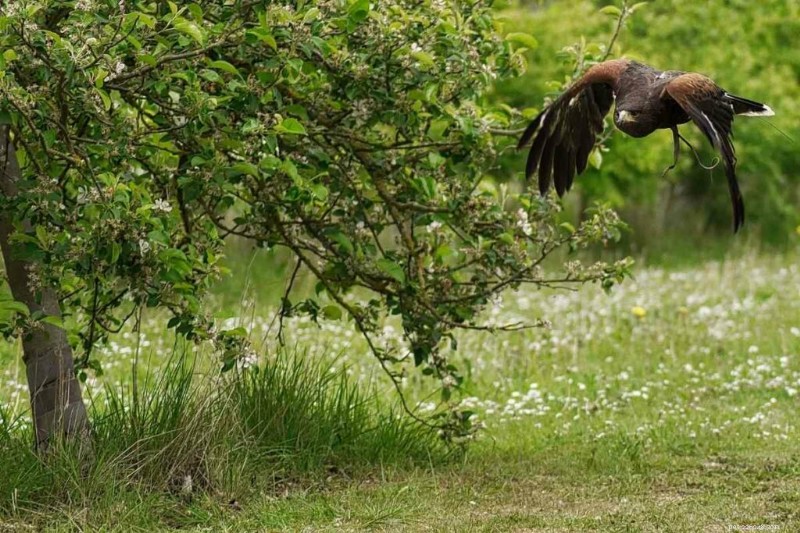
Its preference for desert lowlands has shifted, with a growing urban population due to consistent food sources.
Rough‑Legged Hawk
Like the Ferruginous, the Rough‑Legged Hawk has feathered legs down to its claws, a unique adaptation for Arctic climates. It breeds in summer on the tundra and later migrates south.
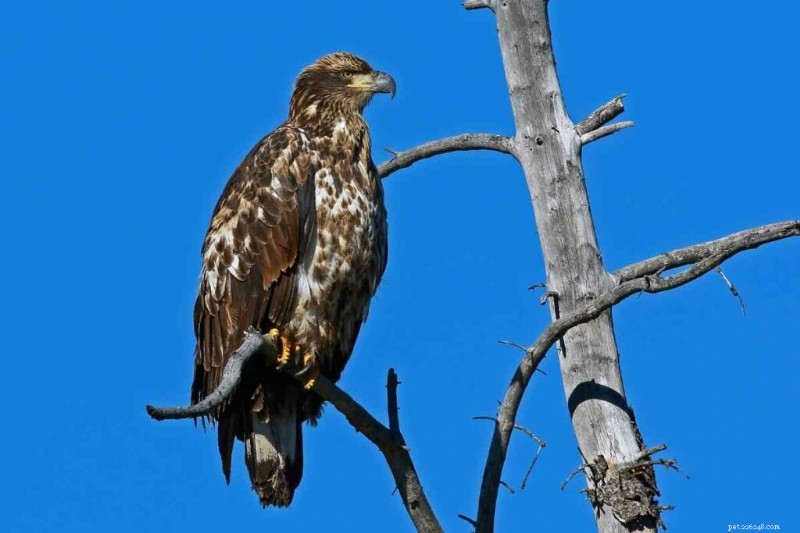
Using a characteristic hovering approach, it scouts from perches before diving to capture prey.
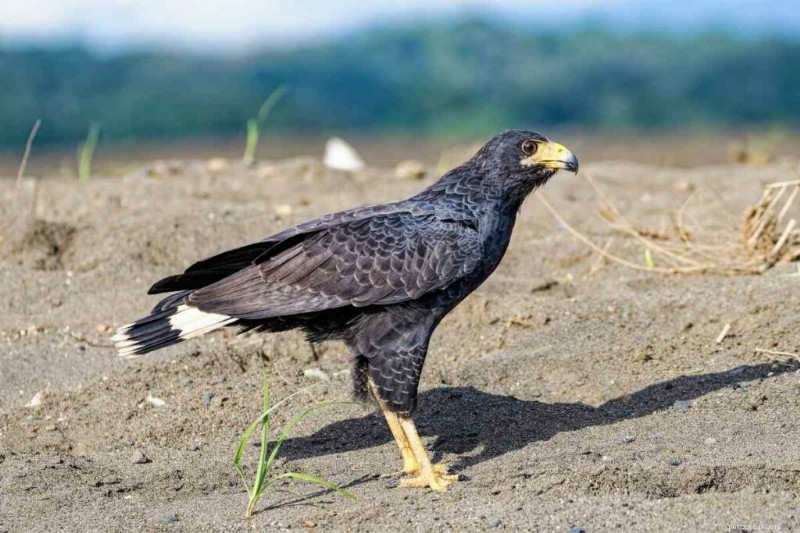
Common Black Hawk
Found in New Mexico, Texas, Arizona, and nearby regions during breeding, the Common Black Hawk sports a jet‑black body with white tail bands. It frequents shallow waters to hunt crabs, frogs, snakes, and small fish.
Broad‑Winged Hawk
Stout and heavily built, the Broad‑Winged Hawk blends into deep forest understories with its mottled chest. It is a long‑distance migrant, wintering in Central America and spending summer months in the eastern U.S.
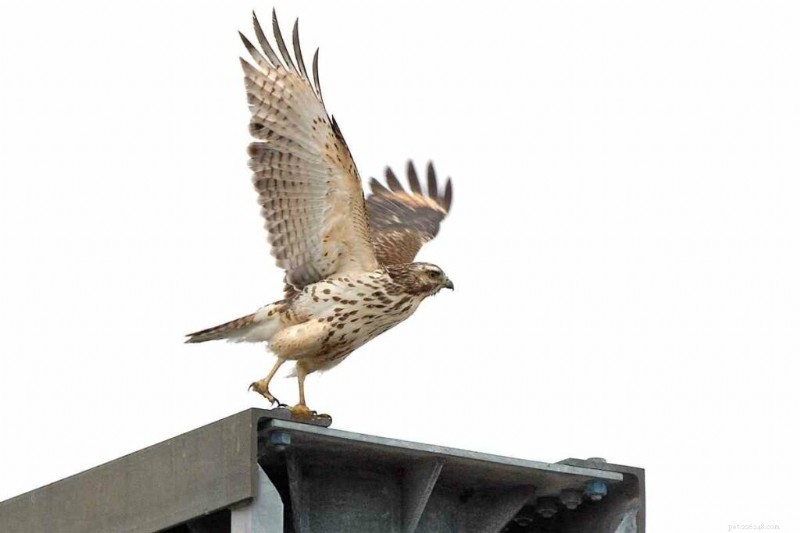
It hunts a varied diet ranging from snakes to small mammals, patiently stalking before striking.
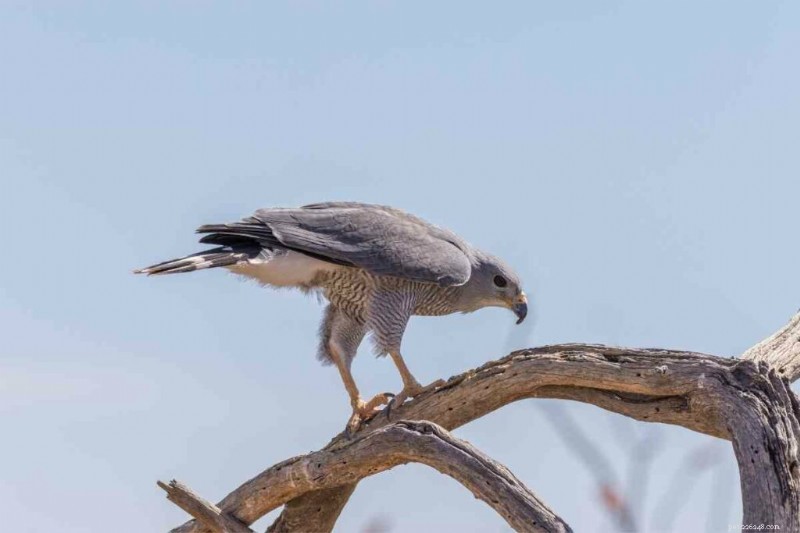
Gray Hawk
A smaller, neotropical species that extends into southern Arizona, Texas, and New Mexico. Known for spectacular aerial displays during breeding, the Gray Hawk is adept at thermals and foraging for lizards and small animals.
Final Thoughts
Across the United States, hawks display remarkable speed, vision, and hunting strategies that make them among the world’s most formidable aerial predators. Whether soaring over open plains or nesting in urban trees, each species contributes uniquely to the ecological tapestry of America.
You Might Also Read
- Why Do Owls Hoot During the Day?
- Wombat Facts for Kids (Perfect for School Homework and Projects)
- Can Bats Take Off from the Ground?
- 5 Positive Cat Behaviors That May Seem Naughty but Enhance Their Well‑Being
- Top 5 Dog Breeds with the Longest Lifespan
- Why Do Dogs Constantly Seek Physical Contact?
- Hot vs. Cold: What Your Cat or Dog Prefers
- Why Dogs Sit on Babies: Understanding Canine Behavior & Ensuring Family Harmony
- What Budgie Chirps Reveal About Their Mood and Health
- A Trusted Guide to Safely Rehome Your Dog