

What Do Baby Cardinals Eat? A Complete Guide to Their Young Birds' Diet
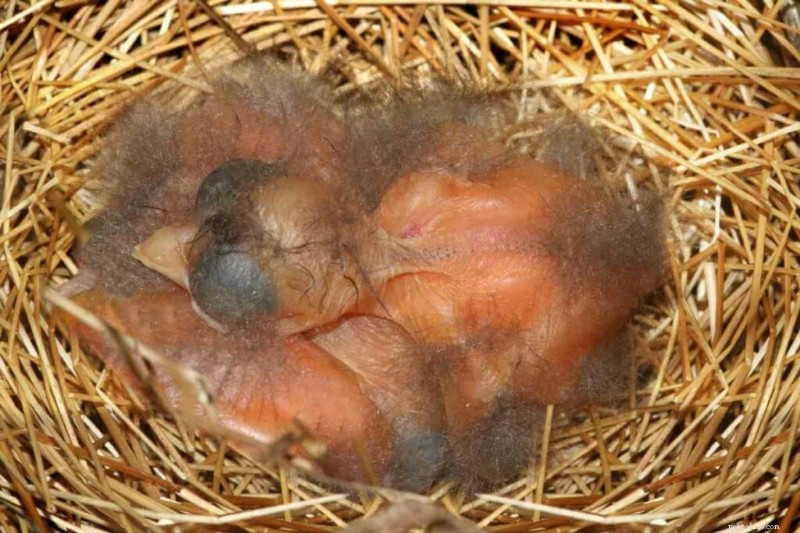
Baby cardinals have dietary needs that differ from their adult counterparts. Understanding what they eat and how they receive nutrition is essential for anyone studying or observing these vibrant birds.
In short, a fledgling cardinal’s diet consists mainly of insects—such as grasshoppers, beetles, leafhoppers, katydids, and caterpillars—paired with high‑fat seeds like safflower and black‑oil sunflower. Parents provide this nutrition by regurgitating freshly‑captured food into the mouths of their hatchlings.
Below we explore key questions about the foods that baby cardinals consume and how their diets support rapid growth:
- Which insects do baby cardinals eat?
- Which seeds are preferred?
- How do parents deliver food?
- How much do the chicks need?
- How does their diet differ from adults’?
Which Insects Do Baby Cardinals Consume?
Insects are the primary protein source for fledglings, fueling muscle development and overall growth.
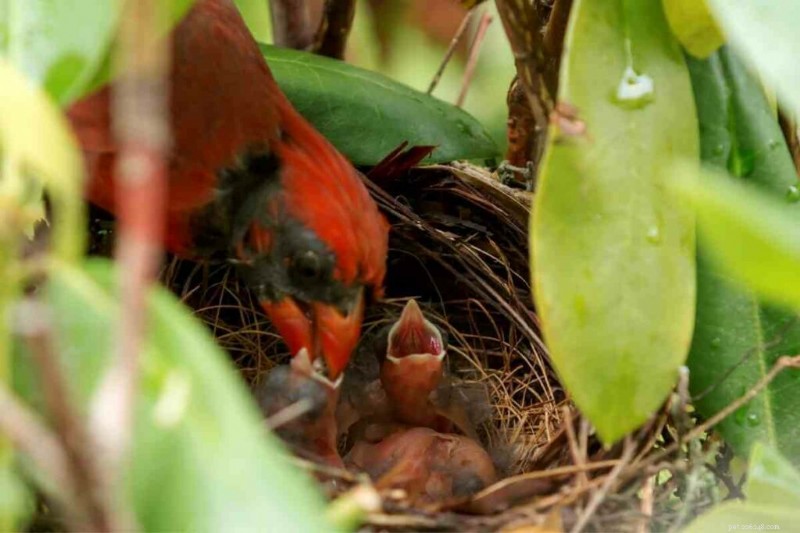
Common prey includes:
- Grasshoppers
- Beetles
- Leafhoppers
- Katydids
- Caterpillars
These insects supply a balanced mix of carbohydrates, fats, proteins, calcium, and iron—crucial for surviving cold weather and rapid growth.
Nutrition of Grasshoppers, Leafhoppers, and Katydids
These insects are rich in carbohydrates, healthy fats, and proteins, helping fledglings build energy reserves for the harsh seasons ahead.
Nutrition of Beetles
Beetles provide dense protein along with significant calcium and iron, supporting bone development and metabolic functions.
Nutrition of Caterpillars
Caterpillars are especially high in protein and iron, making them an ideal supplement for growing chicks.
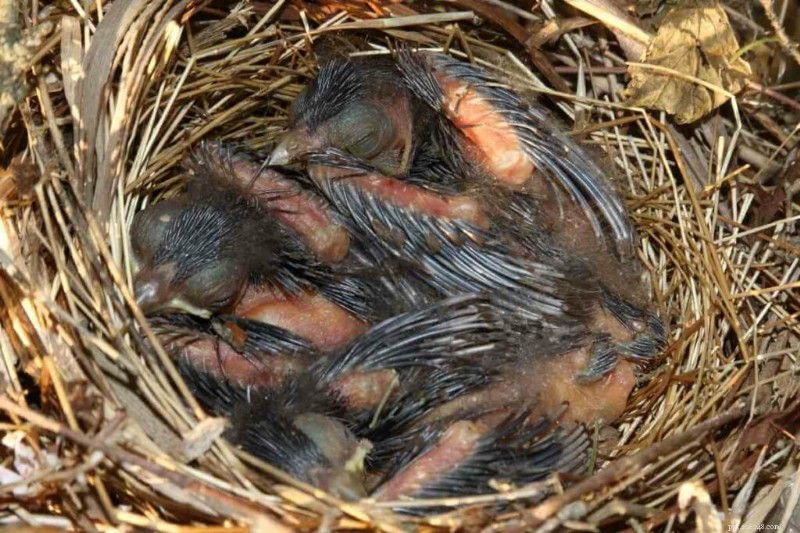
Gardeners who wish to attract cardinals often plant nectar‑rich foliage—such as butterfly bushes, passionflower, milkweed, and snapdragon—to support a robust caterpillar population.
Which Seeds Do Baby Cardinals Prefer?
Seeds are the other cornerstone of a fledgling’s diet. Parents typically offer safflower and black‑oil sunflower seeds, which are high in fat and protein.
Occasional seed types—like box elder or ragweed—may appear, but sunflower and safflower dominate.
Note: Adult cardinals consume a far broader seed variety, which we’ll cover later.
Nutrition of Safflower Seeds
Safflower seeds deliver essential fats and proteins that help fledglings bulk up and strengthen their musculature.
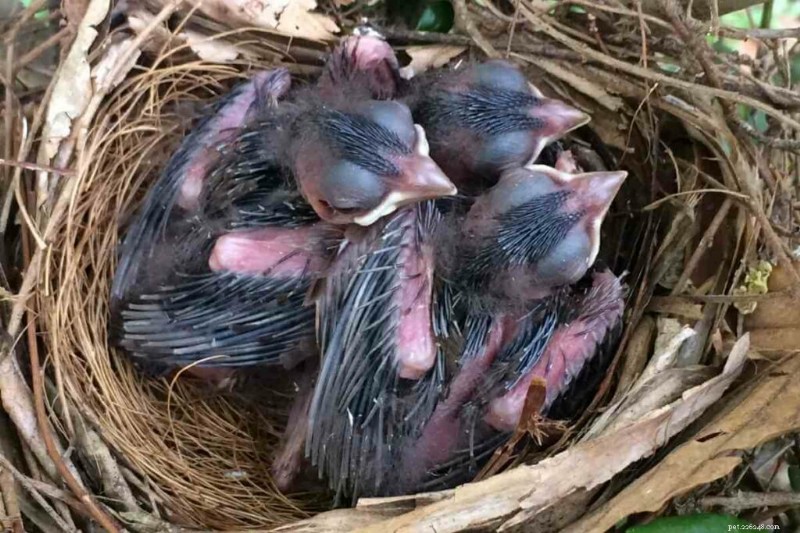
Many bird feeders and garden beds include safflower seeds to attract cardinals and support fledgling nutrition.
Nutrition of Black‑Oil Sunflower Seeds
These seeds have a uniquely high oil content and are rich in vitamins E and B, potassium, calcium, protein, and iron. Their thin, easy‑to‑crack shells make them ideal for regurgitation into a chick’s mouth.
How Parents Deliver Food to Their Young
Because fledglings cannot leave the nest during the early days, they rely entirely on their parents for nourishment.
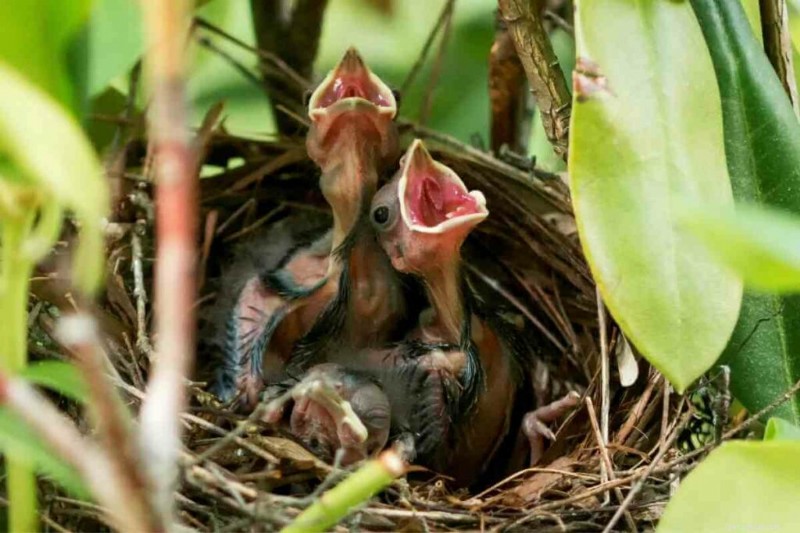
Parents capture insects and seeds, then regurgitate a mixture of partially digested food into the chicks’ mouths—a process that ensures the young receive the most digestible nutrients.
Once fledglings reach the fledgling stage, they begin to forage independently.
Feeding Frequency and Volume
Baby cardinals eat every few minutes—typically 3 to 8 times per hour—to maintain their delicate health. As they age, the feeding frequency drops: around five days old, the parents reduce food intake by half. By six to seven weeks, fledglings start gathering seeds and insects on their own.
Comparing Baby and Adult Cardinal Diets
The primary differences lie in feeding frequency, variety, and independence.
While fledglings feed continuously throughout the day, adults pause feeding for a few hours—often around dusk. Adult cardinals consume a wider spectrum of foods, from berries and fruit to nuts, grains, and even cracked corn.
Conclusion
Baby cardinals depend on frequent, protein‑rich meals of insects and high‑fat seeds delivered via parental regurgitation. Understanding these nutritional needs is key for anyone working to support or observe these remarkable birds.
You Might Also Read
- Do Cardinals Kiss? (Cardinalidae Birds)
- Where Do Cardinals Sleep at Night?
- How to Raise and Care for a Baby Parrot
- Sonny: Ragdoll Kitten of the Month – A Soft‑Toned Star from Sacramento
- Expert Guide to Brushing Your Dog’s Teeth: Tips & Techniques for a Healthy Smile
- Top 5 Safe Wound Care Products Every Dog Owner Should Stock
- Can Dogs Detect Savory Flavors? Insights into Their Taste Capabilities
- Trusted Labrador Retriever Puppies in Massachusetts – 2022 Breeder Directory
- How to Use a Dog Car Harness: A Step‑by‑Step Guide for Safer Road Trips
- Understanding Feather Plucking: Causes, Consequences, and Care for Birds