

How Much Water Do Parakeets Need Daily? Expert Guide for Healthy Hydration
Parakeets are beloved for their playful nature and low upkeep, but their water habits are often misunderstood. Providing a bowl of water is necessary, yet it’s only part of the equation. Understanding their true hydration needs ensures a vibrant, thriving companion.
Unlike larger parrots or finches, parakeets consume less water—roughly 3–5% of their body weight per day, usually 2–3 drinking sessions. They thrive on clean, fresh water available 24/7.
How Much Water Do Parakeets Need Each Day?
Adult parakeets weigh about 30–40 g and stand 18–20 cm tall. Because of their small size, they naturally require less fluid. The 3–5% body‑weight rule is a reliable benchmark: a 35‑g bird needs about 1.1–1.8 ml of water daily.
Their lack of sweat glands means they lose minimal water through perspiration, reducing overall demand. They typically drink twice or thrice a day, supplementing any moisture gained from fresh fruits and vegetables.
How Long Can Parakeets Go Without Water?
Although parakeets can survive 1–2 days without water, it’s far from ideal. Dehydration risks rise sharply after 24 hours, especially in warm or dry environments.
Signs Your Parakeet Is Dehydrated
Physical Symptoms
Check for sunken, dull eye sockets; wrinkled skin; and dull or discolored feathers. A dry, sticky mucous membrane inside the mouth also signals thirst.
Dropping Quality
Normal droppings are firm and well‑formed. Mild dehydration may produce softer droppings, while severe dehydration results in very dry or absent droppings.
Skin Elasticity Test
Gently pinch featherless skin. If it does not quickly snap back to its original shape, your bird may be dehydrated.
Behavioral Changes
Notice a drop in activity: reduced singing, less play, increased sleeping, or aversion to food. These symptoms can overlap with other illnesses, so monitor closely.
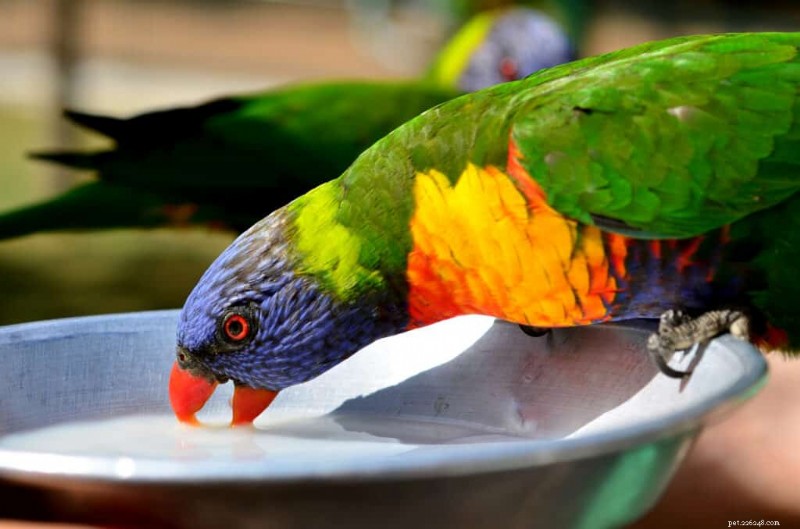 Two Native Australian Rainbow Lorikeet drinks from feeding plate.
How to Encourage Your Parakeet to Drink
Provide Clean, Fresh Water
Birds are picky; keep the bowl spotless and change water daily to avoid contamination from seeds, feathers, or droppings.
Flavor It Safely
Enhance palatability by adding a teaspoon of honey or fresh fruit juice (no additives or added sugar) to a half‑pint of water.
Keep Water Fresh
Stale water deters drinking. Replace the bowl’s contents regularly, especially in warmer months.
Include Hydrating Foods
Serve fresh fruits and vegetables high in moisture—such as berries, melons, or leafy greens—to supplement water intake. Do not rely on food alone.
When to Seek Veterinary Care
Persistent thirst, refusal to drink, or signs of dehydration warrant a vet visit. Birds conceal illness to avoid predators; early detection saves lives. A vet may recommend supplements or electrolytes dissolved in water.
Why Might Your Parakeet Drink Excessively?
Dietary Changes
High‑salt foods or a sudden shift in diet can trigger increased thirst.
Hot Weather
Elevated temperatures raise fluid loss; keep the cage out of direct sun.
Stress or New Environments
Moving, isolation, or illness can elevate water consumption.
Physical Activity
Extended flight or exercise naturally boosts thirst; offer water promptly after vigorous play.
Feeding Young Parakeets
Nestlings and fledglings require extra hydration due to the energy needed for growth and parental care. Monitor their drinking closely.
Frequently Asked Questions
Can Parakeets Drink Tap Water? While many owners use tap water without issue, some prefer filtered or bottled water to avoid chlorine or trace metals. If you’re concerned, opt for filtered or non‑sparkling mineral water.
Can Parakeets Drink Distilled Water? Distilled water is slightly more acidic than ideal. Use it sparingly, if at all.
Final Thoughts
There’s no one‑size‑fits‑all figure for daily water intake, but a healthy parakeet typically drinks 2–3 times a day, totaling 3–5% of its body weight. Ensure constant access to clean water, watch for dehydration cues, and intervene early if your bird’s behavior or health changes.
- Woody: The Charming Two‑Year‑Old Ragdoll Cat
- Strolling Through Mumbai with a Super Dog Mom and Her Joyful Puppy
- Homemade Chicken Jerky Treats for Dogs: A Step‑by‑Step Guide
- How to Engage Your Kids in Positive Dog Training for a Happier Family
- Build a Strong Bond with Your Cockatoo: Proven Strategies for Trust & Companionship
- Caring for Senior Golden Retrievers: Expert Tips for Their Golden Years
- Do Dogs Instinctively Play Fetch? Expert Training Tips