

Discover the Himalayan Cat: A Majestic Blend of Persian Elegance and Siamese Charm
General
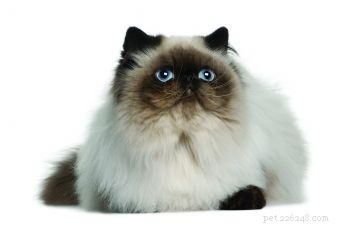
The Himalayan is a hybrid breed identical to the Persian, but distinguished by the points on the cats’ extremities (the facial mask, feet, ears, and tail) which results in a Persian-type cat with the coloring and deep blue eyes of the Siamese-patterned cat. The ideal Himalayan is a strong cat with excellent boning and musculature, a well-balanced cat, giving the impression of robust power.
Breed Traits
Playfulness
3 out of 5Activity Level
1 out of 5Friendliness To Other Pets
4 out of 5Friendliness To Children
4 out of 5Grooming Requirements
5 out of 5Vocality
1 out of 5Need for Attention
4 out of 5Affection Toward Its Owners
5 out of 5Docility
5 out of 5Intelligence
2 out of 5Independence
2 out of 5Hardiness
2 out of 5Personality
“Himmies,” as they are sometimes called, are wonderful indoor cat companions. They are gentle, calm, and sweet-tempered, and possess a playful side as well. Like the Siamese, Himalayans love to play fetch, and a scrap of crumpled paper or a kitty toy will entertain them for hours, or until their next nap. Himalayans are devoted and dependent upon their humans for companionship and protection. They crave affection and love to be petted and groomed, which is fortunate, since every Himalayan owner will spend part of each day doing just that. Like their Persian siblings, they are docile and won’t harass you for attention the way some breeds will. They possess the same activity level as the Persian, and they are not vocal like the Siamese.
History
The first deliberate cross between a Siamese and a Persian was made in 1924 by a Swedish geneticist. In 1935 that the first pointed pattern longhair was born. In the early 1930s, two Harvard medical researchers crossed a Siamese female with a black Persian male, not to create a new breed, but to establish how certain characteristics were inherited. This mating produced a litter of black, shorthaired kittens. They then bred a black Persian female with a Siamese male. The outcome was the same. This is not surprising, since longhair and the colorpoint pattern are both governed by recessive genes. Both parents have to possess the genes in order for the traits to be expressed in the offspring. By crossing a female from the second litter with a male from the first, they produced Debutante, a cat that possessed the Siamese body type and color pattern and the long hair of the Persian. During the same year, British and American fanciers hoped to produce a pointed pattern breed with the Persian hair type and conformation. World War II interfered with these efforts. In 1950 American Marguerita Goforth succeeded in breeding the long awaited Persian-like colorpoint. CFA and ACFA recognized the breed in 1957 under the name Himalayan, named for the color pattern found in other animals such as the Himalayan rabbit. By 1961, all major U.S. cat associations recognized the Himalayan.
Because Himalayans are regularly crossed with Persians, many cat associations have special rules for Himalayan-Persian hybrids, usually allowing them to be shown either as Himalayans or Persians, depending upon their appearance. Whatever the breed is called, the Himalayan remains a popular breed with a solid following.
- Pet Behavior
- Pet Breeds
- Pet Names
- Pet Adoption
- Pet Training
- Cat Stories
- Pet Health
- Adorable Pets
- Cats
- Managing Himalayan Cat Allergies: Symptoms, Treatments, and Myths
- Minuet Cat: Elegant Short-Legged Persian-Munchkin Hybrid
- The Himalayan Cat: Elegant, Gentle Companion for Quiet Homes
- Himalayan Cat: Complete Breed Profile & Care Guide
- Bengal Cat: Quick Facts, Size, and Distinctive Features
- Bombay Cat: Sleek, Social, and Ideal Family Companion
- Himalayan Cat: Breed Profile, Temperament & Care