

Cymric Cat: Features, Coat, and Comparison with the Manx
General
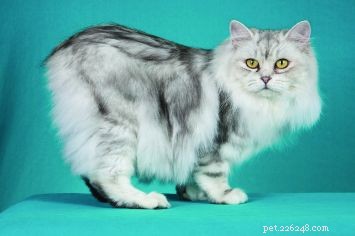
The overall appearance should be that of a medium-sized, compact, muscular cat. The Cymric has a round head with a firm muzzle and prominent cheeks, short front legs, height of hindquarters, great depth of flank, and a short back, which forms a smooth continuous arch from the shoulders to the round rump. The Manx and Cymric are essentially the same in all respects, the Cymric having a longer coat. The Cymric has a medium/semi-long coat with a silky texture, which varies with coat color. Britches, tufts of hair between the toes and full furnishings in the ears distinguish the Cymric.
Breed Traits
Playfulness
3 out of 5Activity Level
3 out of 5Friendliness To Other Pets
5 out of 5Friendliness To Children
5 out of 5Grooming Requirements
3 out of 5Vocality
2 out of 5Need for Attention
3 out of 5Affection Toward Its Owners
4 out of 5Docility
4 out of 5Intelligence
4 out of 5Independence
3 out of 5Hardiness
1 out of 5Personality
The personality of the Cymric has won a strong following. Cymrics are intelligent, fun-loving cats, and they get along well with other pets, including dogs. Cymrics are particularly noted for their loyalty to their humans and enjoy spending quality time with them. As cats go, they can be easily taught tricks. Despite their playful temperament, they are gentle and nonaggressive. Their playful yet tractable dispositions make the Cymric a good choice for families with children. Cymrics are powerful jumpers and if sufficiently motivated will manage to breach the most secure shelf. They are also fascinated by water, as long as you don’t dunk them in the nasty stuff. Perhaps this fascination comes from originating on a small piece of land surrounded by it.
History
Presumed by researchers to have been introduced to the Isle of Man by human settlers and explorers, the Manx has existed there for many centuries. The Isle, located in the Irish Sea between England and Ireland, has no indigenous domestic cat species, and several theories exist about the introduction of domestic cats. Speculated sources include arrival with the Spanish Armada, Phoenician traders, or Viking settlers who colonized the Isle of Man. Records have been found that describe the cat as a mutation among the island’s domestic cats, rather than a cat that arrived with its tail already absent. In this case, the lack of tail is governed by a dominant gene, unlike most other breeds with short tails. This indicates that the Manx and the Cymric (KIM-ric) are not related to breeds, such as the Japanese Bobtail whose tails are governed by recessive genes. Manx cats are noted in early American cat registry records as well. The Cymric apparently has been around as long as the Manx itself. While the Cymric was shown in ACA as early as 1963, the breed didn’t really begin to take hold until the mid-1970s. First shown under the name Longhaired Manx, the name was changed to Cymric during this period. The word is the Welsh name for Wales and was chosen by pioneer Cymric breeders Blair Wright and Leslie Falteisek. In 1976, CCA was the first to accept the Cymric for championship status; it now has full championship standing in most associations. CFF is the only association that does not accept the Cymric; however, the reason they have not done so is that no group of fanciers has campaigned for acceptance. In May 1994, CFA changed the name from Cymric to Longhair Manx; both hair lengths share a single breed standard. Because only hair length separates the two breeds, CFA breeders campaigned for the Cymric to be considered part of the Manx breed. Longhaired kittens born to Manx parents (possible when both parents carry the recessive gene for long hair) can be registered as Cymrics in all associations except CFF. This eliminates the previous status problems with “split litters” in which both hair lengths are present. The Cymric and the Manx are two of the most challenging to breed because of the Manx gene. Cymric embryos that are homozygous (inheriting the Manx gene from both parents) die in the womb. Homozygous kittens comprise roughly one fourth of the kittens conceived; therefore, Cymric litters are usually small (see Manx profile, page 187). Even heterozygous kittens can have deformities such as, spina bifida, fusions of the spine, and defects of the colon, therefore any breeding must be planned with great care to minimize the defects.
- Pet Behavior
- Pet Breeds
- Pet Names
- Pet Adoption
- Pet Training
- Cat Stories
- Pet Health
- Adorable Pets
- Cats
- Understanding a Dog's Undercoat: Types, Care, and Grooming Tips
- Cymric Cat: A Comprehensive Breed Profile – History, Care, and Health
- Spring Pet Grooming Essentials: Keep Your Furry Friends Clean and Healthy
- LaPerm Cats: From Farm Beginnings to Curly Coat Legends
- Heal Your Dog’s Muscles & Joints with Our Therapeutic Compression Coat
- Can Samoyeds Have Black Coats? A Realistic Look at Breed Color Variations
- Bergamasco Dog: The Shaggy, Versatile Alpine Herding Companion