

Oriental vs. Traditional Siamese Cats: Key Differences Explained
This post was updated on December 10th, 2024 by Lisa.
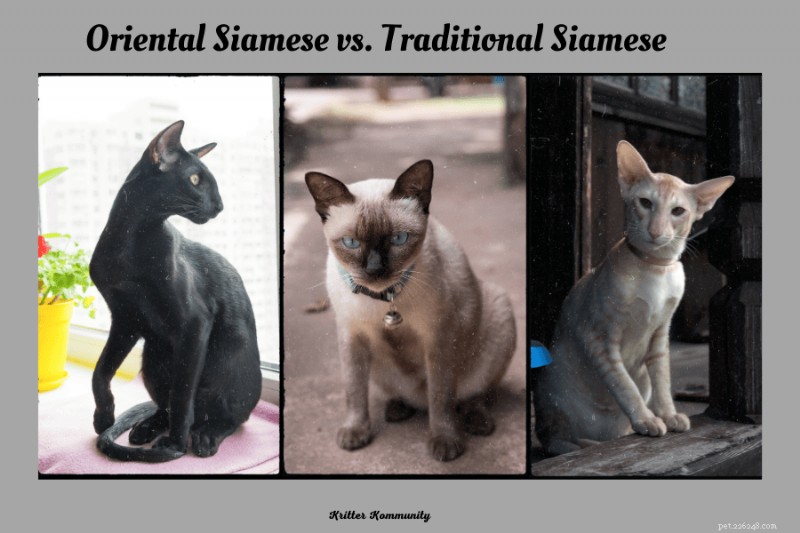
Deciding between a Siamese and an Oriental cat is like choosing between two dazzling gems. Both breeds are elegant, loving, and full of personality, but their subtle differences make them uniquely special. 🐾✨ Did you know that Oriental cats owe their stunning variety of colors and patterns to Siamese cats? Over time, breeders have crossbred Siamese cats with other feline types to expand their genetic palette. This effort gave rise to many fascinating variations of the Siamese, like the traditional Applehead Siamese, the luxuriously fluffy Balinese (a long-haired cousin), and the glamorous Himalayan, known for its lion-like mane. 😻
This post is all about the Oriental Siamese vs. Traditional Siamese cats.
Despite the diversity, all Siamese cats share one iconic feature: a light-colored body with darker points on their face, ears, paws, and tail. But breeders wanted to push the boundaries of this beauty, and voilà—the Oriental Shorthair was born! 🌀 With over 300 coat colors and patterns, these cats took the elegance of Siamese cats and added a kaleidoscope of possibilities. 🎨✨
This article will take you through the physical and temperamental similarities and differences between these two stunning breeds. Whether you’re drawn to the timeless beauty of Siamese cats or the vibrant diversity of Oriental Shorthairs, by the end, you’ll know which is the best fit for your household. Plus, you’ll get tips on how to keep your feline friend happy and healthy, no matter which breed you choose. 🐱❤️ Ready? Let’s pounce right in! 🐾
Are Siamese Cats and Oriental Cats the Same Thing?
While both breeds share similar physical characteristics, there are some key differences that set them apart.
Let’s unpack this interesting and very pretty feline. 🐈⬛
😸 Traditional Siamese cats, also known as Applehead Siamese, have a rounder head shape. They also have a more muscular build than their Oriental Siamese counterparts.
The Oriental Siamese have a more triangular head shape, a longer and leaner body, and a thinner tail.
Another key difference between the two breeds is their personality.
Traditional Siamese cats are known for being more vocal and demanding attention from their owners, whereas Oriental Siamese cats are generally more independent and reserved.
However, both breeds are intelligent, affectionate, and make great companions for those who are willing to give them the love and attention they need.

What is the Difference?
In this post you’ll learn about Oriental Siamese vs. Traditional Siamese in relation to:
- Physical Characteristics
- Oriental Siamese Features
- Traditional Siamese Traits
- Personality and Temperament
- Oriental Siamese Behavior
- Traditional Siamese Temperament
- Health and Lifespan
- Oriental Siamese Health Concerns
- Traditional Siamese Longevity
- Care and Grooming
- Oriental Siamese Grooming Needs
- Traditional Siamese Care Tips
- Breed Popularity and Availability
- Popularity Comparison
- Availability
- Price and Affordability
- Pricing Comparison
- Frequently Asked Questions
Here is a snapshot for easy reference:
Both breeds share intelligence, affectionate, and make great companions but differ significantly in physical appearance, personality, availability, and pricing. 🐈
In a nutshell, Traditional Siamese cats showcase a more traditional appearance and demeanor, while Oriental Siamese cats exhibit a more modern, sleek look and a more vocal, outgoing nature.
Without further ado, let’s pounce in!
History and Origin
Siamese cats have a rich history and are considered one of the oldest cat breeds in the world. The origins of Siamese cats can be traced back to Thailand, which was formerly known as Siam. The breed was first mentioned in the Tamra Maew, or “The Cat-Book Poems,” which dates back to the 14th century.
Oriental Siamese Development
The Oriental Siamese, also known as the modern Siamese, was developed in the 1950s and 1960s.
This breed was created through selective breeding of Siamese cats with other breeds, such as the Abyssinian and the British Shorthair.
The goal was to create a cat that had the distinctive Siamese color points but with a more slender body and a more angular face.
Traditional Siamese Roots
The Traditional Siamese, also known as the applehead Siamese, is the original Siamese breed. This breed has a rounder head and body shape compared to the Oriental Siamese.
The Traditional Siamese is believed to have originated in Siam and was considered a sacred cat by the Siamese people.
These cats were kept in temples and were believed to bring good luck to those who owned them.
In the 1950s, the Traditional Siamese was brought to the United States and Europe, where it quickly gained popularity.
However, in the 1960s, breeders began to focus on the development of the Oriental Siamese, which led to a decline in the popularity of the Traditional Siamese.
Today, the Traditional Siamese is considered a rare breed, but there are still dedicated breeders who are working to preserve this ancient breed.
Overall, both the Oriental Siamese and the Traditional Siamese have unique characteristics that set them apart.
The history and origin of these breeds are fascinating and provide insight into the development of one of the most beloved cat breeds in the world.
Physical Characteristics of Siamese and Oriental Cats
When it comes to the physical characteristics of Oriental Siamese and Traditional Siamese cats, there are some notable differences. Here are the features that set them apart:
Oriental Siamese Features
Oriental Siamese cats have a sleek, muscular body with long legs and a wedge-shaped head. Their almond-shaped eyes are typically blue or green in color, and their ears are large and pointed. They have a short, fine coat that comes in a variety of colors and patterns, including solid black, tortoiseshell, and tabby.
One of the most distinctive features of Oriental Siamese cats is their vocalization. They are known for being very talkative and will often “talk” to their owners with a range of meows, chirps, and trills.
Traditional Siamese Traits
🐈 Traditional Siamese cats, also known as Applehead Siamese, have a more rounded head and a stockier build than their Oriental counterparts.
They have a short, thick coat that is usually a solid color with darker points on the ears, face, paws, and tail. Their eyes are almond-shaped and can be blue, green, or even crossed. 👁️
Unlike Oriental Siamese cats, Traditional Siamese cats are known for being more reserved and less vocal. They are affectionate and loyal to their owners but may take some time to warm up to strangers.
In summary, while both Oriental Siamese and Traditional Siamese cats are beautiful and friendly felines, they have distinct physical characteristics that set them apart.
Oriental Siamese cats have a sleek, muscular body with a wedge-shaped head and come in a variety of colors and patterns.
They are known for their vocalization and will often “talk” to their owners. Traditional Siamese cats, on the other hand, have a more rounded head and stockier build and are known for being more reserved and less vocal than their Oriental counterparts.
Temperament of Oriental Siamese Vs. Traditional Siamese
Oriental Siamese Behavior
Oriental Siamese cats are known for their unique behavior and temperament.
They are intelligent, playful, active, and affectionate cats that make great companions.
They are very social and love to be around people, often following their owners around the house. They are also known for their vocal nature and will often meow to communicate with their owners.
Oriental Siamese cats are very active and love to play, so it is important to provide them with plenty of toys and playtime.
They are also very curious, so they will explore every corner of your house. 🧶🐁
Traditional Siamese Temperament
Traditional Siamese cats have a distinct personality and temperament compared to their Oriental Siamese counterparts. They are also very intelligent, but they tend to be more reserved and independent. They are still affectionate and friendly, but they do not require as much attention as Oriental Siamese cats. Traditional Siamese cats are also known for their loyalty and will often bond closely with one person in the household. They are less vocal than Oriental Siamese cats, but they still communicate with their owners in other ways, such as rubbing against their legs or purring.
In summary, both Oriental Siamese and Traditional Siamese cats are friendly, intelligent, and affectionate. However, Oriental Siamese cats tend to be more vocal and active, while Traditional Siamese cats are more independent and loyal to one person.
What is the Health and Lifespan of Oriental Siamese Cats?
Oriental Siamese Health Concerns
Oriental Siamese cats are generally healthy cats with few major health concerns. However, they are prone to certain health issues that are common among all cats, such as dental problems, obesity, and urinary tract infections. Additionally, Oriental Siamese cats can develop respiratory problems due to their elongated faces and narrow nostrils, a condition known as brachycephalic syndrome. This can cause breathing difficulties, snoring, and even fainting.
To keep your Oriental Siamese healthy, it is important to provide them with a balanced diet, regular exercise, and routine veterinary care. Regular dental checkups and cleaning can help prevent dental problems, while obesity can be prevented by feeding them a healthy and appropriate amount of food.
Traditional Siamese Longevity
The Traditional Siamese cat is known for its longevity, with an average lifespan of 15-20 years. However, like all cats, they are prone to certain health issues, including dental problems, obesity, and kidney disease. 🩺
To keep your Traditional Siamese healthy and increase their lifespan, it is important to provide them with a healthy diet, regular exercise, and routine veterinary care. Regular dental checkups and cleaning can help prevent dental problems, while obesity can be prevented by feeding them a healthy and appropriate amount of food. Additionally, early detection and treatment of kidney disease can help prolong their lifespan.
🥼 Overall, both Oriental Siamese and Traditional Siamese cats can live long, healthy lives with proper care and attention to their health needs.
Care and Grooming
Taking care of your Oriental Siamese and Traditional Siamese cats is essential to ensure they stay healthy and happy. Both breeds require regular grooming and care to maintain their beautiful coat and overall health. 🪥
Oriental Siamese Grooming Needs
Oriental Siamese cats have a short and fine coat that requires minimal grooming. However, they still need regular brushing to remove loose hair and prevent hairballs. You can use a soft-bristled brush to groom your Oriental Siamese once or twice a week.
It’s also important to keep their ears clean and free of wax buildup. You can use a damp cotton ball to gently clean their ears once a week. Additionally, you should trim their nails regularly to prevent them from becoming too long and causing discomfort. 💅
RELATED: Oriental Siamese: A Friendly and Elegant Cat Breed
Traditional Siamese Care Tips
Traditional Siamese cats have a thicker and longer coat than Oriental Siamese cats, which requires more grooming. You should brush your Traditional Siamese at least once a week to remove loose hair and prevent matting. You can use a slicker brush or a comb to groom their coat.
Like Oriental Siamese cats, Traditional Siamese cats also need their ears cleaned regularly to prevent wax buildup and infections. You can use a damp cotton ball to clean their ears once a week.
Both Oriental Siamese and Traditional Siamese cats require regular dental checkups and teeth cleaning to prevent dental problems. You can use a soft-bristled toothbrush and toothpaste specially formulated for cats to clean their teeth. It’s also important to provide them with a healthy and balanced diet to ensure they get all the essential nutrients they need.
By following these grooming and care tips, you can keep your Oriental Siamese and Traditional Siamese cats healthy and happy for years to come.
Breed Popularity of the Oriental Siamese vs. Traditional Siamese Cats
When it comes to popularity, both Oriental Siamese and Traditional Siamese breeds have their own fan base. However, Traditional Siamese cats are more popular than Oriental Siamese cats. Traditional Siamese cats have been around for a long time, and they are often featured in movies, TV shows, and books. This has contributed to their popularity.
On the other hand, Oriental Siamese cats are relatively new to the scene, and they are not as well-known as Traditional Siamese cats. However, they are gaining popularity among cat lovers, thanks to their unique looks and personalities.
In terms of availability, Traditional Siamese cats are easier to find than Oriental Siamese cats. This is because Traditional Siamese cats have been around for a long time, and they are bred more frequently than Oriental Siamese cats. Moreover, Traditional Siamese cats are recognized by major cat associations, which means that they are more widely available. 😸
Oriental Siamese cats, on the other hand, are less common than Traditional Siamese cats. This is because they are a newer breed, and they are not recognized by all major cat associations. However, if you are interested in owning an Oriental Siamese cat, you can still find them through reputable breeders or adoption agencies.
Overall, both Oriental Siamese and Traditional Siamese cats are great pets, and it’s up to you to decide which one is the right fit for you.
Price and Affordability
When it comes to purchasing a Siamese cat, price is an important factor to consider. Traditional Siamese cats tend to be more expensive than Oriental Siamese cats. This is because Traditional Siamese cats are rarer and have a more distinctive look. The price of a Traditional Siamese cat can range from $500 to $2,000, depending on the breeder and the cat’s lineage. On the other hand, Oriental Siamese cats are more common and can be purchased for around $200 to $500. 💵
In addition to the initial purchase price, you should also consider the long-term costs of owning a Siamese cat. Both Traditional and Oriental Siamese cats require regular grooming, feeding, and veterinary care. These costs can add up over time, so it’s important to budget accordingly.
If you’re on a tight budget, an Oriental Siamese cat may be a better choice for you. They are generally more affordable and have a similar temperament to Traditional Siamese cats. However, if you’re willing to invest in a rarer and more distinctive cat, a Traditional Siamese cat may be the right choice for you.
When purchasing a Siamese cat, it’s important to choose a reputable breeder. Look for a breeder who is knowledgeable about the breed and who takes good care of their cats. A good breeder will also provide you with information on how to care for your new cat and will be available to answer any questions you may have.
Frequently Asked Questions
What are the personality traits that distinguish Traditional Siamese from Oriental Siamese cats?
Both Traditional Siamese and Oriental Siamese cats are brainy, playful, and brimming with affection. 🐾✨ But let’s be real—they have their own distinct personalities that make them shine in different ways.
Traditional Siamese cats are the chill Zen masters of the cat world. 🧘♀️ They’re laid-back, a bit more reserved, and love to bask in quiet moments with their favorite humans. 🛋️ They’re also famously loyal, sticking to their owners like a little furry shadow. 🐾❤️
On the flip side, Oriental Siamese cats are the extroverted life of the party. 🎉 These cats are outgoing, love to explore, and have lots to say about everything. 🗣️🐱 Their independent streak makes them a bit more self-sufficient, but don’t be fooled—they still adore your company (and your lap). 🐾✨
In short, if you’re looking for a serene companion, the Traditional Siamese might be your vibe. But if you’re ready for a chatty, lively buddy, the Oriental Siamese will keep you entertained for hours. 😻
Can you explain the physical differences between Traditional and Oriental Siamese cats?
Traditional Siamese cats have a stockier build, with a rounder head and a shorter, more muscular body. They have a distinctive wedge-shaped head, with large, almond-shaped eyes and a short, straight nose. In contrast, Oriental Siamese cats have a longer, more slender build, with a more angular head and a longer, more flexible body. They have a longer, more pointed face, with larger ears and a more pronounced chin.
What are the common color variations in Traditional Siamese compared to Oriental Siamese?
Traditional Siamese cats typically have a darker coat, with distinct “points” on their ears, face, legs, and tail. The most common colors include seal point, blue point, chocolate point, and lilac point. In contrast, Oriental Siamese cats come in a wider range of colors and patterns, including solid colors, bi-colors, and tabby patterns. Some of the most common colors include black, white, red, cream, and blue.
How does the behavior of an Oriental Siamese differ from that of a Traditional Siamese cat?
Oriental Siamese cats are like the energetic athletes of the cat world. 🏃♀️🎾 These lively kitties are brimming with energy and love nothing more than zipping around the house, chasing toys, and showing off their playful antics. 🐾 They’re also quite the chatterboxes, known for their frequent meows, chirps, and yowls—if they have something on their mind (and they often do), you’ll definitely hear about it! 🗣️🐱
On the flip side, Traditional Siamese cats are more the cool, calm, and collected type. 🧘♂️ They enjoy their downtime and tend to have a more laid-back vibe. 🛋️ These graceful companions are deeply loyal and often form strong bonds with their owners, sticking close like true-blue best friends. 💖 Instead of vocalizing, they prefer a more subtle form of communication, using expressive body language and soulful eye contact to tell you exactly what they need. 👀🐾
Whether you prefer a playful chatterbox or a reserved cuddle buddy, both breeds bring something special to the table—and to your heart. 🐾✨
What are the historical origins of the Traditional Siamese breed versus the Oriental Siamese?
Both Traditional Siamese and Oriental Siamese cats are descended from the same ancient Siamese cats that were originally bred in Thailand. However, Traditional Siamese cats are closer to the original Siamese cats, while Oriental Siamese cats are the result of crossbreeding with other breeds, such as the American Shorthair and the Abyssinian.
How can I identify if my Siamese cat has Oriental lineage?
If your Siamese cat has a longer, more slender build, with a more angular head and a longer, more flexible body, it is likely an Oriental Siamese. Additionally, if your Siamese cat has a wider range of coat colors and patterns, including solid colors, bi-colors, and tabby patterns, it is likely an Oriental Siamese. However, the only way to be sure is to have your cat’s lineage confirmed through genetic testing.
In summary, Traditional Siamese cats are characterized by their rounder features, stockier build, and reserved yet loyal temperament. They tend to be less vocal and have a thicker coat with darker points. On the other hand, Oriental Siamese cats possess a more angular appearance, are more vocal and outgoing, and have a slender body with a variety of coat colors and patterns.
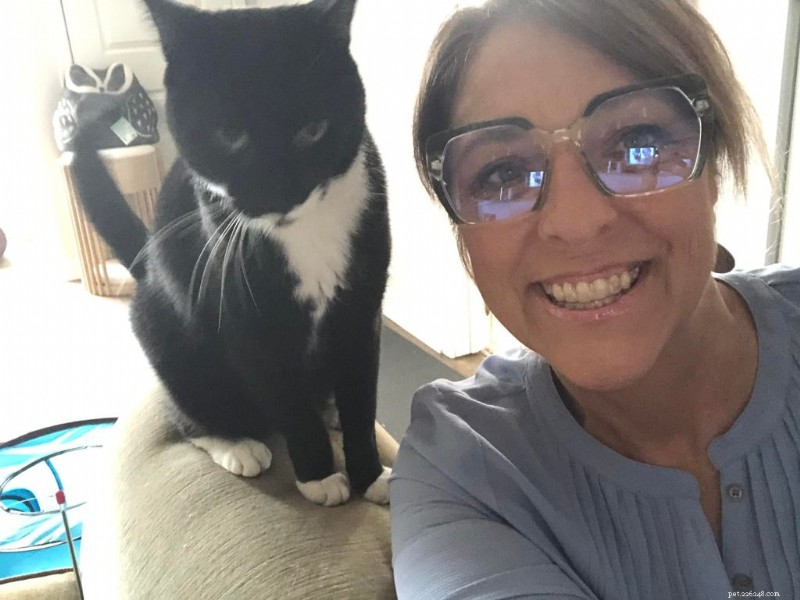
🐾 Lisa Illman is the Founder of Kritter Kommunity, LLC! 🏡 She’s got a dapper tuxedo cat who’s been her sidekick since he was a tiny furball. 🐱 Before Finnegan came along, Lisa cared for two FIV-positive cats for over ten years! 🌟 Their love inspired her to create a cat enclosure and a portable catio, giving kitties the purrfect spot to bask in the sun and feel the breeze. ☀️🌿
As a kid, Lisa shared her home with a Poodle and a chirpy parakeet! 🐩🐦

- Pet Behavior
- Pet Breeds
- Pet Names
- Pet Adoption
- Pet Training
- Cat Stories
- Pet Health
- Adorable Pets
- Cats
- First Time Doggie Wardrobes: Premium Winter Wear to Keep Your Pet Cozy
- Discover Your Dog's True Heritage: DNA Tests Unveil Surprising Insights
- Coral Snakes: Vividly Banded, Deadly Venom—What You Need to Know
- Prevent Your Puppy From Destroying Pee Pads: Simple, Proven Tips
- Can Dogs Lower Your Blood Pressure? The Health Benefits of Pet Ownership
- Is a Summer Trim Right for Your Dog? Expert Advice
- Stray Cats: Understanding the Problem and How You Can Help