

Hope for Feline Infectious Peritonitis: New Potential Cure on the Horizon
As many of you know, I lost my very first Ragdoll cat, Skittles, to FIP when he was just 2 years old, and I was only 10. We then got Rags and his half-brother, Cosby, who also died of FIP at 10-months old. “FIP” is a disease I loathe, and it hits me hard when I hear about it because of the traumatic childhood experience I had with it. So when I heard this news out of KSU, I was super excited and hopeful and wanted to share.
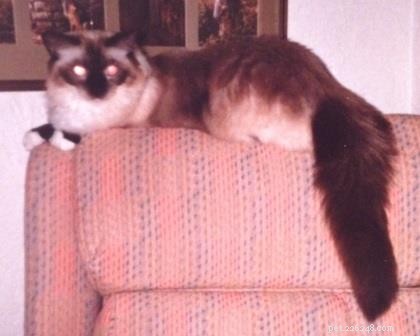
In an exciting recent study, Kansas State University veterinary medicine researchers have started the process of developing an antiviral treatment for the deadly infectious cat disease: feline infectious peritonitis (FIP). FIP has been almost 100% deadly in cats, so a treatment for this disease would be a huge breakthrough. Here are a few basic facts about FIP:
How Do Cats Get FIP?
FIP starts as a coronavirus infection, which is a common infection among cats and isn’t fatal. However, in some cases this infection can develop into a viral mutation that a cat’s immune system cannot contain, which is FIP.
FIP in Cats Symptoms
The coronavirus in cats symptoms are usually mild intestinal inflammation and diarrhea, or no symptoms at all. However, if coronavirus develops into FIP, it can take two different forms: wet (effusive) form or dry (non-effusive) form. Wet form is more common and the symptoms include jaundice, weight loss, a fever that does not respond to antibiotics, and the escape of bodily fluids. This is caused by a buildup of fluid in the abdomen or chest.
FIP in Cats – How Long Do They Live?
FIP progresses rapidly, and the FIP in cats life expectancy is weeks to a few months once symptoms begin to show.
Research Breakthroughs for Treatment of FIP
The recent study conducted by Kansas State University researches funded partially by a grant from the Morris Animal foundation showed promising results in developing a treatment for FIP. Researchers successfully blocked the progression of FIP in cats in clinical trials by inhibiting viral replication, which led to the recovery of the cats.
The next stage of the study involves enrolling up to 70 cats in another experimental trial that will run for approximately two years. Yunjeong Kim, one of the head researchers of this project, expressed hope over the outcome of this trial: “This will help us and other researchers find a way to effectively manage or treat FIP in the future. Also, these findings have broader implications for other important coronavirus infections, since no antiviral drugs exist for human or animal coronaviruses.”
Hopefully this study will be a giant step towards eliminating a terrible disease for cats and their humans that love them.
- Pet Behavior
- Pet Breeds
- Pet Names
- Pet Adoption
- Pet Training
- Cat Stories
- Pet Health
- Adorable Pets
- Cats
- Professional Cat Hospice Care: Compassionate End-of-Life Support
- The Cat Network: Championing Cat Rescue and Overpopulation Prevention in South Florida
- How to Care for Your Arthritic Cat: Expert Tips & Treatments
- Top 5 Proven Flea Treatments for Cats – Safe, Effective, and Easy to Use
- Catios: Secure Outdoor Enclosures for Your Cat's Health & Happiness
- How to Pick the Perfect Cat Brush for a Healthy, Tangle-Free Coat
- The Ultimate Guide to Selecting the Best Wet Cat Food