

Why Cats Are Attracted to Bleach: Understanding Their Behavior
Originally published Aug 10, 2016
 A reader recently shared a story that might sound very familiar to other Ragdoll cat owners: someone in your house has been cleaning using bleach, and even though they wash up thoroughly, your Ragdoll kitty immediately and inexplicably begins to go a little crazy, sniffing, rubbing and rolling all over anything that smells like bleach, from hands, to mops, to laundry. What in the world is going on?
If you have experienced this scenario and wondered why does my cat roll in bleach? Are they having some kind of strange reaction? You are not alone. This is a surprisingly common occurrence among cats. While even the experts can’t totally explain this, here is a little bit of information to help you understand this odd phenomenon.
A reader recently shared a story that might sound very familiar to other Ragdoll cat owners: someone in your house has been cleaning using bleach, and even though they wash up thoroughly, your Ragdoll kitty immediately and inexplicably begins to go a little crazy, sniffing, rubbing and rolling all over anything that smells like bleach, from hands, to mops, to laundry. What in the world is going on?
If you have experienced this scenario and wondered why does my cat roll in bleach? Are they having some kind of strange reaction? You are not alone. This is a surprisingly common occurrence among cats. While even the experts can’t totally explain this, here is a little bit of information to help you understand this odd phenomenon.
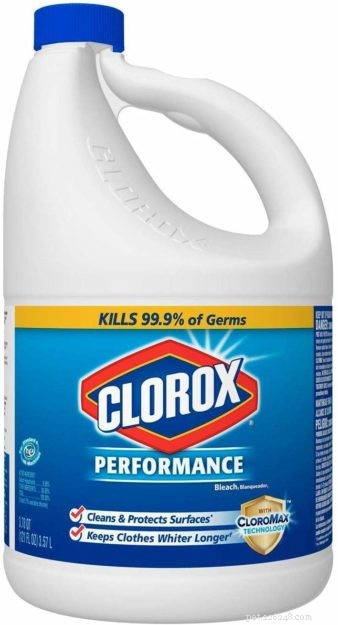 This is a bleach product that has a lower concentration of chlorine. Its acidity is lower than that of other products, with a PH of 11. While this acidity is still high enough to cause irritation, it will take a larger amount of the product to produce life-threatening lesions.
Effects of Skin Contact – if your cat gets this kind of bleach on its skin or fur, chances are it is going to get away with an irritation of the skin. Naturally, this only applies to a small quantity of household bleach. A large quantity of bleach on the cat’s skin is certainly going to cause a serious irritation that will require treatment.
Moreover, if the bleach gets into the cat’s eyes, then the damage will be much greater. This is a medical emergency. If your cat has bleach in its eyes, then wash your cat’s eyes with cold clean water and take your cat to the vet as soon as possible because it will need medical attention.
Effects of Ingestion – If your cat licks some bleach off a surface, it is sure to cause irritation to the areas that have come into contact with the bleach – mouth, tongue, throat, esophagus, and stomach.
If the quantity is very low, then the damages are minimal because the bleach will barely reach the stomach. The cat will still need medical attention for the digestive tract irritation, but the prognosis is likely to be good.
However, if the cat ingests a larger quantity of bleach (anything from a spoonful up), then it is surely going to reach the stomach, which means that the damage will be deeper. Furthermore, the larger quantity will exacerbate the irritation. The mouth will be gravely affected, but the most dangerous lesions are those to the esophagus and stomach.
This is also a medical emergency and your cat’s life depends on the treatment it gets. Waiting is not an option because the bleach must be neutralized. Otherwise, the irritation will worsen. Aside from this, the irritation exposes the cat to infections, which can be life-threatening.
This is a bleach product that has a lower concentration of chlorine. Its acidity is lower than that of other products, with a PH of 11. While this acidity is still high enough to cause irritation, it will take a larger amount of the product to produce life-threatening lesions.
Effects of Skin Contact – if your cat gets this kind of bleach on its skin or fur, chances are it is going to get away with an irritation of the skin. Naturally, this only applies to a small quantity of household bleach. A large quantity of bleach on the cat’s skin is certainly going to cause a serious irritation that will require treatment.
Moreover, if the bleach gets into the cat’s eyes, then the damage will be much greater. This is a medical emergency. If your cat has bleach in its eyes, then wash your cat’s eyes with cold clean water and take your cat to the vet as soon as possible because it will need medical attention.
Effects of Ingestion – If your cat licks some bleach off a surface, it is sure to cause irritation to the areas that have come into contact with the bleach – mouth, tongue, throat, esophagus, and stomach.
If the quantity is very low, then the damages are minimal because the bleach will barely reach the stomach. The cat will still need medical attention for the digestive tract irritation, but the prognosis is likely to be good.
However, if the cat ingests a larger quantity of bleach (anything from a spoonful up), then it is surely going to reach the stomach, which means that the damage will be deeper. Furthermore, the larger quantity will exacerbate the irritation. The mouth will be gravely affected, but the most dangerous lesions are those to the esophagus and stomach.
This is also a medical emergency and your cat’s life depends on the treatment it gets. Waiting is not an option because the bleach must be neutralized. Otherwise, the irritation will worsen. Aside from this, the irritation exposes the cat to infections, which can be life-threatening.
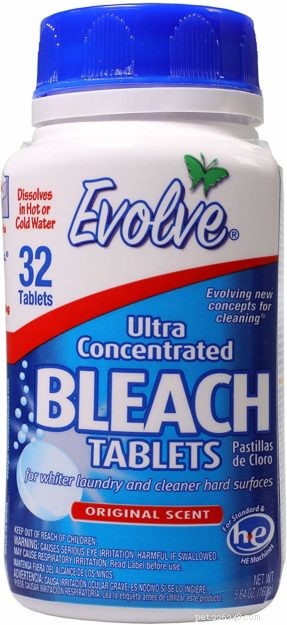 This is a product found less in households and more in professional cleaning. However, highly-concentrated bleach products are available on the market.
If you use this type of bleach, then you should know that its higher efficacy comes from a much higher concentration of chlorine. This also means much higher acidity. The values are typically around 12-12.5. This makes it particularly dangerous to cats.
This is a product found less in households and more in professional cleaning. However, highly-concentrated bleach products are available on the market.
If you use this type of bleach, then you should know that its higher efficacy comes from a much higher concentration of chlorine. This also means much higher acidity. The values are typically around 12-12.5. This makes it particularly dangerous to cats.
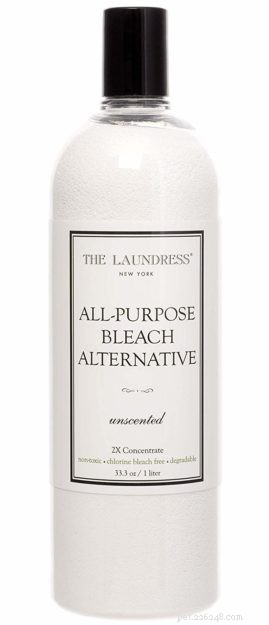 There are some bleach products that have no chlorine at all. Instead, they have hydrogen peroxide in their composition. This substance is also very dangerous for your cat because, aside from the irritation, it also induces vomiting. This is, in fact, a tell-tale sign in identifying what happened to your cat.
Effects of Skin Contact – If your cat gets a small quantity of non-chlorine bleach on its skin, it will likely cause a low-grade irritation because its fur might provide sufficient protection. You may notice, however, that the fur in the area of contact is much lighter in color. Hydrogen peroxide is the same substance used for hair bleach. If you notice any contact, all you have to do is wash the area thoroughly with cold clean water and examine the cat’s skin for irritation.
This type of bleach only becomes dangerous if the cat comes into prolonged contact with a larger quantity. While this is less likely to happen, it is not impossible. If this is the case, the irritation on the cat’s skin does require medical attention. Wash the area thoroughly as soon as possible to dilute the substance.
However, if this type of bleach gets into the cat’s eyes, even a small quantity can cause serious damage. You will notice the cat’s eyes are red, tearing, and that the cat is trying to use its paws to respond to the irritation. It won’t be able to keep its eyes open, so you will see the cat blinking. This can be very dangerous so you need to wash your cat’s eyes with cold water immediately and take it to the vet.
Effects of Ingestion – Even ingesting a small quantity of hydrogen peroxide is enough to cause an immediate effect. The cat will start vomiting because the substance activates the vomiting reflex. If you see your cat vomiting and smell bleach, then take it to the vet because there may be lesions on its mouth and throat that require treatment.
If the cat ingests a larger quantity of non-chlorine bleach, the effects are going to be that more violent – more vomiting, more profound lesions, and a wider area affected. Moreover, when the cat vomits, the acidity will irritate its throat and mouth even more. This is a medical emergency. There is very little you can do at this point, so take your cat to the hospital immediately.
There are some bleach products that have no chlorine at all. Instead, they have hydrogen peroxide in their composition. This substance is also very dangerous for your cat because, aside from the irritation, it also induces vomiting. This is, in fact, a tell-tale sign in identifying what happened to your cat.
Effects of Skin Contact – If your cat gets a small quantity of non-chlorine bleach on its skin, it will likely cause a low-grade irritation because its fur might provide sufficient protection. You may notice, however, that the fur in the area of contact is much lighter in color. Hydrogen peroxide is the same substance used for hair bleach. If you notice any contact, all you have to do is wash the area thoroughly with cold clean water and examine the cat’s skin for irritation.
This type of bleach only becomes dangerous if the cat comes into prolonged contact with a larger quantity. While this is less likely to happen, it is not impossible. If this is the case, the irritation on the cat’s skin does require medical attention. Wash the area thoroughly as soon as possible to dilute the substance.
However, if this type of bleach gets into the cat’s eyes, even a small quantity can cause serious damage. You will notice the cat’s eyes are red, tearing, and that the cat is trying to use its paws to respond to the irritation. It won’t be able to keep its eyes open, so you will see the cat blinking. This can be very dangerous so you need to wash your cat’s eyes with cold water immediately and take it to the vet.
Effects of Ingestion – Even ingesting a small quantity of hydrogen peroxide is enough to cause an immediate effect. The cat will start vomiting because the substance activates the vomiting reflex. If you see your cat vomiting and smell bleach, then take it to the vet because there may be lesions on its mouth and throat that require treatment.
If the cat ingests a larger quantity of non-chlorine bleach, the effects are going to be that more violent – more vomiting, more profound lesions, and a wider area affected. Moreover, when the cat vomits, the acidity will irritate its throat and mouth even more. This is a medical emergency. There is very little you can do at this point, so take your cat to the hospital immediately.
A reader recently shared a story that might sound very familiar to other Ragdoll cat owners: someone in your house has been cleaning using bleach, and even though they wash up thoroughly, your Ragdoll kitty immediately and inexplicably begins to go a little crazy, sniffing, rubbing and rolling all over anything that smells like bleach, from hands, to mops, to laundry. What in the world is going on?
If you have experienced this scenario and wondered why does my cat roll in bleach? Are they having some kind of strange reaction? You are not alone. This is a surprisingly common occurrence among cats. While even the experts can’t totally explain this, here is a little bit of information to help you understand this odd phenomenon.
Why do cats love bleach?
The most common explanation is that there might be something in the chemical makeup of bleach that attracts cats, such as chlorine. But that raises the question, why do cats like chlorine? The generally agreed upon answer is that it is because cats have a very highly developed sense of smell – much more complex than humans’ – and something like bleach might be connected to their pheromones, triggering a biological, hormonal reaction to the scent. Common reactions include rubbing, purring and drooling – very similar to the effect that catnip has on kitties. So while cat experts haven’t really reached a detailed conclusion about why cats are into bleach, a simple way of thinking of it is that it has the same effect as catnip does on a kitty.Cats and Bleach Poisoning
Many pet owners see this reaction as a reason to worry about the health and safety of their cat, but the faint smell of bleach and a cat’s reaction to it is harmless. However, licking or ingesting a lot of bleach can cause some serious cat health issues that would require immediate veterinary attention. Some symptoms to be on the lookout for if you think your cat has swallowed bleach include vomiting, sore throat, stomach pain, excessive drooling, and a bleached appearance of the hair around the paws or mouth, possibly along with the smell of bleach or chlorine. If your cat is showing these symptoms, give them milk or water and get them to the vet ASAP – do not try to induce vomiting. The vet will continue to treat the cat by giving them large amounts of milk or water, and the prognoses is generally good if you act quickly and effectively. So if your cat goes into a state of ecstasy over your bleach-scented hands every time you clean the bathroom, you do not have to worry that they are crazy. Their love of the scent is a common cat quirk, but it does mean that you have to be extra careful to keep any chemicals containing bleach safely away from your kitty.Types of Bleach and the Effects They Have
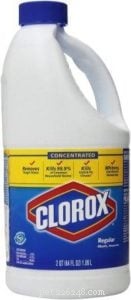
As you may know if you use bleach for your washing, there are several types of bleach available on the market. The variable is the chlorine in the composition. There are bleaches with a low concentration of chlorine, other with a high concentration of chlorine, and some that don’t have chlorine at all. While their efficacy for whitening your clothes is debatable, one thing is certain – all of them are very attractive to your cat because all three types of bleach have that irresistible smell that your cat simply goes crazy for. All of them are also dangerous for your cat. However, some of them are more dangerous than others. Here are the main types of bleach and their effects on your cat:Regular Household Bleach
This is a bleach product that has a lower concentration of chlorine. Its acidity is lower than that of other products, with a PH of 11. While this acidity is still high enough to cause irritation, it will take a larger amount of the product to produce life-threatening lesions.
Effects of Skin Contact – if your cat gets this kind of bleach on its skin or fur, chances are it is going to get away with an irritation of the skin. Naturally, this only applies to a small quantity of household bleach. A large quantity of bleach on the cat’s skin is certainly going to cause a serious irritation that will require treatment.
Moreover, if the bleach gets into the cat’s eyes, then the damage will be much greater. This is a medical emergency. If your cat has bleach in its eyes, then wash your cat’s eyes with cold clean water and take your cat to the vet as soon as possible because it will need medical attention.
Effects of Ingestion – If your cat licks some bleach off a surface, it is sure to cause irritation to the areas that have come into contact with the bleach – mouth, tongue, throat, esophagus, and stomach.
If the quantity is very low, then the damages are minimal because the bleach will barely reach the stomach. The cat will still need medical attention for the digestive tract irritation, but the prognosis is likely to be good.
However, if the cat ingests a larger quantity of bleach (anything from a spoonful up), then it is surely going to reach the stomach, which means that the damage will be deeper. Furthermore, the larger quantity will exacerbate the irritation. The mouth will be gravely affected, but the most dangerous lesions are those to the esophagus and stomach.
This is also a medical emergency and your cat’s life depends on the treatment it gets. Waiting is not an option because the bleach must be neutralized. Otherwise, the irritation will worsen. Aside from this, the irritation exposes the cat to infections, which can be life-threatening.
Highly-Concentrated Bleach
This is a product found less in households and more in professional cleaning. However, highly-concentrated bleach products are available on the market.
If you use this type of bleach, then you should know that its higher efficacy comes from a much higher concentration of chlorine. This also means much higher acidity. The values are typically around 12-12.5. This makes it particularly dangerous to cats.
Here’s why:
Effects of Skin Contact – If your cat comes into contact with ultra-concentrated bleach, it will damage its skin immediately. If you’ve ever washed clothes by hand using bleach, you might remember that your hands sting afterward. Now keep in mind that you’ve used water and that you’ve used the low-concentration bleach. If the products with PH-11 chlorine are irritant, then those with 12-12.5-PH bleach are corrosive. What your cat will get on its skin is a chemical burn, which is painful and very dangerous. All you can do is wash the area with cold water to help dilute the bleach and minimize its effects on the skin. You must also call the vet because a chemical burn is an emergency. If this substance gets into your cat’s eyes, then they are at risk of getting permanent damage. Wash its eyes as soon as you can, and take your cat to the vet. Effects of Ingestion – Ingesting even a small quantity of ultra-concentrated bleach (under a spoon full) will cause serious lesions on your cat’s lips, tongue, gums, inner cheeks, the roof of the mouth, esophagus, and even the stomach. Since the digestive tract is far more sensitive than the skin, the lesions will also be far more profound. Try to wash your cat’s mouth with cold clean water and take it to the hospital as soon as possible because this is a clear emergency. As you can imagine, ingesting a large quantity of ultra-concentrated bleach (anything over a spoon full) is extremely dangerous. The lesions to the mouth are going to be very deep, so you might see blood and open wounds. The lesions extend to the esophagus, stomach, and even intestines. The prognosis depends on the quantity of bleach, the gravity of the lesions, and how fast the treatment was administered. Please note that it can even take a few months for such wounds to heal and that they can be life-threatening.Non-Chlorine Bleach
There are some bleach products that have no chlorine at all. Instead, they have hydrogen peroxide in their composition. This substance is also very dangerous for your cat because, aside from the irritation, it also induces vomiting. This is, in fact, a tell-tale sign in identifying what happened to your cat.
Effects of Skin Contact – If your cat gets a small quantity of non-chlorine bleach on its skin, it will likely cause a low-grade irritation because its fur might provide sufficient protection. You may notice, however, that the fur in the area of contact is much lighter in color. Hydrogen peroxide is the same substance used for hair bleach. If you notice any contact, all you have to do is wash the area thoroughly with cold clean water and examine the cat’s skin for irritation.
This type of bleach only becomes dangerous if the cat comes into prolonged contact with a larger quantity. While this is less likely to happen, it is not impossible. If this is the case, the irritation on the cat’s skin does require medical attention. Wash the area thoroughly as soon as possible to dilute the substance.
However, if this type of bleach gets into the cat’s eyes, even a small quantity can cause serious damage. You will notice the cat’s eyes are red, tearing, and that the cat is trying to use its paws to respond to the irritation. It won’t be able to keep its eyes open, so you will see the cat blinking. This can be very dangerous so you need to wash your cat’s eyes with cold water immediately and take it to the vet.
Effects of Ingestion – Even ingesting a small quantity of hydrogen peroxide is enough to cause an immediate effect. The cat will start vomiting because the substance activates the vomiting reflex. If you see your cat vomiting and smell bleach, then take it to the vet because there may be lesions on its mouth and throat that require treatment.
If the cat ingests a larger quantity of non-chlorine bleach, the effects are going to be that more violent – more vomiting, more profound lesions, and a wider area affected. Moreover, when the cat vomits, the acidity will irritate its throat and mouth even more. This is a medical emergency. There is very little you can do at this point, so take your cat to the hospital immediately.
How Can You Protect Your Cat from Bleach?
While the smell of bleach will never cease to be irresistible for your cat, you can easily make it impossible for it to reach it. There are some safety precautions that you can take so that your cat never has access to bleach. Here are a few things that you can do:- Place all the bleach products in the house (including floor or bathroom cleaners) in a closed cabinet. Ideally, it should be one that locks because cats are very inventive when it comes to opening doors.
- After washing the floor, the tub, or the bathroom with products that have bleach in their composition, you must rinse thoroughly. If you leave any bleach on the floor, your cat will come to inspect, being drawn by the smell and it will get the bleach on its paws, nose, mouth, and tongue.
- It is also very important to let the washed areas dry out before the cat has access to it. Dried bleach is less of an irritant than it is as a fluid.
- Try to keep your cat away entirely when you are washing your house with bleach-based products. You could try cleaning one room at a time and keeping the cat in a room that has dry floors.
- Observe your cat after using bleach-based products. Keep the cat close so that you can stop it in case it tries to go and lick the places where you’ve used the bleach.
Pin it here!
- Pet Behavior
- Pet Breeds
- Pet Names
- Pet Adoption
- Pet Training
- Cat Stories
- Pet Health
- Adorable Pets
- Cats
- The Science Behind Why Cats Love to Climb
- Why Cats Are Naturally Drawn to Boxes: The Science Behind Their Fascination
- Why Cats Love High Places: Instincts Behind Their Perching Habits
- The Surprising Truth Behind Why Cats Love Shoes
- Why Cats Love Fish: A Complete Guide to the Best Fish Choices and Health Tips
- The Science Behind Why Cats Love Boxes: Comfort, Security, and Curiosity
- Why Cats Love Grass: The Science Behind Their Herbivorous Habit