

What Is a Healthy Cat Weight? Understanding Average, Ideal, and Overweight Ranges
As a culture, we love “chonky” cats. So how do you know if an adorably chubby appearance is actually problematic for your cat’s health? Studies continue to reaffirm what most of us already know: Pet obesity is on the rise—and so is the average cat weight. But what is considered a healthy cat weight? Find out where your cat falls on the spectrum, and what you can do if your cat is overweight.
It’s confirmed: Cats are getting fatter
What do 19 million cats tell us about the average cat weight? That it’s going up.
In July 2019, the Journal of the American Veterinary Medical Association published the results of a 35-year study that looked at the weight of 19 million cats in the U.S. and Canada. The study confirmed that most cats continue to put on weight as they age, and that average cat weight is on the rise.
Findings from the study include these interesting tidbits:
- Male cats tend to reach higher weight peaks than females.
- Spayed or neutered cats tend to be heavier than unaltered cats.
- Among the four most common purebreds (Siamese, Persian, Himalayan, and Maine Coon), the average weight peaks between 6 and 10 years of age. Among common domestic cats, it peaks at 8 years.
- The average weight of neutered, 8-year-old domestic cats increased between 1995 and 2005 but remained steady between 2005 and 2015.
One thing the study did not explicitly state? The average cat weight. This is likely because it’s difficult to measure a cat’s health by weight alone. We’ll explain more in the next section.
What is a healthy cat weight?
So, what does a healthy cat weigh? It’s tempting to reduce all cats to the same standards—saying, for instance, that a healthy cat weight is around 10 pounds. Yet this isn’t an entirely effective way to determine health, owing to the fact that breed, age, and gender all play a factor. For instance, a 10-pound Maine Coon may be considered healthy (even petite for his breed!), while a 10-pound Bambino cat would be considered obese.
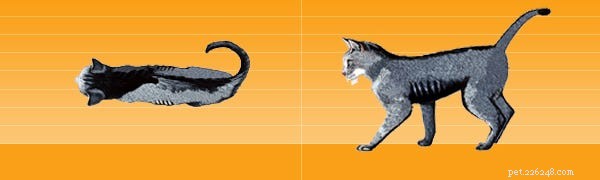
Instead, many veterinarians follow the Purina Body Condition Score (BCS), which basically boils down to using your eyes and your hands. The BCS describes three factors you’ll find in a cat with an ideal body condition:
- Ribs that can be felt but are not highly visible (in short-haired cats, at least), with a small layer of overlying fat.
- A clear waistline when viewed from above
- A visible tummy tuck, when viewed from the side.
Compare three different cat body conditions—underweight, ideal, and overweight—for yourself:
- Pet Behavior
- Pet Breeds
- Pet Names
- Pet Adoption
- Pet Training
- Cat Stories
- Pet Health
- Adorable Pets
- Cats
- Average Weight of Female Calico Cats: What You Need to Know
- Top 10 Diet Cat Foods for Healthy Weight Loss
- Assess Your Cat’s Ideal Weight: A Simple Guide for Owners
- How Long Do Ragdoll Cats Live? Typical Lifespan & Tips for Longevity
- Average Cat Weight Rising: How to Spot Healthy vs Overweight Cats
- How to Keep Your Cat at a Healthy Weight: Expert Tips & Guidance
- How to Tell if Your Cat is Overweight – Simple Signs & Health Tips