

Managing Your Cat's Seizures: Quick, Safe Care Tips
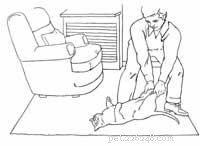
A convulsion or seizure is rarely fatal for a cat, but it can be a frightening experience, especially if witnessed for the first time. It is important for a cat owner not to panic. You are not in danger, but the cat needs help to protect him or her from self-injury.
If your cat is experiencing a convulsion or seizure, use the following cat care tips to help him or her:
Step 1: Do not place your fingers or any object in the cat's mouth.
Step 2: Pull the cat away from walls and furniture to prevent self-injury.
Step 3: When the seizure or convulsion has stopped, contact the veterinarian for further instructions.
Step 4: If the seizure or convulsion does not stop within 10 minutes, or if the cat comes out of the seizure and goes into another one within an hour, transport the cat to the veterinarian immediately.
Step 5: Expect the cat to be dazed and very frightened for 10 to 15 minutes after the seizure or convulsion.
Be patient; do not panic. Seizures and convulsions are rarely fatal, and most last only a few minutes. Call the veterinarian for further instruction.
Publications International, Ltd.
- Pet Behavior
- Pet Breeds
- Pet Names
- Pet Adoption
- Pet Training
- Cat Stories
- Pet Health
- Adorable Pets
- Cats
- Expert Guide to Introducing Cats: Tips for a Smooth Transition
- Effective Tapeworm Treatment for Cats: Safe & Proven Methods
- Effective Ways to Relieve Cat Constipation: Home Care & Vet Tips
- Effective Treatments for Hyperthyroidism in Cats
- Treating Cat Diarrhea: Quick Home Remedies & Vet Guidance
- The Science Behind Cats: Understanding Their Behavior and Biology
- Immediate Steps to Stabilize a Cat in Shock