

Do Cats Benefit from a Companion? Insights from a Two‑Cat Home
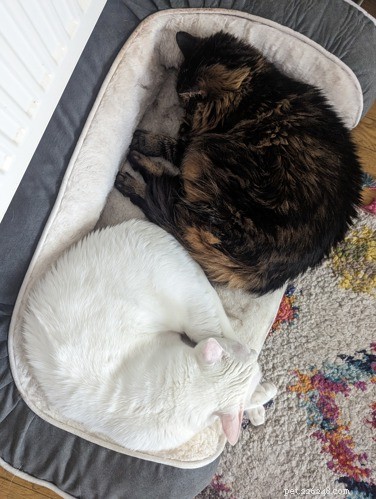
When my beloved cat Coco passed away in 2024 at 18, I turned my attention to the one she left behind. I had adopted Rudy as a kitten two years earlier. Despite their age gap, the pair had become inseparable—sharing beds, grooming each other, and appearing genuinely soothed by one another’s presence.
So when Coco died, I asked the question many owners wonder: Was Rudy lonely? I assumed another cat would fill that void, thinking that because Rudy had loved Coco, he would welcome a new feline friend. That belief led us to welcome Lula into our household.
Do Cats Need Another Cat?
It’s easy to anthropomorphise feline behaviour. After losing a human companion, we seek solace in others; it seems natural that cats would do the same. Yet cats are individual animals. Some form deep bonds with other cats—especially if they have been raised together—while others thrive as the sole feline in a home.
In Rudy’s case, the loss he felt was not the absence of another cat but the absence of Coco. Those are two distinct emotions.
When Two Cats Don’t Click
Initially, Rudy and Lula tolerated each other. They weren’t best friends, but they could coexist in shared spaces. I saw this as a positive start, but it was far from the harmonious life I had imagined.
Over time, tension escalated: cautious coexistence turned into stand‑offs, chasing, and occasional fights. Rather than growing closer, the pair seemed increasingly uncomfortable. We eventually found ourselves dividing the house with closed doors, giving Rudy access to one area while Lula occupied another. Daily routines became a careful schedule of segregation and supervised introductions.
Although the arrangement kept both cats safe, it did not allow them to thrive.
Seeing Life Through a Cat’s Eyes
At Cats Protection, the philosophy is to understand cats by viewing the world from their perspective. Applying that lens, I began to ask: What did life look like for Rudy? For Lula? I realised that their home had become a territory split by doors, a constant source of stress.
The arrangement was a stop‑gap that avoided a painful decision but ultimately did not serve their wellbeing.
Sometimes the Kindest Decision Is the Hardest
A common misconception about multi‑cat households is that conflict signals a mistake on the owner’s part. While careful introductions and behavioural support can help, some cats simply are not compatible. Just as people have distinct personalities and social needs, so do cats.
After exhausting all options, we made the difficult choice to rehome Lula. It was heartbreaking, but when viewed through our cats’ eyes, it became clear that their welfare had to come first.
What Rudy and Lula Taught Me
After Lula found a home that matched her needs, she settled beautifully into a space that was entirely her own. Rudy, freed from constant tension, relaxed and regained his calm.
The experience underscored an essential lesson: every cat is an individual. Some enjoy companionship; some do not. The most compassionate approach is to listen to their signals and adjust our expectations accordingly.
When I adopted Lula, I believed Rudy needed a friend. What Rudy and Lula ultimately taught me is that understanding cats means accepting that they may not want what we assume they should. By focusing on their perspective, we can make decisions that give them the best possible life.
- Pet Behavior
- Pet Breeds
- Pet Names
- Pet Adoption
- Pet Training
- Cat Stories
- Pet Health
- Adorable Pets
- Cats
- How to Stop Your Puppy from Snapping: Proven Training Tips
- Safe & Nutritious: Feeding Superworms to Hedgehogs – A Complete Guide
- Adopting a Retired Police Dog: A Trusted Guide
- Celebrating Murphy’s 12th Birthday: A Ragdoll Cat’s Milestone
- Understanding Depression in Rabbits: Signs, Causes, and Vet‑Recommended Treatments
- Meet Linus: The Charming Ragdoll of the Week
- Expert Guide to Maintaining Healthy Joints in Dogs