

Facebook Pet Scams: How to Spot Fake Cat Listings and What to Do If You’re Victimized
Social media platforms like Facebook offer great ways to connect with pet lovers, but they also host a growing number of pet‑related scams. Scammers post fake cat listings, lure buyers with unbelievably low prices, and then disappear with the money. By learning the warning signs and knowing how to respond, you can avoid becoming a victim and help keep the online pet community safe.
How to Spot a Facebook Cat Scam

Facebook is riddled with fake profiles and deceptive ads. Below are the most common red flags that indicate a cat listing may be a scam.
- Bargain Prices – Prices far below market value are a classic lure. Legitimate breeders rarely sell kittens at rock‑bottom rates.
- Stolen or Inconsistent Photos – Scammers recycle images from other listings. If the backgrounds, lighting, or cat breeds vary wildly, the photos are likely stolen.
- Copied Descriptions – Paste a seller’s text into Google; if it appears on other sites, the ad is probably fake.
- No Professional Website – Reputable breeders have a dedicated website in addition to a Facebook page.
- Requests for Extra Payments – Up‑front fees followed by “quarantine” or “shipping” charges are typical scams.
- Kittens Sold Too Young – Healthy kittens are not sold before eight weeks old. Anything younger is a red flag.
- Poor English – Misspelled words, awkward grammar, or overly generic language often signal a non‑local scammer.
- Refusal to Provide Video or In‑Person Visits – Legitimate sellers will gladly show the cat via video call or arrange a meet‑up.
Bargain Prices

Scammers advertise kittens at prices well below the breed’s typical market value to create urgency. If it sounds too good to be true, it probably is.
Stolen Photos
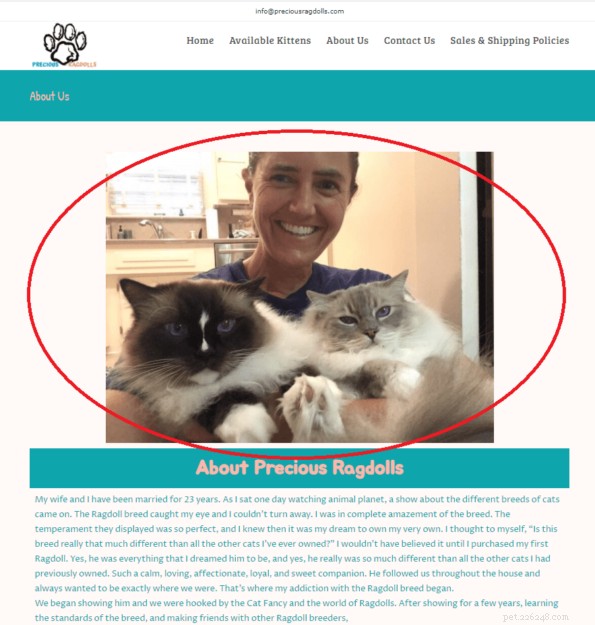
Fake sellers often steal images to make their listings look authentic. Reverse‑image search the picture; if it appears on multiple unrelated pages, the ad is suspicious.
Inconsistent Photos

Check the settings and backgrounds. Genuine breeders usually post photos taken in the same facility. wildly different environments suggest the images were lifted from various sources.
Stolen Descriptions
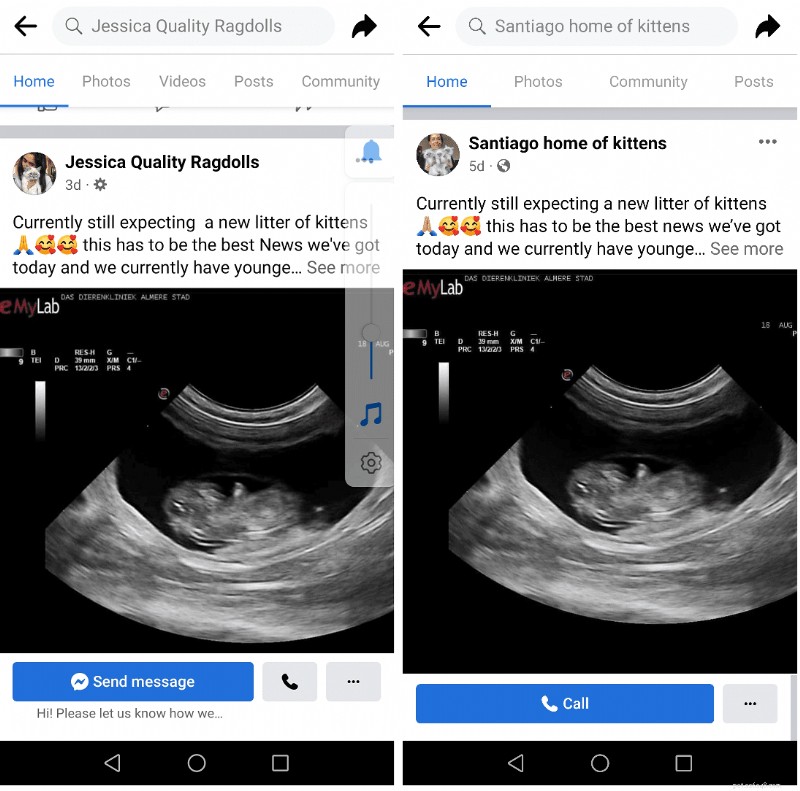
Scammers also copy text from other listings. Paste the description into a search engine; identical results point to plagiarism.
Lack of a Dedicated Website

Most reputable breeders maintain a full website where you can verify credentials, view health guarantees, and read reviews. A Facebook‑only presence warrants caution.
Extra Payment Requests

Legitimate breeders agree on a single price. Scammers may ask for an upfront deposit and later demand additional “fees” such as quarantine releases or shipping costs.
Kittens Advertised Too Young

Kittens should be at least eight weeks old before being sold. Listings offering younger kittens are either fraudulent or from irresponsible breeders, putting the animal’s health at risk.
Poor Use of English

Scammers often operate from abroad and may use broken English. While not definitive proof, it raises the likelihood of a scam.
Seller Refuses Video Calls or Visits

A trustworthy seller will allow you to see the kitten live, either in person or via a video call. Refusal to do so should be taken as a warning sign.
Reporting Scammers to Facebook
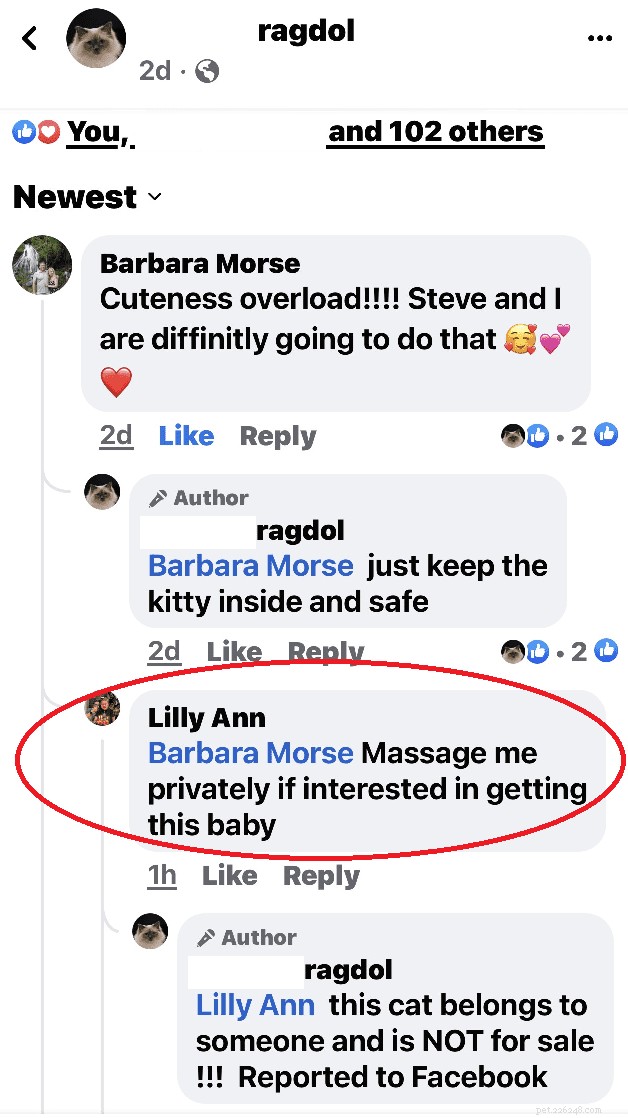
If you suspect a listing is fraudulent, use Facebook’s reporting tools. Provide screenshots and any evidence; Facebook will review and may remove the page.
Beware of “Scam‑Help” Pages

Some fraudsters target other victims by offering “expert” assistance to remove a scam page. These are themselves scams—avoid clicking on any unsolicited help links.
Where to Find Reputable Sellers

Look for breeders with a professional website, verifiable health certificates, and a willingness to arrange an in‑person visit. Even then, exercise caution when purchasing online.
More Paw‑some Articles from Floppycats

Explore our other cat‑focused pieces, from the personalities of orange cats to hilarious feline mishaps and the quirky habit of “splooting.”
10 Cat Lover Opinions: Is The Stereotype About Orange Cats Real?
Feline Fiascos: Cats Caught in Embarrassing and Compromising Situations
Ragdoll Cats and Their Unusual Resting Positions
Cats Lying Flat on Stomach with Legs Out – Splooting
Real‑Life Cat Heroes
- Pet Behavior
- Pet Breeds
- Pet Names
- Pet Adoption
- Pet Training
- Cat Stories
- Pet Health
- Adorable Pets
- Cats
- Anableps (Four-Eyed Fish): In-Depth Species Guide
- Cornish Rex Cat: A Gentle, Silky‑Coated Companion – Breed Profile & Care Tips
- Ariege Pointer: Characteristics, Hunting Skills, and Family Compatibility
- Discover the 9 Most Popular Dog Breeds – A Quick Guide
- Blue Belly Lizard Care Guide: Expert Tips for Healthy Pets
- How to Train Your Cat to Use a Scratching Post and Protect Your Furniture
- 11 Cat‑Friendly Herbs: Safe Plants & Which to Avoid