

Stop Your Cat from Licking Wounds: 3 Proven Techniques for Faster Healing
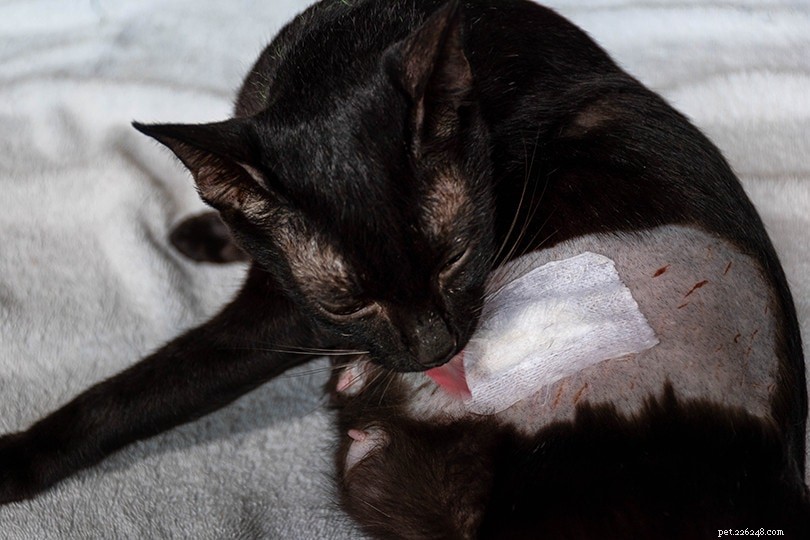
Wounds are a normal part of life for all living creatures. As a fellow cat lover, you’ve probably heard a time or two that you shouldn’t allow your cats to lick their wounds. Even though it seems to comfort them, it can only make the injury worse if you allow this behavior to continue. It can be a bit challenging to stop your cat, but it’s necessary in order for her to recover quicker and get back to her normal self.

Why Do Cats Lick Wounds?

There are several reasons why cats try to lick their injuries. Think of their wound similar to one of yours. For example, after getting spayed or neutered, your cat’s hair starts to scab and the hair regrows. The affected area is itchy while healing, and it feels good to scratch it. Cats also have the instinct to lick away blood so that predators can’t track them. While they probably aren’t in any danger from predators, it is part of their DNA to protect themselves.
Cats could also be licking a fresh wound to try and keep it clean. Unfortunately, this could jeopardize the healing process and you’ll have to step in and prevent them from continuing.
Caring For Cat Injuries
Fresh wounds range from minor to more serious. If your cat has a small scrape, make sure to clean it up with soap and water and it should start to heal on its own time. Deeper cuts or injuries may require a trip to the vet for deeper cleanings and sutures to keep it closed. If you’re unsure about what to do, the vet is always the best person to assess the situation and determine what kind of treatment is needed.
Ways to Keep a Cat from Licking Its Wounds
Cats are determined animals, and stopping them from doing things they want to do is a challenge. What are some helpful options if you can’t get your cat to stop licking their injuries? Let’s take a look at some of the best cat-licking deterrents.
1. Bandage the Area
Probably the easiest way to get your cat to stop licking a wound is to wrap a bandage around it. Ensure that the dressing you use is dry and clean. Change bandages on a daily basis to help the wound heal.
Some cats continue to lick or chew on the bandage until it’s destroyed. This behavior can be a pain, but there is also a way to stop this from happening.
2. Apply Topical Ointments
There are some topical solutions specifically made to keep cats from licking themselves. Many of these products have unpleasant tastes. As soon as your cat starts to lick, the bitter taste is going to keep them from going in for more action.
3. Use a Neck Collar
Neck collars are commonly used for all animals that have recently undergone surgery or received some sort of injury. These collars wrap around the cat’s neck and make it harder for them to reach the affected area. There are two common types of collars. The first looks like a lampshade and blocks them from reaching the wound. While effective, it does take a couple of days for the cat to adjust to it. The second is a firmer collar that prevents the cat from turning its head. They are similar to a neck brace. While they are effective for most wounds, they aren’t the best for those that are located on their front legs.
Why It’s Important to Stop a Cat from Licking Its Wounds
Cat saliva actually does contain antibacterial properties that help them in the wild and usually keep them from getting infected. It also has painkilling properties that help ease the pain and keep them on the move. However, the disadvantages of licking far outweigh the advantages.
Saliva isn’t the only thing that’s left behind while your cat licks themselves.
Regardless of the antibacterial properties, it is still mixed in with a dirty mouth that is rarely brushed. Bacteria still lingers in your cat’s mouth and gets left behind. Cat’s may be notorious for their grooming habits but think about all the unsanitary places that they spend cleaning. All of these germs end up in their mouths, and the last place you want those germs to end up is on an open wound. If you don’t keep the wound free from bacteria, you’re just asking for an infection.
What Happens if a Wound Gets Infected?
Infections turn to abscesses and, if left untreated, can lead to some severe and potentially life-threatening problems. Signs of an infection include one or more of the following symptoms:
- Fever
- Red or inflamed skin
- Pus or blood on skin
- Excessive itching
- Loss of hair
- Swelling
- Lethargy
- Drooling
- Loss of appetite
- Vomiting
- Diarrhea
- Foul-smelling discharge
Final Thoughts
Even though our cats think they can take care of themselves, we are their guardians and have to act in their best interest to keep them safe. It can be tempting to let them do whatever they want to do, but your supervision is crucial for speeding up the wound’s healing process and getting them back to normal.
- Pet Behavior
- Pet Breeds
- Pet Names
- Pet Adoption
- Pet Training
- Cat Stories
- Pet Health
- Adorable Pets
- Cats
- Prevent Your Dog from Licking Stitches: Simple, Safe Tips
- Stop Cats from Pooping in Your Yard: 8 Proven Strategies
- 10 Proven Ways to Keep Cats Out of Specific Areas Safely
- 5 Expert Tips to Stop Cats From Climbing Window Screens – Safe & Easy Solutions
- 5 Proven Ways to Keep Your Cat From Climbing Trees
- How to Safely Keep Cats Away from Your Christmas Tree: 5 Expert-Approved Techniques
- 8 Proven Techniques to Keep Cats Out of Specific Rooms