

Understanding Your Cat’s Nighttime Energy: Why They’re Active After Dark
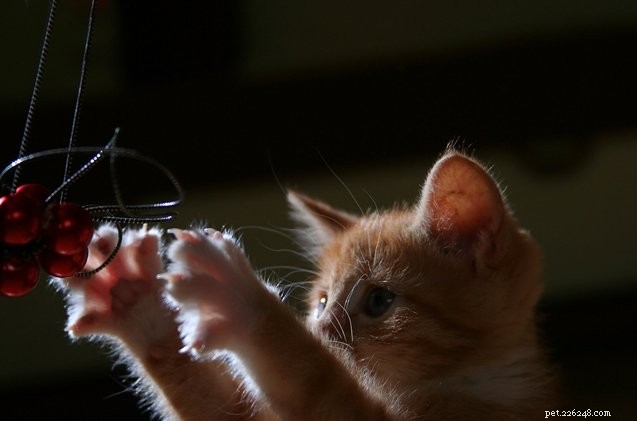
When the sun goes down, your cat is on the prowl… for madness and mayhem! What is it about the night time that brings out the friskiness in our cats?
While you may think “Midnight Madness” is a late night sale at the local mall, those of us who share space with a feisty feline know better. It means Fluffy racing around the house in the wee hours while emitting a bone-chilling howl.
For my tiny tabby Shelby, it was like clockwork. The guttural, throaty call and the tap, tap, tap of busy claws on hardwood floors would begin at 3 am. By morning my bed was peppered with favorite soft toys that she had “killed” and brought to me throughout the night.
This manic behavior is not uncommon in cats and there can be a number of reasons your kitty feels the witching hour is the best time to cut loose and let off steam. Here are six common thoughts about the feline phenomenon:
Is it nature or nurture? Cats in the wild typically hunt at night and it doesn’t matter a hoot that your girl is well-fed; her need to stalk and hunt out the predators she imagines lurking under the bed and in your cupboards can be what’s driving her late night antics. And if your rambunctious feline isn’t running around the house in the middle of the night, you might discover that she likes to wake up at dawn to go on the hunt like she would if she were living outside on her own. That’s because cats are typically most active at dusk and dawn. This is when the prey animals that they like to go after are out and about and easier to catch. Either way, whether she’s most active at night or at dawn, her energetic behavior might be super annoying if she ends up waking you up before your alarm is set to go off.
When hunger strikes. Another reason why your cat might be acting up during the night is because she’s feeling hungry. While you might be fast asleep, her tummy might be growling and ready for a midnight snack or meal. This might cause her to run around, making loads of noise to try to get your attention. Or, again, it might happen in the early hours of dawn when her natural instinct tells her that it is time to get out there and hunt down some breakfast. So, figuring out the right meal schedule might make a difference if this is the reason your cat acts a little crazy during the night.
Related: Top 5 Puzzle Games for Cats
Lazy, crazy or both? Most felines spend the day indoors chasing nothing more than a ray of sunshine. They typically sleep, eat then sleep some more. While this used to be in anticipation of the night’s big hunt, that isn’t the case anymore and all that lying about just leaves them with pent up energy that needs an outlet. But even though your cat might just be releasing all of the energy she built up throughout her inactive day, it is important to consider that she might also be more active at night because she’s hoping to get your attention. After spending the day without you, and maybe even feeling quite bored, especially if she doesn’t have any other kitties to keep her company, she might let all of her energy out at night. Taking steps to interact with your pet during the day, giving her a chance to spend plenty of time with you, and also taking some time out for interactive play with her, might be what she needs.
Guard duty calls. My crew go ballistic if another cat suddenly appears outside a window in the night (not so much for raccoons or possums). Those deep, threatening yowls include racing from window to window to keep the offender out and protect her turf. Note that if you have multiple cats, the creation of an instant yowling tag-team is imminent.
Could it be fleas? The cause may not be down to pent up energy but annoying, itchy fleas that are driving your cat round the bend. Even if she’s an indoor puss, simply strolling in the yard can be enough to pick up fleas. Never assume it “can’t be” because this is one potential cause you’ll want to identify and deal with immediately. Trust me! If you don’t tackle the flea problem right away, you might end up with an infestation that not only attacks your cat but also attacks you and your family.
While some may recommend confining her to a separate room at night, to me that just seems like punishment for her being, well, a cat. Some other solutions include:
- Have a highly active play-date with her before bedtime – chasing a laser pointer, hiding toys, fetch – followed by her dinner. This can help quell her urge to hunt and catch, and a full tummy has a calming influence. My dad used a fishing rod with soft toy at the end. Cast out, reel back in and you’ll have her pouncing in no time (without the need to get up to fetch toys she caught and ditched).
- Keep her engaged during the day. There are many inter-active gadgets on the market that will allow you to talk to your pet and even call her over to it so you can actually toss a treat from time to time.
- Check out toys that can be can be set on a timer. It will catch her off-guard when you’re out, keep her on her toys and help prevent boredom.
- Mix it up when it comes to her playthings. When you sense she’s losing interest in the same-old-same-old stuff, pull out some new toys and store the old ones for later. Douse ‘em with catnip and you’ll buy yourself hours of playtime when you’re not home.
- YouTube offers up a number of cat-friendly channels that include birds, fish tanks and scurrying mice. If you’ve got a video-loving feline, pop something on to keep her happy when you’re not around.
- Let them quell their need to explore. I let my crew out on the deck for 10-15 minutes each morning. Rain or snow (be on hand to let them in asap), it satisfies their need to survey what’s going on in their yard, make sure their catnip plant hasn’t been messed with (yes, even in winter) and overall just seems to calm them for the rest of the morning.
- If she’s the only pet in the house, consider increasing your family. Cats are social and love the companionship of another feline or pooch. Choose carefully and take the time to integrate.
If these tricks aren’t working, and your inspection for fleas and vermin proves negative, you may want to speak with your vet. There is a disorder known as Hyperesthesia syndrome which can present similarly to above and includes obsessive scratching or grooming and running about. While not fatal, it does need to be treated and controlled with the advice of your vet.
- Pet Behavior
- Pet Breeds
- Pet Names
- Pet Adoption
- Pet Training
- Cat Stories
- Pet Health
- Adorable Pets
- Cats
- Why Cats Hiss: Decoding Their Defensive Body Language
- Why Do Cats Meow at Night? Understand Their Behavior and Find Peaceful Solutions
- The Science Behind Cats' Curiosity: Why They Knock Things Over
- Why Cats Knead: The Science Behind Their Affectionate Behavior
- Understanding Your Cat’s Nighttime Yowls: Causes and Solutions
- Why Cats Trill: Understanding the Sweet, Mysterious Sound
- What Causes a Bulldog to Be Restless at Night?