

How to Stop Your Cat From Peeing Inside: A Practical Guide
If your cat has ever peed or sprayed in your house, you know how difficult it can be to get those harsh odors out of carpets or furniture. After a long day at work, the last thing you want to come home to is a smelly mess. So if you’re asking yourself, how do I stop my cat from peeing in the house? we have your answer in this guide!
The first step to dealing with marking behaviors is to identify if your cat is spraying or urinating. Knowing which behavior is occurring will help you solve the problem and keep your house clean and your cat healthier.
Cat spraying vs peeing
First, identify if your cat is spraying or urinating. You’ll be able to tell by the posture your feline takes when marking. Cats urinate by squatting onto horizontal surfaces and leaving a larger pool of urine. If your cat is spraying, they will stand up, lift their tail, and project towards a surface; you’ll also notice their tail quivering.
For those times you don’t catch your cat in the act, know that in general cats spray on vertical surfaces, like the wall, and urinate on horizontal surfaces, like the floor.
Why do cats spray or pee outside of the litter box?
The answer to why do cats spray? is usually pretty simple. In most cases, male and female cats (typically those not neutered or spayed) spray as a way of communicating and marking territory. Cats urinate outside of the litter box because they have a behavioral or medical issue—which is not so simple.
Keep in mind that if your cat urinates outside of the litter box, it’s not because they are trying to be a menace. This type of behavior can be due to stress, urinary tract infections, litter box issues, and so much more. Here’s a deeper look into the reason this behavior is taking place.
Health issues
Cats that are experiencing health issues are more likely to urinate outside of the litter box, rather than spraying. Health issues associated with not using the litter box include bladder stones, urinary tract infections, chronic kidney disease, arthritis, diabetes, cystitis, and metabolic disease. It's a good idea to get your cat evaluated by a veterinarian if they’re having accidents outside their litter box.
Territorial marking
Cats mark their territory for mating purposes and to signal ownership. Marking can occur when other cats are in the vicinity. Cats will also mark their territory when they feel threatened or stressed by other animals.
Getting your male cat neutered or female cat spayed is the best way to reduce territorial spraying. Another great way to help deter your cat from spraying or urinating in your home is to use an enzyme-based cleaner like this pet-safe cleaner spray. Not only will this cat pee deterrent help stop your cat from marking in the same spot, but it will also eliminate the intense odor and stains.
Feral cat outside
Say you don't have another cat indoors causing your cat to spray or urinate. If your feline sees a feral or stray cat outside, this may trigger them to mark for a territorial reason, to taunt the outdoor cat, or even for mating purposes.
Change in routine or environment
Cats are very sensitive to changes in their environment, which can cause them to inappropriately urinate or spray. Something as simple as redecorating can trigger your feline. Other environmental changes that might affect your cat are moving to a new home, adopting another pet, or switching to a new type of litter.
Emotional stressors
Stress can be a big trigger causing your cat to spray or pee around your home. When a cat feels anxious, scared, or threatened, marking is a natural response. Triggers can include other pets, not having a safe space to relax, or disruptions to their daily routine. Give your cat a comforting space like a cat orb when they need some additional privacy.
Feeding schedule
Cats like routine, so irregular meals can cause stress. A great way to combat inconsistent feeding times is to try a timed automatic pet feeder and food dispenser so you can keep to a feeding schedule. You’ll also want to be sure they like the food you're feeding them!
Litter type
It's common for cats to have a litter preference. They may avoid using the litter box if they don't like the scent or texture of the litter you're using. If you notice your cat straying from the litter box, consider using a different type of litter like all-natural clay-clumping cat litter, for soft, unscented, and odor-absorbing litter your cat is sure to appreciate.
Old urine smells or dirty litter box
Because cats can be territorial, old urine smells from other animals can trigger a negative response. Recycled pet trees or moving into a home whose previous owners had a cat can lead to territorial marking. It's also important to keep your cat’s litter box clean, as cats aren't a fan of using dirty boxes.
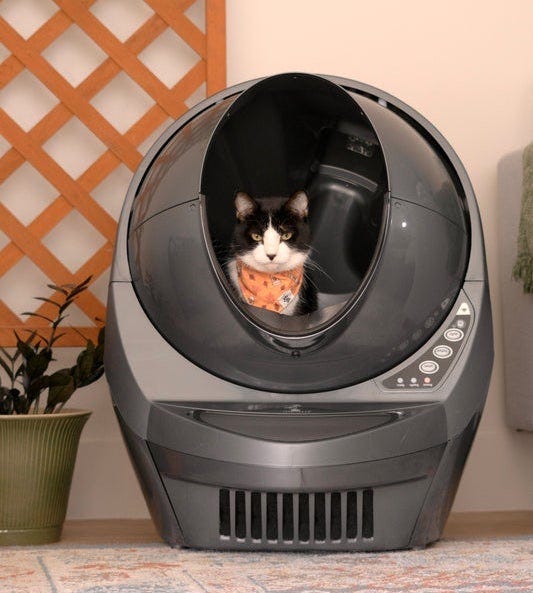
Take the hassle out of cleaning your litter box constantly with the Litter-Robot 3 Connect. This self-cleaning, automatic litter box will separate soiled litter into a drawer below as soon as your cat is finished using the box. And with the app, you’ll be notified when the waste drawer needs to be emptied.
Litter box location
If the litter box is placed in an area where your cat feels uneasy doing their business, like high-traffic or loud areas of the home, it may cause them to find other places to go. Pay attention to if your cat is peeing in the same spot outside of the litter box and try moving their box to that location.
Too few litter boxes
The rule of thumb for traditional scooping litter boxes is you should always have one more litter box than you have cats. So, one cat = two litter boxes, two cats = three litter boxes. If the litter box is occupied or soiled by another cat, it may deter your feline from using it. Consider getting an automatic litter box like the Litter-Robot 3 Connect, which can better accommodate multiple cats due to its self-cleaning technology and waste management capabilities.
- Pet Behavior
- Pet Breeds
- Pet Names
- Pet Adoption
- Pet Training
- Cat Stories
- Pet Health
- Adorable Pets
- Cats
- Prevent Cat & Kitten Biting: Proven Training Tips
- Effective Ways to Keep Your Carpet Safe from Cat Scratching
- Stop Your Cat From Urinating on the Bed: A Step‑by‑Step Guide
- Resolving Cat Conflicts: How to Stop One Cat from Bullying the Other
- Stop Your Dog from Peeing Inside: Proven Strategies for House Training
- Stop Your Cat from Peeing Outside the Litter Box: Proven, Easy Solutions
- Effective Strategies to Prevent Cat Spraying and Keep Your Home Fresh