

Recovered from Illness, My Cat’s Personality Changed – Expert Guidance
Roughly a week ago, a new reader, Rooksaar, stumbled across my blog while digging for information about behavioural changes in cats, and in particular, about personality changes that occur after illnesses.
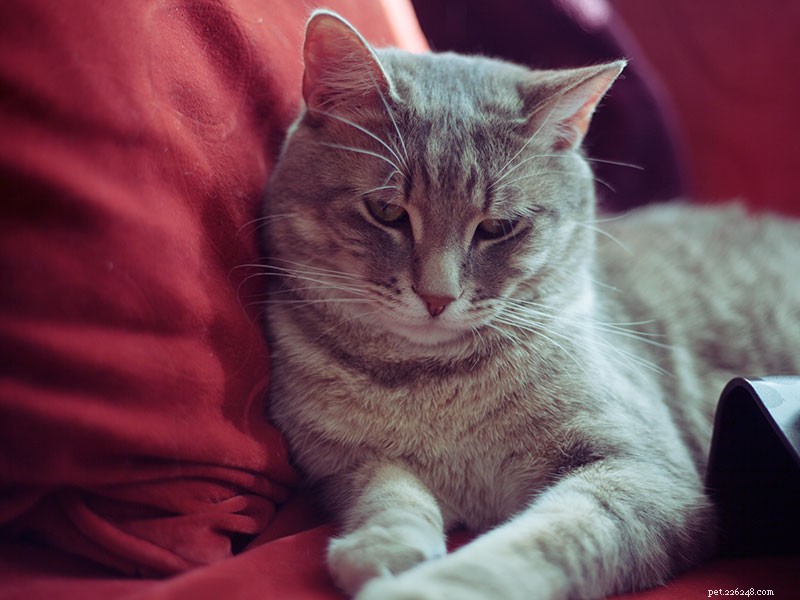
Her newly adopted shelter cat had taken ill with an upper respiratory infection almost immediately after being taken home, and on his successful road to recovery, he sadly transformed from the loving, affectionate lap cat she fell in love with to a discontented kitty who bit quite frequently and preferred to be left alone rather than being cuddled or petted – as he used to like.
Not finding much on the net about behavioural changes post-illness specifically, she asked me to write up a post on the topic. Here’s her question:
I’m going to say here for the record: I am not a vet or pet expert. Just your run of the mill pet parent who likes to research things and test things out to make for optimal cat happiness in her home. I don’t even have a crazy amount of first-hand expertise with cats, only have the one and in my particular case, one who’s never been ill or sick in his time with me (roughly 3 years). But I do have some thoughts on the matter, and these are my own opinions but I’m happy to change them if you can show me they’re off anywhere. Have any corrections or don’t agree with something in particular I’ve said? Bits and pieces resonate with you? Please leave your input down in the comments – your wisdom could really help other pet parents and their pets. Now let’s jump into my thoughts on this topic.
The Connection Between Feline Illness & Behavioural Changes in Cats
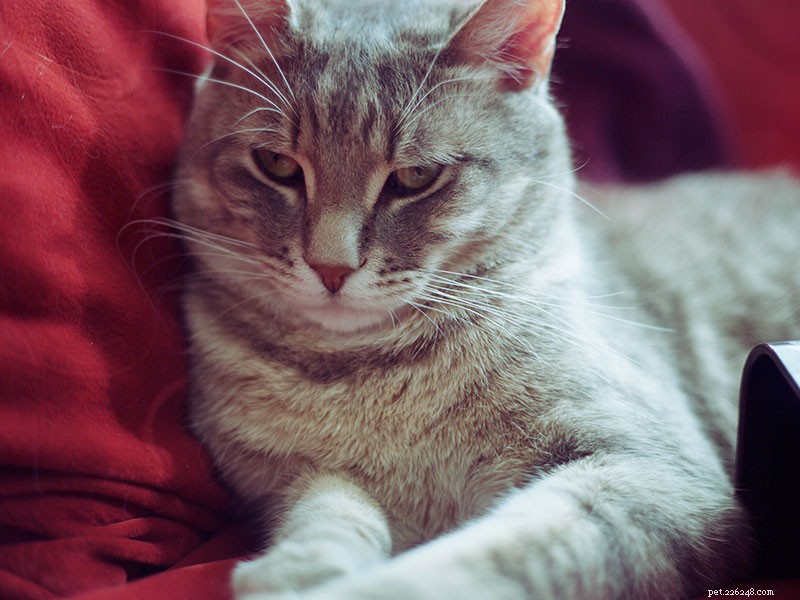
Do a quick search on the internet about behavioural changes or personality changes in domestic cats and you’ll get long lists of types of these changes to look out for in case your cat is sick. There’s an obvious connection between illness and change in a cat’s personality and behaviour, and when the problem is patched up, it makes sense that a cat would not immediately return back to normal.
That being said, personally, I think it’s completely possible to get a cat’s initial personality back – with effort and prodding on a pet parent’s part for the speediest recovery to a cat’s normal state. There should be a full return “back to normal” over time in my mind so long as the cat returns to tip-top health after the illness, and here’s why.
Cat Behavioural Changes During & After Illness Are Co-Related With Discomfort
When it comes to behavioural changes in relation to illness, it’s pretty obvious at first glance why a cat’s behaviour changed in the first place.
Being sick is not fun. It’s uncomfortable, annoying, and frustrating all in one. Not being able to breathe (in this particular case) is certainly something to be bothered about, and the discomfort from the illness by itself likely would have caused behavioural changes. I know if I had issues breathing temporarily, I’d probably act out and suffer an enormous behavioural change; with a cat it’d be the same thing.
On top of being agitated by the illness itself we have the fact being lugged to and from the vet’s is also not fun for a cat. It’s a necessary evil, but it’s still pretty exhausting for our furry ones. Cats also hate big changes and, let’s be honest, things always change in quite big ways when pets are sick. We have to give cats their medicine or change their environment in ways that will help them recover from their illness or diseases. In your particular case you said a dehumidifier your cat hated was helping with the breathing – again, a necessary evil, but any source of agitation definitely can contribute to the overall discomfort a cat feels, and thus temporarily cause a change in behaviour or personality.
Why Cats May Not Go Back to Normal Immediately After Being Cured
You might think all this is fair enough, but when humans get sick, then are patched up and return to perfect health, we’re essentially back to our peppy selves immediately. And while for the most part, I’d have to agree that this is the case – it isn’t always true.
Let’s say a human gets cancer. But it’s very early stage, and a surgery can remove all the cancer cells. The surgeons manage to cut absolutely everything cancerous out in one go, but even after the cancer is 100% gone post-surgery, that human is still going to feel exhausted – tired, probably irritated, and completely wiped out. It may take weeks or even months for that human being to feel back to normal – your cat after being remedied is probably in a similar boat.
What do you do for a person who’s recovering from surgery, or for a person who’s still recovering from the process of being cured of an illness or disease? You give them space and time, spoil them with their favourite things, treat them as if they’re fragile for the time being (which they likely are), and slowly test things out they might like because there are always things a person typically likes that he or she won’t when ill or exhausted. Will they return to normal? Absolutely – slowly but surely they will be back to their good ol’ self once the discomfort – the pain and exhaustion – are alleviated.
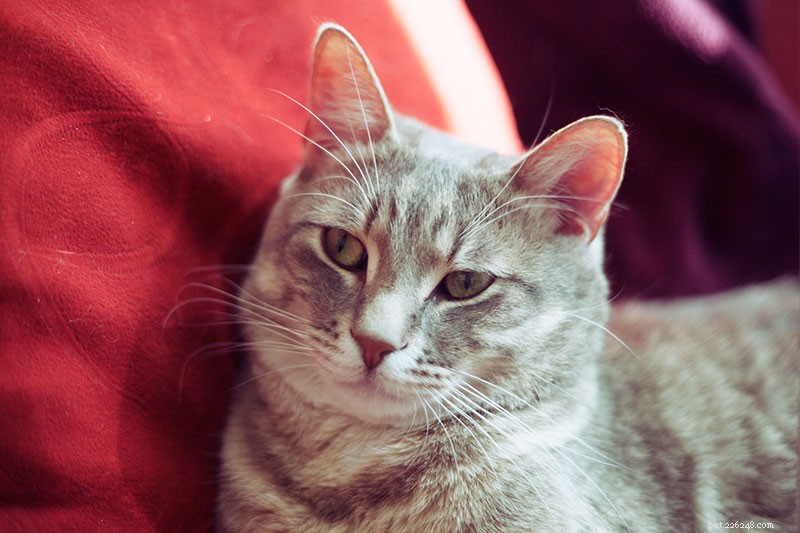
Technically, I guess I’d say that if your cat’s personality hasn’t returned back to normal, but he or she is better, that your cat has been cured, but has not fully recovered from the illness yet. It’s still taking it’s tole. Still felt in terms of wear and tear. Your cat will need time to feel better, even though he or she is better.
How Can You Help Recovery Along to Get Kitty Back to Normal Speedily
Again, I’ve never had an ill cat (though my brother and mother have both had sick cats), but I have dealt with a few short-term personality and behavioural changes in my cat Avery. These specifically happened after we moved houses – which we’ve done quite a lot, and the two times we flew with Avery on a plane when emigrating to a new country.
The following are some of the tricks I used to help along his recovery from exhaustion, shock from too much change, and in general being withdrawn or excessively hiding. I hope these will also help a cat recovering from illness to get back to normal in the quickest way possible.
- Keep your cat confined to one small-ish room. Essentially a recovery room.
- Make sure it’s a room kitty can see out of a window very well from, extra points for a window that’s got a nice view or vantage point of birds, but no people, cars, or dogs that may stress your kitty out. Make sure absolutely everything kitty needs (food, water, litter, scratching post) is in the room, and keep food in ample amounts even when it’s not being eaten. Cat can’t get to the window easily? Place a chair next to the window sill, and if the sill isn’t wide enough for your cat to sit comfortably, drag a dresser or another piece of furniture that’s the right height next to it. Place a sweater or a blanket on top to make a perfect kitty-napping spot with a view. Chances are high this is where your cat will spend most of his or her time.
- Make sure the room is quiet, and if you need to drown out noise from renovations, traffic, or whatever else, invest in an air purifier and blast it on low, medium, or high (depending on how much noise there is to drown out) to create white noise that will keep kitty calm.
- Create a space for your cat to hide if he or she wants to. Easiest way to do this: drape blankets over a chair or a table to create a little cave of sorts for your cat. Lots of renovations or stressful things going on? Keep the air purifier just outside the hiding spot, so kitty can feel really safe and not hear much of the commotion when inside his or her hiding spot.
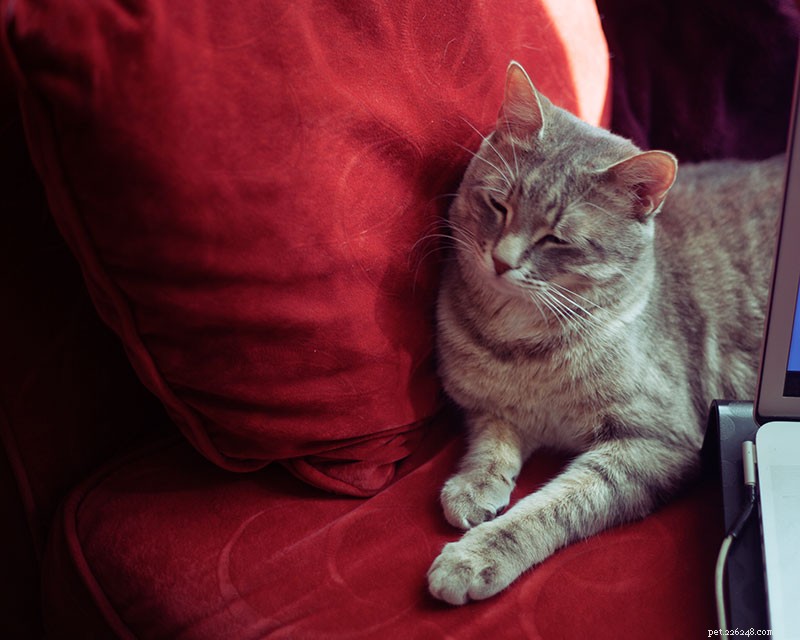
- Fill the room with your cat’s favourite things – blankets, pillows, cat beds, yours sweaters – whatever you have that kitty used to love or you think your cat might love to snuggle and nap in. Provide plenty of toys, offer to play, but no pressure, and if possible, keep kitty company passively by sitting with a laptop or browsing on a phone near your cat, but without pressuring your cat to interact for a number of hours each day.
- Try to figure out if there are ways you can pet your cat that he or she is okay with. If something’s not working, don’t do it again for a few days. If something is working, continue to do it but don’t overdo it, as over-stimulation when a cat is exhausted is no fun.
- Be patient and play things by ear. If your cat suddenly begins sniffing at the door, it’s time to let your cat out of the room to explore (don’t immediately move things in the recovery room, he or she may want to come back) because he or she’s ready to tackle inspecting the rest of the house. If he or she’s content to be left in the room, let him or her stay until activity levels are high again.
Signs You’re On the Sure Road to Recovery
Because it’s always nice to have little milestones to feel progress is being made, watch out for some of these signs your cat is returning to normal (again, based on my limited experience with personality changes in cats):
- Kitty’s stopped hiding.
It may not feel like a big deal, but cats that are hiding are definitely scared, and being rid of that fear is a definite step forward. Cat never hid? That in itself is a great sign. - Your cat takes a nibble of food, drinks, and uses the litter box.
For a lot of people, this will be the first huge sigh of relief, because cats will when stressed often decline to do any or all of the above for what feels like ages to us pet owners. All three checked? Next awesome milestone… - Your cat isn’t just napping, but also enjoys looking out the window.
I’ve always felt like looking out the window is the best distraction to get cats back on track to being less stressed. I feel it pulls them out of their head and helps them recover faster than anything else, so if your cat is spending his or her days looking out windows for hours instead of simply napping and resting endlessly in a hiding place, this is amazing. - Kitty’s happy to be petted in specific ways.
Even a little petting being tolerated is a huge step forward. Keep petting your cat in short bouts and don’t overdo it. But take this as a great sign. - Your cat’s begun to move around, sniff, inspect, and even “explore.”
Again, a really big step forward, though you might not feel it is. Exploring means your cat is really coming out of his or her shell. Encourage this with positive words and affirmation, as well as petting if any physical contact is tolerated. - Your cat’s appetite is returning.
If kitty’s not feeling so hot, chances are his or her appetite won’t be so high. You’ll get a nibble or two every once in a while at best. Notice your cat’s appetite returning to normal? Take that as a sign recovery is well underway. - Your cat enjoys playing in ways he or she used to.
For some reason my cat always seems to not want to play at all whenever he’s withdrawn or in recovery from any type of distress. He is lazier than most, so maybe other cats will play, just not to the extent they used to, but either way, getting your cat to play as he or she did before is a really, really good sign your cat’s recovering well. Take advantage of this by playing with your cat as often as he or she will. Relieving aggression this way and tuckering your cat out “the right way” (the wrong way being attacking humans!) will really help with behavioural issues like biting to be resolved over time. As a side thought, you may also want to try having some of these chew toys around in case your cat has just developed an interest in biting and has nothing appropriate to take it out on. - Kitty approaches you on his or her own.
Even if it’s just a little bit, if your cat is walking toward you and sniffing or rubbing him or herself on your legs – this is an almost certain sign that bright days are just around the corner. - Kitty sleeps belly up, slow blinks at you, and acts very comfortable on his or her own.
While you may not yet be able to pet your cat the way you used to, this is a sign that your cat is getting more comfortable around you again and is likely to soon be happy as a clam as he or she used to be.
That’s all I can think of for now, but if you have any other signs of recovery in mind after a personality change – please leave them in the comments down below!
Your Experiences with Cat Personality Changes & Illness?
Do you have firsthand experience with behavioural changes after a cat became ill? How long did they take to resolve themselves?
Did the cat go back to normal completely or not quite? Did anything you did help? Anything not help?
On behalf of pet owners with this problem, thank you for taking the time to leave a comment about your thoughts and experiences!
- Pet Behavior
- Pet Breeds
- Pet Names
- Pet Adoption
- Pet Training
- Cat Stories
- Pet Health
- Adorable Pets
- Cats
- Expert Cat Grooming Tips: Keep Your Feline Stress‑Free
- Recovered from Illness, My Cat’s Personality Changed – Expert Guidance
- Immediate Action: How to Handle a Poisoned Cat Safely
- Savannah Cats: Uncovering Their Unique Personality Traits
- Why Your Cat’s Personality Evolves – Key Factors & Insights
- What to Do When Your Cat Contracts Herpes: A Comprehensive Care Guide
- 6 Key Indicators Your Cat Is Ill – Spot Symptoms Early