

How to Read a Cat Food Label Like a Pro: Decoding Ingredients for Optimal Nutrition
Choosing the right food for your feline companion can feel like navigating a maze of bright packaging and bold claims. Words such as “natural,” “grain‑free,” and “premium” are often unregulated, making it difficult to determine what truly benefits your cat. The key lies in understanding the ingredients list, guaranteed analysis, and nutritional adequacy statement—once you do, the labels become a reliable guide to your cat’s diet.
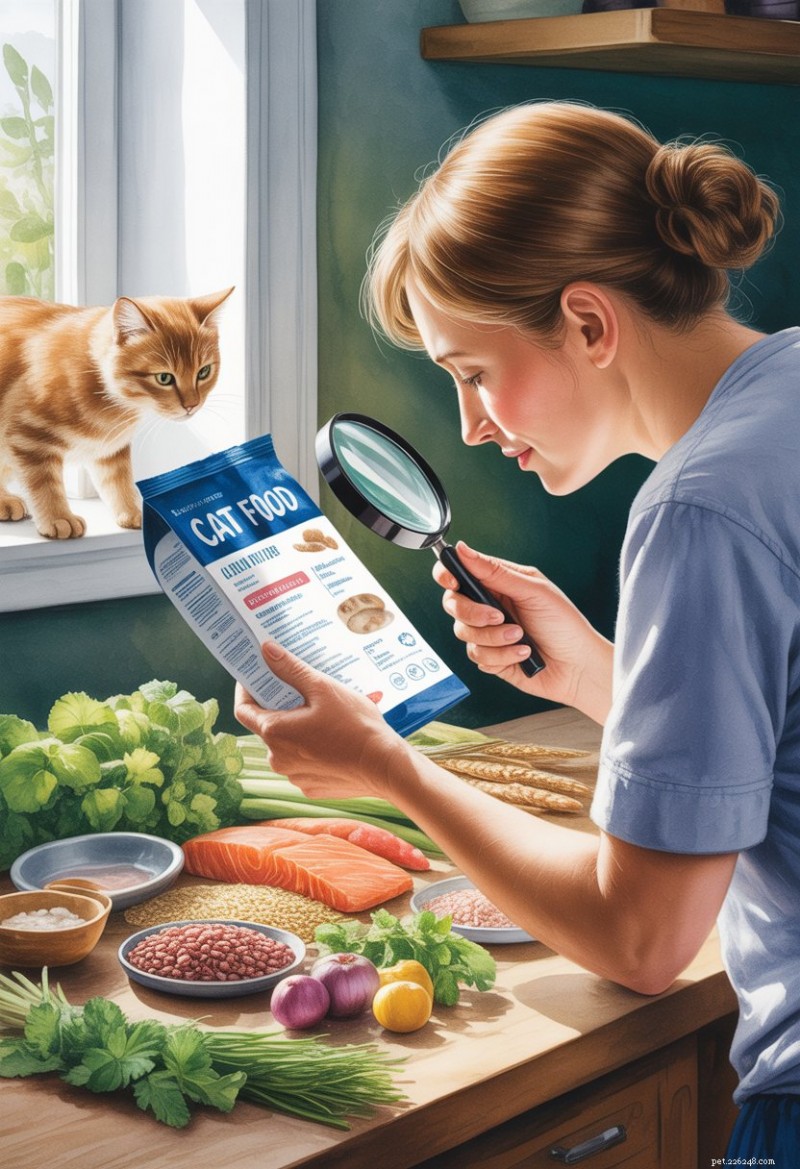
Understanding Cat Food Label Basics
Cat food labels are governed by specific regulatory requirements that differ from other pet foods. These guidelines help you identify ingredient quality and nutritional value.
Key Parts of a Cat Food Label
Every label contains five essential sections:
- Product Name and Brand—the wording reflects ingredient percentages. For example, “Chicken Cat Food” means at least 70% chicken, while “Chicken Dinner” indicates 25‑70% chicken. “With Chicken” is only about 3%.
- Guaranteed Analysis—lists the minimum crude protein and fat, and maximum crude fiber and moisture. Adult cats need at least 26% protein in dry food or 10% in wet food.
- Ingredients List—sorted by weight, with the first three ingredients indicating the bulk of the formula.
- Nutritional Adequacy Statement—confirms compliance with AAFCO standards and specifies the life stage it targets.
- Feeding Guidelines—suggests a daily amount based on weight and age. Treat these as a starting point, not a strict rule.
Differences Between Cat and Dog Food Labeling
Because cats are obligate carnivores, their food requires higher protein (minimum 26%) and specific nutrients like taurine and arachidonic acid—elements dogs can synthesize. Life‑stage labels (“kitten,” “adult maintenance,” “senior”) and ingredient terminology also differ.
Front of the Package: What It Really Means
Product Name and Branding
Regulations tie the product name to ingredient percentages, so “Chicken Cat Food” guarantees at least 70% chicken. Words like “premium” or “grain‑free” are marketing buzzwords without regulatory weight.
Identifying Net Weight and Brand Lines
Net weight appears prominently and is crucial for cost comparison. Compare cost per pound or ounce, not just sticker price. Brands may vary significantly between product lines; never assume all items from a single brand are identical.
Deciphering Marketing Claims
Claims such as “natural,” “grain‑free,” or “premium” are unregulated and may not reflect ingredient quality. “Complete and balanced” is meaningful—it indicates compliance with AAFCO standards.
The Nutritional Adequacy Statement and Compliance
AAFCO Standards
The Association of American Feed Control Officials sets the nutrient profiles for “complete and balanced” cat food. There are two main profiles: adult maintenance and growth/gestation/lactation.
Understanding the Statement
The label will state whether the product meets AAFCO standards by formulation or by feeding trial. Feeding trials are preferable as they demonstrate real‑world efficacy.
Life‑Stage Suitability
Labels may specify “kitten,” “adult maintenance,” or “all life stages.” Kittens need higher protein and calories; adult maintenance foods meet those needs for mature cats; “all life stages” foods meet the more demanding kitten standards but may not address senior needs.
Ingredient List: Decoding What’s Inside
Ordering by Weight
Ingredients are listed by weight before processing. Fresh meat appears first due to its water content, but meat meals (e.g., chicken meal) are dehydrated and represent a higher protein concentration.
High‑Quality Protein Sources
Look for named proteins—chicken, beef, salmon, lamb—in the top three ingredients. “Meat” or “poultry” are vague; “meal” indicates concentrated protein. Multiple protein sources can enhance flavor and nutrition.
Fillers and By‑Products
Common fillers include corn gluten meal, wheat gluten, soy protein concentrate, rice hulls, and peanut hulls. Meat by‑products may range from organ meats to bones; avoid vague terms like “poultry by‑products.” A higher plant protein content usually signals lower quality for a carnivore.
Nutrients to Look For and Their Role
Taurine, Arachidonic Acid, and Essential Minerals
Taurine is essential for heart, vision, and reproductive health; cats cannot synthesize it. Arachidonic acid, derived from animal tissues, supports skin, coat, and immunity. Calcium, phosphorus, magnesium, potassium, zinc, iron, and copper maintain bone health, muscle function, and immune support.
Vitamins and Omega‑3 Fatty Acids
Vitamin A (pre‑formed) is vital for vision and immunity; B vitamins support energy and nervous function. Omega‑3s (EPA/DHA) from fish oil or fish meal aid brain health and reduce inflammation. Vitamin E, combined with selenium, serves as an antioxidant.
Additives and Preservatives
Natural preservatives like tocopherols (vitamin E) and ascorbic acid are preferable. Avoid synthetic additives such as BHT, BHA, and ethoxyquin. Artificial colors offer no benefit and may cause sensitivities. Look for probiotics and prebiotics to support gut health.
Analyzing Guaranteed Analysis and Caloric Content
Evaluating Crude Protein, Fat, Fiber, and Moisture
Crude protein and fat represent the lowest guaranteed amounts. Crude fiber shows the maximum fiber, and moisture reflects water content—dry food typically 10‑12%, wet food 75‑78%.
Understanding Dry Matter Basis
To compare wet and dry foods, convert to dry matter: subtract moisture from 100, divide the protein percentage by that number, and multiply by 100. Example: 8% protein, 75% moisture → 32% dry‑matter protein.
Assessing Caloric Content and Fat Content
Calories per cup or kilogram inform feeding amounts. Higher calorie foods require smaller portions. Fat contributes more than twice the calories per gram compared to protein or carbs, so monitor fat for weight management.
Feeding Guidelines, Life Stage, and Special Diets
Using Feeding Guidelines for Portion Control
Guidelines provide a daily range based on weight. Example ranges:
- 5‑9 lbs: 1/3 to 1/2 cup daily
- 10‑14 lbs: 1/2 to 3/4 cup daily
- 15+ lbs: 3/4 to 1 cup daily
Considering Activity Level and Life Stage
Kittens need up to three times more calories per pound than adults. Indoor cats consume 20‑30% fewer calories than outdoor cats. Seniors may benefit from gentler formulas and additional joint support. Pregnant or nursing cats require all‑life‑stage formulas with higher calorie density.
Dry vs. Wet Food
Dry food has 6‑10% moisture and delivers concentrated nutrition; wet food contains 75‑85% moisture and requires larger portions to meet calorie goals. Mixing both can provide hydration, convenience, and dental benefits, but monitor total calories to avoid overfeeding.
- Pet Behavior
- Pet Breeds
- Pet Names
- Pet Adoption
- Pet Training
- Cat Stories
- Pet Health
- Adorable Pets
- Cats
- Choosing the Right Treats for Effective Bird Training
- Gus: A Ragdoll's Journey of Love & Healing
- Essential Grooming Tools for a Pristine Rough Collie Coat
- Chizzy Akudolu Donates Time to Mitcham Homing Centre, Caring for Cats
- Top Dog Bathing Products Reviewed: Make Bath Time Easy & Stress-Free
- Step-by-Step Guide to Massaging Your Puppy for Health & Bonding
- Mastering Bird Speech: A Proven Guide to Teaching Your Avian Friend to Talk