

9 Simple Steps to Train Your Kitten: Build Bond & Boost Health
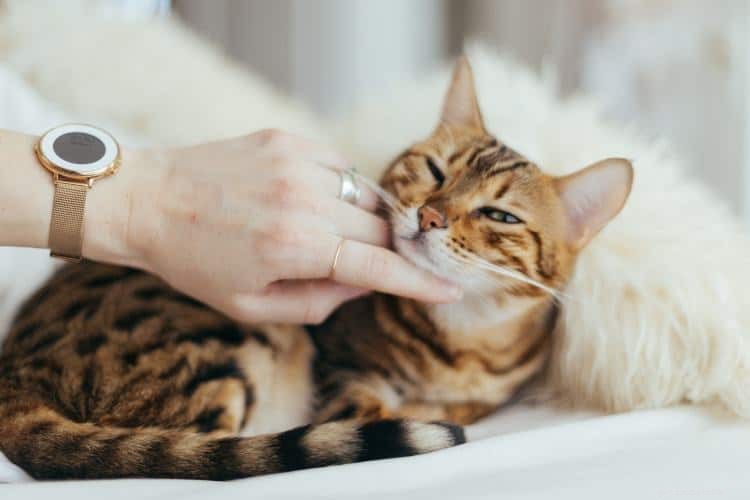
There is more to gain when you take the time to train your kitten. And contrary to popular beliefs, training a cat is not impossible.
Felines are intelligent and so, they can be taught a variety of behaviours and tricks. You stand a better chance at success when you commence training as your kitten arrives home.
Training a kitten stimulates his mind and body, thereby improving his overall health. It also boosts the bond between you and your fur companion.
In this post, I explained in detail how you can train a kitten.
Ready to roll? Let’s get to it!
How To Train A Kitten in 9 Easy Steps
#1 – Socialize Your Kitten
This is the foundation of Kitten Training. If you and your pet get it right at this stage, the rest of the training will be less difficult.
The best period to socialize your kitten is between 2 – 7 weeks of age. This will remove the fear of the company as your cat matures.
Here are a few tips you can try:
• Take your kitten with you as you go for fun-filled outings
• Intentionally invite different folks to your home – friends of different age, gender, hair colour, etc.
• You want to help your kitten be comfortable around different kinds of people
• Invest in a harness and leash so that you don’t leave your pet behind when you are running errands
• After he has received proper vaccinations, you can create avenues where your kitten meets with other cats and cat-friendly dogs.
• Teach your kids how to handle a kitten so they can play with him
• Don’t hesitate to take your kitten in the car for short trips. This is how he will get used to car travels.
• All the while, endeavour to pair every experience with playtime, praise, or treats.
#2 – Training to Sit (How To Train A Kitten)
The easiest way to train your kitten to sit is to maximize the moment that he sits on his own.
At any time you notice your kitten sitting, give him a reward.
Say something as his bottom hits the floor like ‘sit’, or ‘good’, or ‘yes’. Then offer him a treat.
If he tries reaching for the treat with his paw or stands on his hind feet, move the food away until all his feet are back to the floor.
That way, you will not reward the wrong behaviour – pawing/standing on hind feet.
Repeat these steps as often as the opportunity presents itself until your kitten can sit on your command.
#3 – Crate Train Your Kitten
The trick here is to make your kitten see the crate as a place of comfort, fun, and safety.
So, you want to serve him his food there, give him toys to play with, make the bedding comfy, and the likes.
When you start this training, always leave the crate open so your cat does not become suspicious.
After a while, close it at intervals to help your cat get accustomed to staying in the crate.
Then after playtime, you also lead him back to the crate.
With time, you will have no problem securing your kitten in the crate for travel or visit to the vet.
#4 – Train Your Kitten To Receive Different Holding Styles (How To Train A Kitten)
If you keep holding your kitten only in a particular way, he will get used to it and that is not so good.
When you visit the vet or when people come to your house, the chances that your dear pet will be held in different positions are high.
That will be trouble if your kitten is already used to a particular style.
On the other hand, if you have trained your kitten while handling him in different ways, it will be easy for him to tolerate different holding styles no matter how awkward from others.
Be sure to hold him only at levels where your cat feels comfortable and relaxed.
An added advantage of this training is that it makes nail trimming, brushing of teeth, and cleaning of ears a lot easy as your cat ages.
You can hold him on his side, under his arms with his bottom dangling, and on his back.
Other stuff you can try on your kitten for this training are:
• Touching his feet and ears often
• Tugs on his tail
• Running your finger over his teeth and gums.
Ps: As your kitten cooperates, reward him with a treat.
#5 – Train Your Kitten To Play With Toys
I know that you want to bond with your kitten so bad. Sure, ample playtime can help you achieve that.
But you have to apply some caution here. You do not want your kitten to bite and scratch you all the time, do you?
This is the essence of training your kitten to play with toys. While playing with your kitten, use toys instead of your bare hands.
That way, he will not be motivated to bite or scratch at your hand. And he can always play with the toys when you are not available.
Some toys you can use are a feather on a string, a ball or a catnip toy, etc.
#6 – Use a Clicker (How To Train A Kitten)
When training your cat, a clicker can be very helpful. It is used to let the cat know that he is on the right track.
So, when your cat behaves in a manner that pleases you or responds perfectly to an instruction, click and offer him a treat.
Be sure to click at the instant he does the right thing and give him a treat.
As you do that repeatedly, he will master the behaviour that you require of him.
In the absence of a clicker, a pen that makes a clicking sound will do.
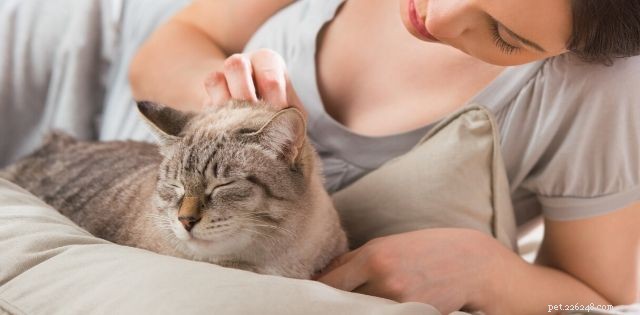
#7 – Training To Eat
You should feed your kitten 4 times a day until he is 12 weeks old. The best approach is to feed him at the same intervals daily.
Choose a good spot where you will place his food and water bowl. Also, select the cue you will use to alert him about the food. Maybe a voice call or a bell.
It is also important that you feed him the right food. Opt for commercial foods specifically made for kittens.
I’m sure you want your pet to have the appropriate body weight. Giving him the right food for him will help you achieve that because it has the perfect caloric content.
Additionally, always provide your cat with clean water. An excellent means would be to refill his water bowl before it gets empty
If you master this art, your cat will not have any reason to whine, and you know whining can be very annoying.
Furthermore, avoid feeding your cat from the table. For one thing, most human foods are not healthy for cats.
Secondly, feeding him that way will cause him to form the habit of clambering on the table whenever you are eating and that is not a good sight.
Now, this may come as a surprise to you but cats cannot digest dairy, so, don’t give your cat milk. It will save you from having to clean up a messy litter box afterward.
Again, tuna should not be regular food for your kitten no matter how much he loves it.
Tuna should only be a once or twice a week treat as it lacks most of the nutritional elements that cats need for overall health.
#8 – Train Your Kitten to Use the Litter Box (How To Train A Kitten)
Start by getting a simple uncovered litter box. Go for a simple tray that is full of fresh litter.
It is better to go for unscented pine-based cat litter and maintain it. A scented litter can be overwhelming and stop your kitten from using the litter.
Also, changing to another type of litter may confuse your kitten, don’t do that.
Another error that will confuse your cat is adding stuff other than litter in the tray like toys or food. Again, don’t do that.
To train your kitten to use a litter box, you only have to place him in it. That’s how he will know the location.
You can also try sitting your cat in the litter and physically compel him to paw on the litter so he gets familiar with the environment.
The idea here is to get him to scrape and cover up his faeces after using the tray. This means that you have to put enough litter in the tray.
It is also a good idea to place the tray in the corner of the room. Your cat will feel safer since he only has to watch his front (you know, old predator instincts).
Also, be sure not to place the tray close to a machine that makes sudden noise like a washing machine. The noise may stop your kitten from using the tray in the future.
For a happy and healthy kitten, always clean up your cat’s poop. Daily cleaning is recommended. If the litter box is messy, your kitten will not be encouraged to use it.
#9 – Train Your Kitten To Scratch
Training your kitten to scratch at the right spot is one way you can protect your sofa (LOL)
A scratching post provides the perfect surface for any urges your pet may have.
Follow these tips to train your kitten to use the scratch post:
• Show him the scratch post
• Then dangle a toy around it to encourage him to play.
• He will most likely get the idea when his claws hit the post
• Else, try placing your cat’s front paws on the post.
• Then make downward, scratching motions on the post.
• This will show your cat how to use the scratch post and lure him to try it himself.
• Also, attaching a catnip on the post will form a huge attraction for your pet.
• Now, when your kitten properly uses the post, don’t just sit and watch. Reward him with a treat and thank me later.
Still here? Good! Let’s learn some quick training tips in the next section.
Tag along!
Quick Kitten-Training Tips You shouldn’t miss!
- Confirm from your vet that your kitten does not have any underlying medical conditions, and is fit for training.
- Once training commences, be very firm and clear with your commands.
- Go for food-based options when rewarding your cat.
- Adjust training time to hold before mealtime. Hunger can be a motivation to learn but don’t starve your kitten.
- Limit background noises during training sessions so that your cat can concentrate.
- Training sessions should be short and consistent. 15 minutes is ideal and at the same hours of the day.
- Use the same trainer, cues, signals, and rewards.
- Take the training one at a time.
- When your kitten takes a wrong course, say a firm ‘no’, and redirect his focus.
- Avoid punishing your cat, instead redirect his behavior. Say, he is scratching your sofa, redirect him to the scratching post with a toy.
- If you don’t want your cat in some parts of the house, soak cotton balls in citrus or perfume and place them there. The scent will keep him away.
- Lastly, don’t fail to praise your cat and reward him with treats for good behaviour.
Conclusion
Training your kitten is possible. Use lots of treats and be very patient with your pet. Rome was not built in a day, you know.
We have now come to the end of our discussion on how to train a kitten. I hope you enjoyed the read.
Do you have any questions or kitten training experience that you’d love to share? Please do so in the comments section right now.
Also, share this article with your friends, thank you!
- Pet Behavior
- Pet Breeds
- Pet Names
- Pet Adoption
- Pet Training
- Cat Stories
- Pet Health
- Adorable Pets
- Cats
- Step-by-Step Guide to Litter Training Your New Kitten
- Litter‑Training Your Kitten: 3 Easy Steps for Success
- Effective Litter Box Training for Your New Kitten: Step‑by‑Step Guide
- Mastering Police Dog Training: 10 Expert Steps for Success
- Master Litter Training Your Cat in 5 Simple Steps – The Ultimate Guide
- Master Cat Training: 6 Proven Steps for a Well‑Behaved Feline
- Train Your Dog to Stay: 6 Easy, Proven Steps