

Managing Conflict with Your Cat: Expert Strategies to Rebuild a Healthy Bond
Relationships with pets can be stressful and they’re definitely not always easy.
While it’s certainly not very common to hear stories about extreme conflict with pets at home, I think these stories exist, but aren’t often shared because those with strained pet relationships either feel ashamed or as though they will be harshly judged by other pet owners for feeling a sense of resentment or hatred toward their pets.
But conflicts happen, and negative emotions can and do spring up. It happens between people, and it can happen between pets and their owners as well.
Conflict is a reality of life, and to get through problems, if a solution is not obvious, issues should be discussed so they can be identified and resolved, no matter how uncomfortable talking about negative emotions towards pets may make us feel.
I’m ultimately convinced that the issues between pet owners and their pets can be resolved in almost every case.
After all, a pet owner cared enough for their pets to take them into their home and look after their needs in the first place. Of course, the initial step to resolution is identifying the individual problems that created the hostility to begin with.
Once that’s done, steps can be taken to patch these issues up, one problem at a time.
If you feel you hate your cat, I have a hunch it’s not really your cat you hate. Please correct me if I’m wrong in the comments down below, but if you feel you hate your cat, I think the problem is more or less one of the following:
- You think your cat hates you because of the way your cat acts toward you, and so you resent your cat for that,
- You hate specific things your cat does (like scratch your clothes and furniture, run away from you, or wake you up with whining early in the morning), or
- You hate that your cat doesn’t do specific things (like cuddle, or sit in your lap, or look at you when you call).
Again, please let me know if the problem you have with your cat has nothing to do with any or all of the above.
However, if your negative emotions do stem from one or a combination of the above problems, help is here!
(Edit 09/14/2018: There is another type of hatred toward your cat that Kailey in the comments drew attention to.
It’s essentially a type of hatred you can have for any pet because of the overhwelming responsibility having a pet brings. If you’re in this boat, take a look at my article on the topic here.)
Part I: I Think My Cat Hates Me, So I Hate My Cat
If you happen to think your cat hates you and want to take steps toward troubleshooting and resolving this particular issue, I’d recommend taking a look at the full article I’ve written up on cats hating their humans here.
The TLDR;
Cats don’t actually hate their owners, but they will act in ways that may make you think they hate you due to something being wrong with them, or due to there being an issue with their environment.
Things that could be wrong with a cat include:
- Physical illness.
- Physical injury.
- A need for more exercise/play.
- A change in the environment that’s somehow causing distress.
- A lack of stimulation from the environment, causing a cat to be in a state of perpetual boredom.
When there is something wrong for us, as humans, we try to change things by taking matters into our own hands, talking about the issue to someone who can resolve it, and/or have an emotional reaction to the problem by getting motivated, angry, frustrated, or even sad.
When there is something wrong for a cat, he or she will have a similar emotional reaction – getting annoyed, upset, anxious, and/or antsy – but will also not be able to communicate what exactly is wrong or take steps to change the problem for him or herself.
Acting out, which is essentially what a cat acting like he or she hates you boils down to, is the only way a pet can communicate to his or her owner there’s a problem.
And yes, even something we may think is slight, like a lack of stimulation, can become an enormous problem for a cat over time.
To solve the negative behavioural issues in this case, find out what’s wrong with your cat and take steps toward resolving it. Once the problem is resolved, the behavioural problems should then go away.
Again, if you find yourself in this boat here’s the play-by-play on what to do if your cat is acting like it hates you.
Part II: I Hate My Cat Because He/She Does Things That Drives Me Nuts
While not, in my opinion, the majority – many cats are completely indifferent to the preferences of their owners and will do what they want, when they want, completely unconcerned by how it makes their pet owners feel and react.
Then there’s the very small percentage of cats who are substantially worse and actually get a kick out of doing all the things their humans hate. Purposefully disobeying is actually a source of highly enjoyable entertainment for cats like these.
It sucks when you end up with a cat who is indifferent toward your wishes, and it’s even more frustrating when you end up with a cat with malicious intent – set on doing things he or she knows you hate simply because you hate them.
But does that mean the situation can’t be helped? In my opinion, there’s still plenty you can do.
You can in fact train your cat to stop doing certain, incredibly annoying things.
While it will take a lot of time and effort on your part, it should be possible to change even the most frustrating of pet behaviours, and while no cat will ever be perfect, life gets one hell of a lot easier when you take the time to train your pet out of those specific bad behaviours you just can’t stand.
Of course, there will be some things you’ve likely got to give up on and let slide, but being insistent on change for those annoying pet behaviours that really bother you means there can finally be peace at home because your negative emotions toward your pet, if they originated from those specific bad behaviours, will change to positive ones.
Training Your Cat to Stop Doing Certain Things
Before you try training your cat to stop doing certain things, I’d advise you to make absolute sure nothing is wrong with your cat and/or his or her environment first.
Make sure to:
- Get your cat checked out a the vet if you haven’t had a check up lately.
- Reduce your cat’s boredom as much as physically possible. (Here’s some tips for doing this quickly & easily. At work all day? Try some home alone cat toys for cats to play with by themselves).
- Inspect the environment for changes that could be making kitty moody, uncomfortable, or upset.
- Play with your cat so it can get it’s hunting game on at least once, maybe even twice a day (for at least 15-30 min).
- Make sure your cat is getting enough exercise. Cat too lazy to play? Have your cat do a quick, daily workout routine using this surefire system.
If the negative behaviour still exists after you’ve been sure to resolve any and all issues your cat may have had, it’s time to tackle the bad habit that’s been driving you nuts head on.
Types of things you can train a cat to stop doing include:
- Scratching up furniture and clothing
- Whining for food constantly, all day long
- Waking you up in the morning with crying
- Running away whenever you come near
- Jumping up on counters
- Hiding under beds
…and honestly a vast amount of other things. The general rule for training your cat out of a certain behaviour?
Step 1: Figure out the reason behind the behaviour (examples include: wanting food, wanting to scratch, being afraid of interactions with you, wanting access to food left out, or wanting to feel secure, etc.)
Step 2: Offer alternatives that will fulfill those desires and needs (examples include: changing to meals, having dedicated scratch rugs and furs, adding hiding spots in the house kitty can go to besides under the bed, etc.)
Step 3: Discourage kitty from fulfilling his or her wants and needs in the ways you dislike (examples include: clapping loudly and shouting, “No!” when you see your cat scratching up furniture, going on counters, going under the bed)
Step 4: And finally, reward your cat for good behaviour by giving out snacks and affection (congratulating kitty with “Good Jobs!” and/or petting if that’s something your cat likes) whenever he or she fulfills his or her wants and needs in ways you do approve of (examples include: giving kitty kibble each time you see him or her use the scratching post or a dedicated scratch rug, giving your cat a treat each time he or she jumps on a chair next to you instead of the dinner table, etc.).
I’ve written up a large number of articles on cat training, and will continue to do so considering I believe training cats out of bad behaviours is ultimately good for both cats their owners.
A happier pet parent after all makes for a happier household for any pet. If there’s something your cat does that drives you up a wall, let me know in the comments section.
I’ll try to direct you to an article of mine that will hopefully help resolve the issue, or if I haven’t gotten one up on the topic yet, will do my best to get out a step-by-step guide on how to train your cat out of that behaviour.
Part III: I Hate My Cat Because He/She Doesn’t Do Things I Wish It Would
Cat’s usually just aren’t the warm, snuggly creatures that dogs often are. It’s just the way things are.
But even still, there are some cats that are more antisocial than others, and this can drive a pet parent who simply wants to be able to get near enough to give his or her cat a nice little pat on the back every once in a while a heartache.
If you’ve adopted a cat whose not into cuddles at all, I cannot promise you can turn your cat into a snuggling machine, but I can promise that even the most anti-cuddle pet can turn a lot more cuddly with enough time, effort, and – let’s be honest – bribery, as food is a crazy effective motivator for cats.
Training Your Cat To Do & Like What You’d Prefer It To
If you’d like to train your cat to put up with or maybe even enjoy a little interaction with you, it’s a process.
It’ll take a long time, but breakthroughs, as I’ve said, are completely possible even with the least cuddly of cats.
If you’re willing to put in the effort, start by teaching your cat not to run away from you – a simple process that’s easy in theory, but does take persistence to successfully do. I’ve outlined the process of training your cat to stop running away from you here.
Once you’ve gotten past this initial step, the next one is to use some of the tips outlined in this article to, over time, turn your cat into a cuddlier version of him or herself.
Again, not every cat is going to turn into a teddy bear or a lap cat, but every cat is likely to become a lot more accepting of and even happy with petting – so it’s worth the effort.
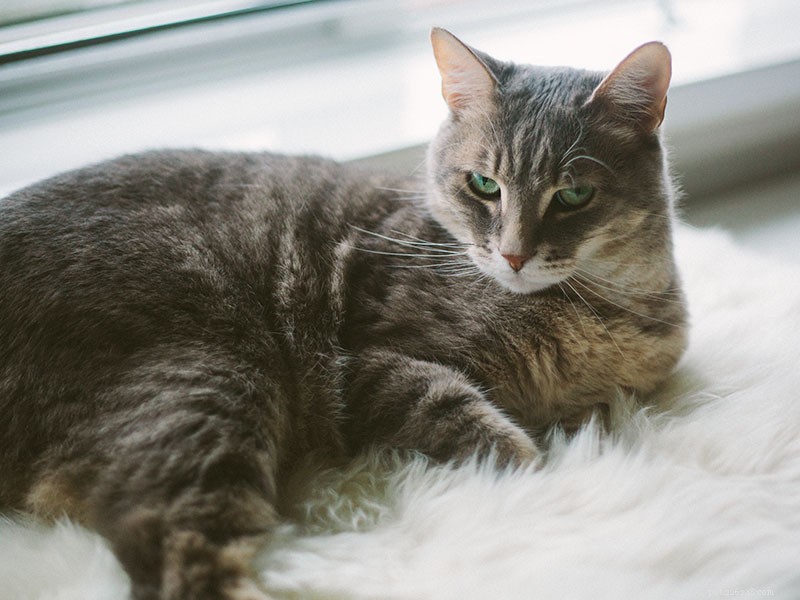
Have You Ever Harboured Negative Emotions Toward a Pet?
Have you ever had any negative emotions toward a pet? Sadly, I’ve been there before with Avery.
Cats can be rainbows and butterflies, but they have claws, too at the end of the day.
It’s not all pros and no cons when it comes to cat ownership – as with everything in life, there are good parts and bad, though of course, the pros do significantly outweigh the cons to most of us pet owners.
I used to resent Avery a bit around a month or two after we first took him in.
He’d wake us up earlier and earlier each morning. Getting very little sleep as a new pet parent and having no clue how to fix the problem drove me up a wall.
Took me months of trial and error to figure out what to do, but once I did, the implementation was oddly easier and more quick to implement than I thought.
With the experience I have now, most problems that crop up are easily resolved.
Training a cat gets a lot easier over time: not just because a cat will get more used to being trained over time, but also because you get used to cat psychology, and learn how to make the process of training painless and actually often enjoyable for your cat.
If you’ve ever been in a situation where something your cat did drove you up a wall, what was it? Did you take steps to change it? Work around the problem? How did things eventually turn out?
If you were to give advice to those who are frustrated by their cat’s bad behaviour, what advice would you give?
One last thing before I invite you to take to the comments section – please make sure whatever words you leave for other pet parents are respectful and empathetic.
No one adopts a cat wanting to hate it. Sometimes negative emotions just bubble and build out of frustration and hurt.
Those who find themselves in this type of situation should be helped, not looked down on. After all, if they are here it’s because they’re looking for a resolution to their problem.
Thank you in advance for the understanding I’m sure you’ll show, and I’m really looking forward to hearing your thoughts and stories down below.
- Pet Behavior
- Pet Breeds
- Pet Names
- Pet Adoption
- Pet Training
- Cat Stories
- Pet Health
- Adorable Pets
- Cats
- Understanding Whisker Stress in Cats: Causes, Symptoms, and Solutions
- Expecting a Baby? Debunking the Cat-Transfer Myth
- Managing Cat Separation Anxiety: Practical Solutions for a Happier, Healthier Pet
- Teach Your Cat 10 Simple Tricks for Fun & Treat Rewards
- Skittish Cat? How to Calm and Bond with Your New Feline Friend
- How to Recognize When Your Cat Is Truly Happy
- Stop the Excessive Meowing: Causes & Solutions for Your Cat