

Minnesota’s 16 Snake Species: A Visual Guide
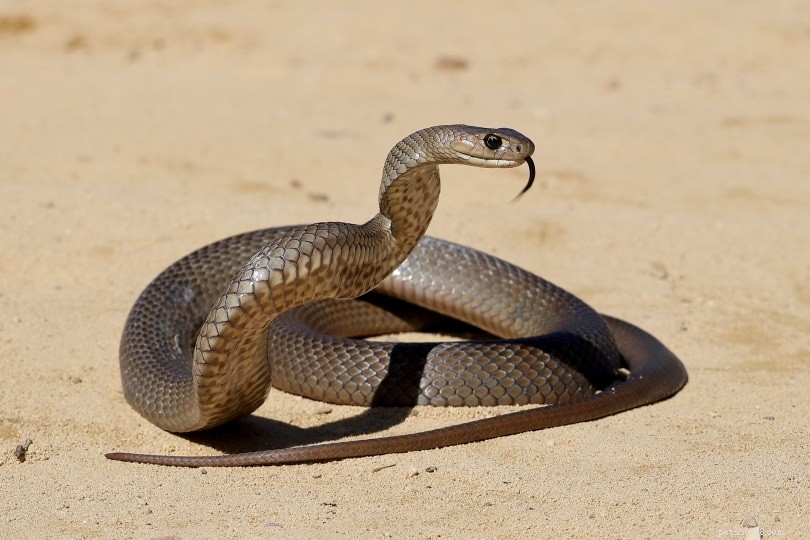
You may not think of Minnesota as a place teeming with snakes. After all, it’s somewhere where the extreme minimum temperatures range from -15℉–-40℉. That’s certainly not a match for cold-blooded animals, such as reptiles. However, the state is home to 16 species. Some are common, and others are rare species, according to the MN Department of Natural Resources.
Most of the over 3,900 species of snakes are harmless, with only about 600 capable of hurting someone or something. Nevertheless, there are two species of venomous snakes in Minnesota. You won’t find any large reptiles, like pythons or boas. However, it’s safe to say these reptiles are well-represented in the land of 10.000 lakes.
Minnesota has a category of plants and animals referred to as rare species, which indicates their conservation status. It is not legal to capture wild snakes in this state. However, many are captive bred and found in pet stores.
Snakes Found in Minnesota
1. Brown Snake
| Species: | Storeria dekayi |
| Longevity: | Up to 7 years |
| Good to own as a pet?: | Yes |
| Legal to own?: | Yes (captive bred) |
| Adult size: | 9–13” L |
| Diet: | Carnivorous |
The Brown Snake is a docile and adaptive animal that does well in a broad range of environments. That fact has played a significant factor in its wide distribution in the United States. It’s a diurnal reptile that will keep to itself undercover. It eats a variety of foodstuffs, from earthworms to insects to frogs. It isn’t venomous but will defend itself if the need arises.
2. Northern Water Snake
| Species: | Nerodia sipedon |
| Longevity: | Up to 9 years |
| Good to own as a pet?: | No |
| Legal to own?: | Yes (captive bred) |
| Adult size: | 24–36 inches |
| Diet: | Carnivorous |
The Northern Water Snake is a diurnal animal that prefers its own company in wetlands and planted shorelines. It’s not a venomous reptile. But like other water snakes in Minnesota and elsewhere, they are sometimes aggressive. Their aquatic environment often means that a bite can become infected quickly because of the poor conditions in its habitat.
3. Plains Hognose Snake*RSG
| Species: | Heterodon nasicus |
| Longevity: | Up to 20 years |
| Good to own as a pet?: | No |
| Legal to own?: | No |
| Adult size: | 14–36” L |
| Diet: | Carnivorous |
The Plains Hog-Nosed Snake is a fascinating species. It has a similar behavior that resembles that of cobras. It puffs out its sides and hisses, making it appear more dangerous than it is since it rarely bites. If that doesn’t work, the animal will play dead to ward off potential predators. It is a species of Special Concern in the state.
4. Bullsnake (Gophersnake)*RSG
| Species: | Pituophis melanoleucus |
| Longevity: | Up to 22 years |
| Good to own as a pet?: | Yes |
| Legal to own?: | Yes (captive bred) |
| Adult size: | 36–72” L |
| Diet: | Carnivorous |
The Bullsnake lives in the savannas and shrublands of southern Minnesota. This reptile, also known as the Pine Snake, is adaptable and can live in disturbed areas without any major issues. That’s a good thing, considering that it is a species of Special Concern in the state. As its name may suggest, this species puts on a show with hissing and puffing out to deter predators.
5. Plains Garter Snake
| Species: | Thamnophis radix |
| Longevity: | Up to 8 years |
| Good to own as a pet?: | Yes |
| Legal to own?: | Yes (captive bred) |
| Adult size: | 15–28” L |
| Diet: | Carnivorous |
As the name implies, the Plains Garter Snake likes dry habitats, including grasslands and even parking lots if it’s undisturbed. It’s typically a diurnal animal that is active during the warmer times of the year in Minnesota. However, it will become nocturnal to escape the heat if temperatures get into the 90s. This snake eats a wide range of foods, from fish to insects to small rodents.
6. Smooth Green Snake (Grass Snake)
| Species: | Opheodrys vernalis |
| Longevity: | Up to 6 years |
| Good to own as a pet?: | Yes |
| Legal to own?: | Yes (captive bred) |
| Adult size: | 12–24” L |
| Diet: | Insect eater |
The Smooth Green Snake is appropriately named and the only species of its kind in Minnesota. It differs from many species on our list in that it will also inhabit the northern part of the state in grassy areas where it can find spiders and insects to eat. Its color provides excellent camouflage. Interestingly, these reptiles turn blue when they die.
7. Milk Snake
| Species: | Lampropeltis triangulum |
| Longevity: | Up to 20 years |
| Good to own as a pet?: | No |
| Legal to own?: | Yes (captive bred) |
| Adult size: | 24–36: L |
| Diet: | Carnivorous |
The Milk Snake is a river-dwelling reptile that prefers the cover of rocky places to hide and find its prey. That fact also makes them hard to spot in the wild. It is also a long-lived species compared to many animals on our list. It lives primarily in the northeastern corner of the state. It feeds on small snakes, rodents, and birds. Like many reptiles, it shakes its tail if it feels threatened.
8. Redbelly Snake
| Species: | Storeria occipitomaculata |
| Longevity: | 4 years |
| Good to own as a pet?: | Yes |
| Legal to own?: | Yes (captive bred) |
| Adult size: | 8–10” L |
| Diet: | Usually gastropods |
The Redbelly Snake has an extensive range in North America that extends north into Nova Scotia. It prefers moist forests where it can find earthworms, slugs, and insects to eat. It is found throughout the state. There are two color variations, gray and brown, both with the characteristic red belly. Although it’s small, this snake won’t hesitate to bare its teeth if threatened.
9. Common Garter Snake
| Species: | Thamnophis sirtalis |
| Longevity: | Up to 20 years |
| Good to own as a pet?: | Yes |
| Legal to own?: | Yes (captive bred) |
| Adult size: | Up to 36” L |
| Diet: | Generalist |
The Common Garter Snake is found just about anywhere in Minnesota. It is an adaptable species that can live wherever it can find food. It’s a generalist animal that will feed on whatever it can find. They are typically solitary, but you may find them in the same areas as Plains Garter Snakes. The Common Garter Snake is sometimes aggressive if not handled regularly.
10. Lined Snake*RSG
| Species: | Tropidoclonion lineatum |
| Longevity: | Up to 10 years |
| Good to own as a pet?: | No |
| Legal to own?: | No |
| Adult size: | 8–15” L |
| Diet: | Primarily earthworms |
The Lined Snake has only been spotted in one location in the extreme southwest corner of the state. Therefore, it is a species of Special Concern in Minnesota. It prefers prairies and meadows where it feeds on earthworms as its primary food source. As you may expect, they are most active at night and after it rains when their prey is easier to catch.
11. Western Fox Snake
| Species: | Elaphe vulpina |
| Longevity: | Up to 10 years |
| Good to own as a pet?: | Yes |
| Legal to own?: | Yes (captive bred) |
| Adult size: | Up to 5’ L |
| Diet: | Carnivorous |
The Western Fox Snake is a creature of grasslands, pastures, and prairies. Like other species, it will also shake its tail like a rattlesnake when threatened. They are harmless animals that feed mainly on rodents and young rabbits. Perhaps because of its size, it uses constriction to kill its prey. It lives primarily in the southwest and southeast corners of Minnesota.
12. Northern American Racer (Blue Racer)*RSG
| Species: | Coluber constrictor |
| Longevity: | Up to 10 years |
| Good to own as a pet?: | No |
| Legal to own?: | No |
| Adult size: | Up to 5’ L |
| Diet: | Carnivorous |
The Northern American Racer gets its name from its speed, which can get up to 4 mph. It lives in a wide range of habitats, from forests to prairies of northeastern Minnesota. While not venomous, it won’t hesitate to bite. Unfortunately, the population has dropped in recent years, making it a species of Special Concern in the state.
13. Ratsnake*RSG
| Species: | Pantherophis obsoletus |
| Longevity: | Up to 30 years |
| Good to own as a pet?: | Yes |
| Legal to own?: | No |
| Adult size: | Up to 6’ L |
| Diet: | Carnivorous |
The Ratsnake is widespread in other areas of the Great Plains. The species only occupies the southernmost eastern counties of Minnesota. That makes its status vulnerable as a state-threatened species. They aren’t aggressive snakes, despite their name. Instead, they prefer to avoid conflict. While their diet is more diverse as juveniles, adults feed primarily on rodents in the wild.
14. Ringneck Snake
| Species: | Diadophis punctatus |
| Longevity: | Up to 20 years |
| Good to own as a pet?: | No |
| Legal to own?: | Yes (captive bred) |
| Adult size: | 10–15” |
| Diet: | Carnivorous |
The Ringneck Snake gets its name from the distinctive band below its head. It lives in two separate ranges in the state. The northern population consists of woodland animals, whereas the southern group occupies stream shorelines. Their diet also varies with the habitat. Unlike many snakes, this species is crepuscular or active at dusk.
15. Timber Rattlesnake
| Species: | Crotalus horridus |
| Longevity: | Up to 30+ years |
| Good to own as a pet?: | No |
| Legal to own?: | No |
| Adult size: | Up to 4’ L |
| Diet: | Carnivorous |
The Timber Rattlesnake is one of two venomous species in the state. It lives primarily in the wooded rocky outcrops of northeastern Minnesota. It is a long-lived reptile that surprisingly isn’t very cold-tolerant. Thus, it hibernates for a significant portion of the year and will migrate to its stomping grounds. it is a state-threatened species.
- See Also: Are There Snakes in Alaska? All You Need To Know!
16. Massausaga
| Species: | Sistrurus catenatus |
| Longevity: | Up to 20 years |
| Good to own as a pet?: | No |
| Legal to own?: | Yes |
| Adult size: | Up to 30” L |
| Diet: | Carnivorous |
The Massasauga is the second of the state’s venomous snakes. Unlike the rattlesnake, it prefers wetlands, such as swamps and bogs. Its diet includes rodents, birds, and amphibians. The illegal pet trade is one of its major threats, which also includes agriculture and encroachment. Thus, it is a state-endangered species. Unfortunately, you can say the same about its habitat.
Conclusion
As cold as Minnesota can get, at least a few snakes have managed to brave the frigid winters and find a home in this beautiful state. The low population density of some areas and the conservation efforts of the Minnesota Department of Natural Resources make it a welcoming place for these often-misunderstood reptiles. They play a vital role in the ecosystem by controlling pest populations, making them worthy of respect.
Learn about the snakes in different regions with one of these related posts:
- 14 Snakes Found in Pennsylvania (With Pictures)
- 7 Snakes Found in Kentucky (With Pictures)
- 44 Snakes Found in Oklahoma (With Pictures)
- 33 Common Texas Snakes – Expert Guide & Photos
- 28 Native Iowa Snakes – Complete Guide with Photos
- Top 10 Maryland Frog Species & Images: A Field Guide
- 11 Indiana Spiders You’ll Spot – Identification Guide with Photos
- 44 Oklahoma Snake Species: Venomous & Non‑Venomous Guide with Photos
- 14 Pennsylvania Snakes You Should Know About – Images & Safety Guide
- Snake Species in Hawaii: Discover the Island Blind (Brahminy) Snake