

Pomsky Dog Breed: Complete Guide to the Husky-Pomeranian Mix
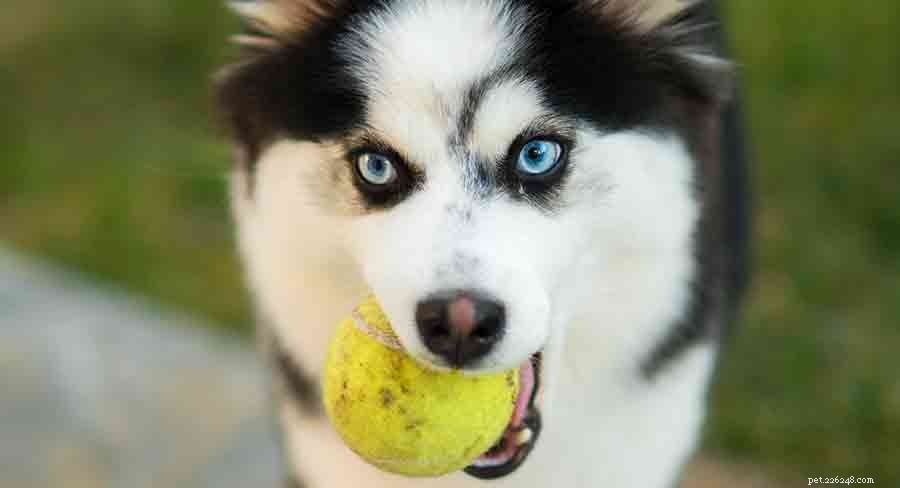
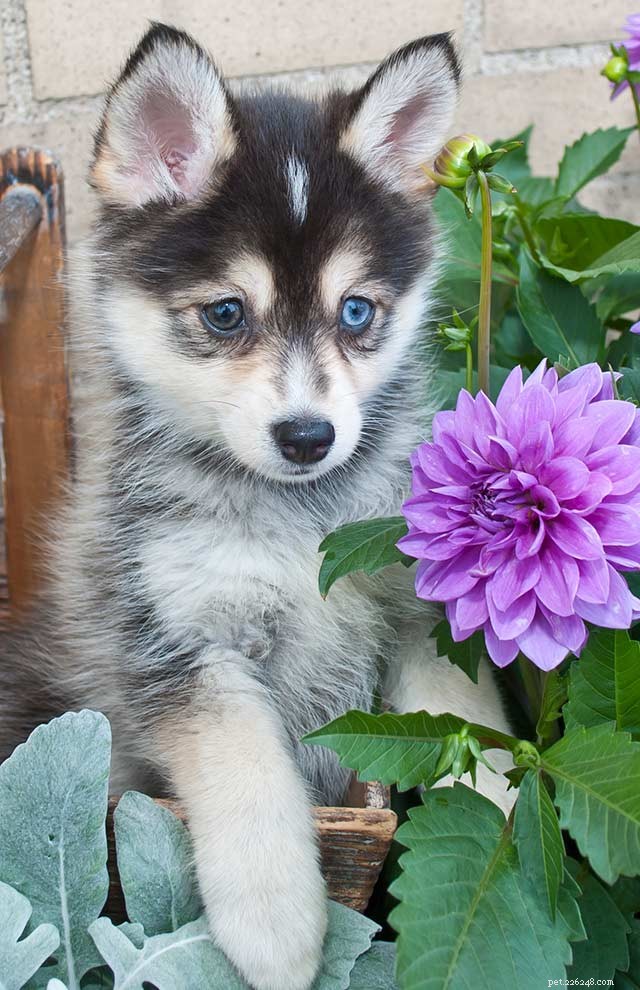
The Pomsky dog breed is a mix between a purebred Pomeranian and a purebred Siberian Husky. The fluffy coated Pomeranian Husky mix is intelligent, loyal, and active. A full grown Pomsky could be anywhere from 10 to 40 pounds as an adult. We’ll be looking at the origins, care and exercise needs of this unusual hybrid. And explore the Pomsky’s suitability as a family pet. From health and personality traits, to finding and raising a Pomsky puppy, we’ve plenty of information to share!
Contents
- History of the Pomsky dog
- Fun facts about the Pomeranian Husky mix
- Training and exercising your Pomsky
- Pomeranian Husky mix health
- Rescuing a Pomsky dog
- Finding a Pomeranian Husky mix puppy
This mix is slowly gaining popularity. So, finding a puppy shouldn’t be too hard, but finding a reputable breeder might require going onto a waiting list.
Quick Stats: Full Grown Pomsky
Popularity:On the risePurpose:CompanionWeight:10 – 40 poundsHeight:Anywhere from 7 – 20 inchesTemperament:Active, bold, loyalCoat:Thick and fluffyCommon Pomsky Dog Breed Questions
Follow the links to find out more!
Are Pomskies good family dogs?Yes, in active families with plenty of time to dedicate to grooming and playHow much is a Pomsky puppy?Generally over $2000, but prices vary depending on location and demandAre Pomskies hypoallergenic?No, Pomskies are often heavy sheddingDo Pomsky dogs bark?Yes, especially if their needs are not metHow long does a Pomsky live?12 – 15 years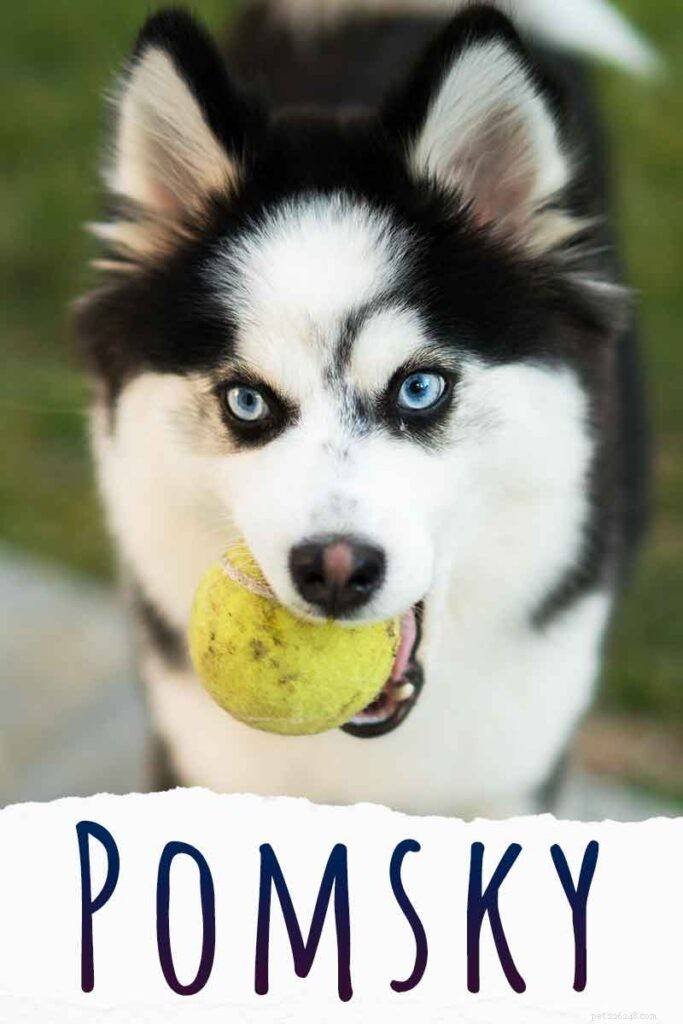
Pros And Cons of Getting A Pomsky Mix
Pros:Cons:Very IntelligentPuppies can be expensive and hard to findFriendly and playful dispositionCan be challenging to trainGreat for active familiesA great escape-artistSlowly becoming a more popular, common mixUnpredictable temperament and appearanceWhat Else Is In This Guide
The Pomsky is on the rise. But what is this cute puppy really like?
History and Original Purpose of the Pomsky Dog
A Pomsky is a first generation cross-breed. It is a mix between a purebred Siberian Husky and a purebred Pomeranian.
So, finding out more about it’s history is tricky – no one knows a lot about it!
Generally, the Pomeranian Husky mix has been a companion dog throughout its short history.
It is slowly gaining popularity. Looking at the parent breeds is a great way to learn where the Pomsky comes from.
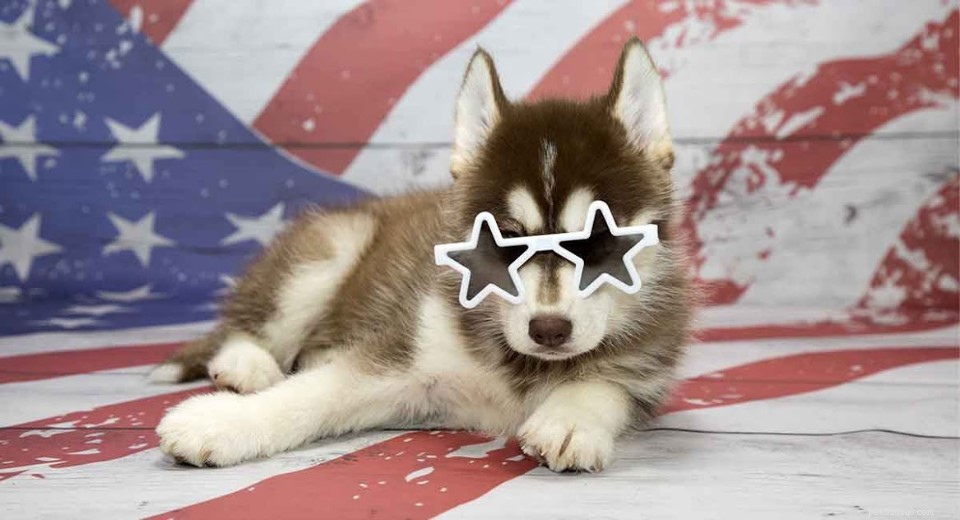
Parent Breeds
The Pomeranian is a miniature version of ancient spitz sled dogs. Until the 1800s this breed was larger, although was still the smallest of the spitz breeds.
Since then, Pomeranians have become quite different. They are now a tiny toy breed with a thick coat, but one that was not built for warmth.
The Siberian Husky was originally a sled dog; born to haul heavy sleds over icy terrain for hours on end and to survive on frozen meat and sleep out in the snow!
This is a moderately large and powerful breed, known for having a friendly but independent nature.
Fun Facts About Pomeranian Husky Mix Dogs
Pomskies regularly feature in the news. They’re also really popular on social media!
A Pomsky called Norman managed to gain 11,000 Instagram followers over just 6 weeks!
Another Pomsky called Mya has over 25,000 Instagram fans!
Mya and her friend Dave are well travelled. They spend a lot of time hiking.
Pomeranian Husky Mix Appearance
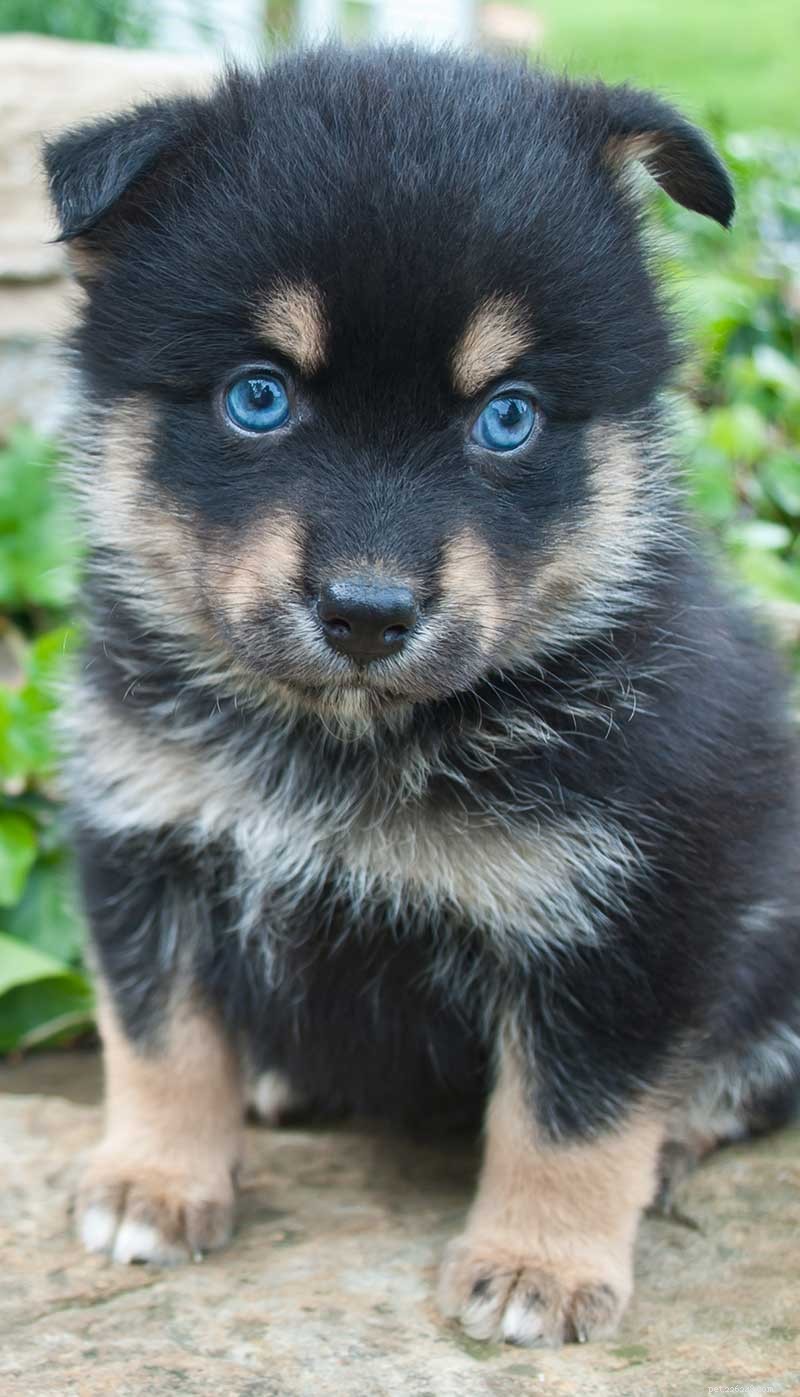
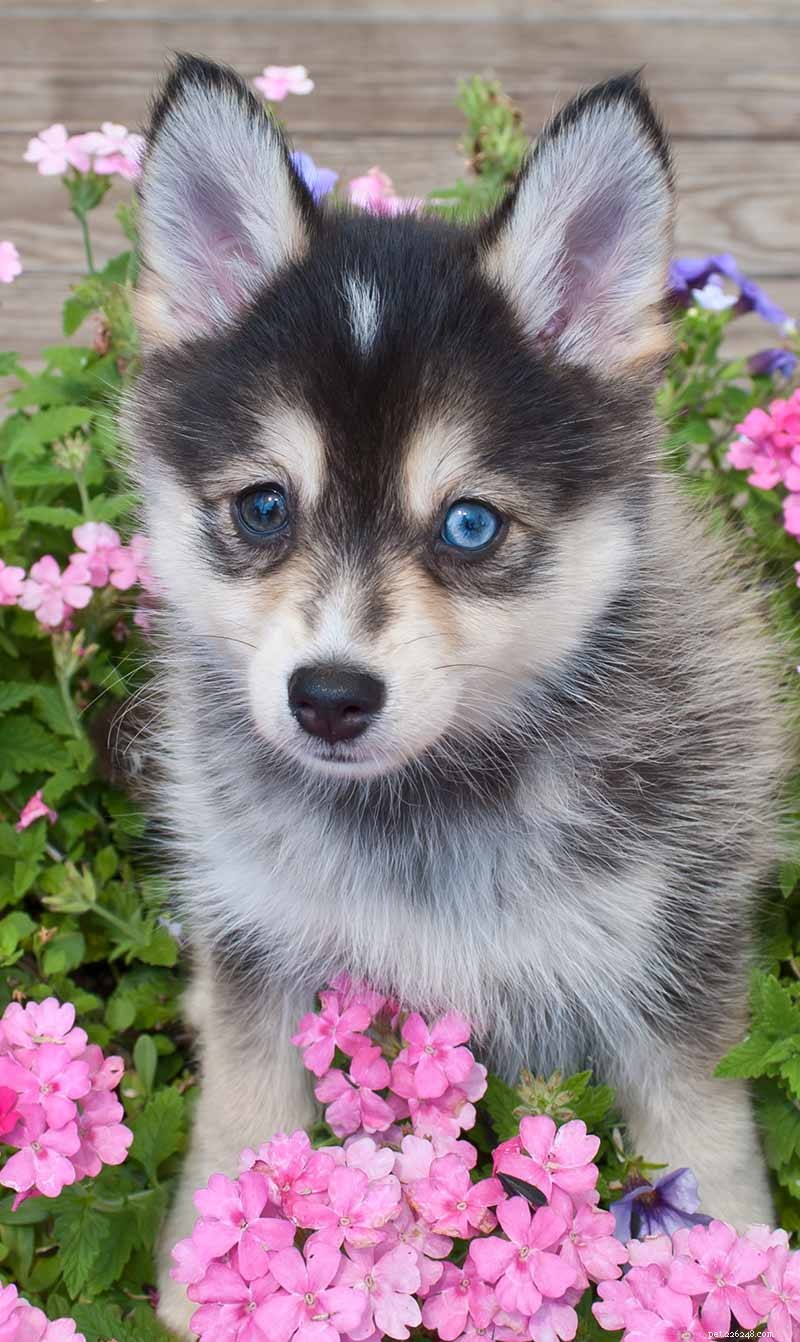
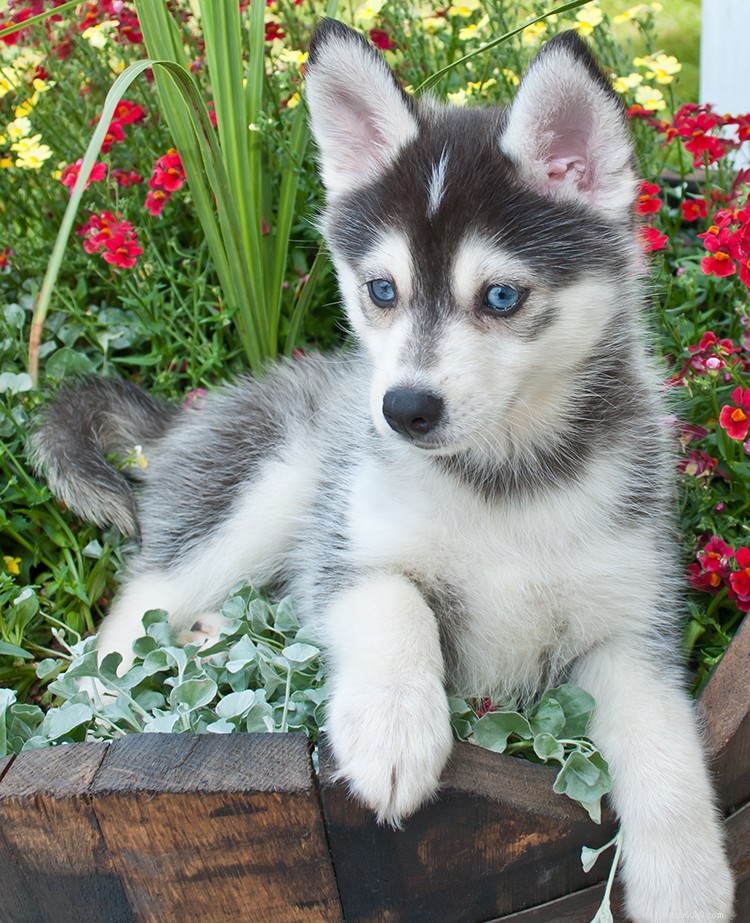
Like all cross breed puppies, the Pomeranian Husky mix appearance varies from pup to pup. This is because we can’t predict which genes they will inherit from either parent.
So, we must take a look at all of the options. Here’s what your full grown Pomsky may be like:
PomeranianHuskyPomskySizeToyMediumSmallHeight6 – 7 inches20 – 23/5 inchesOften 10 – 20 inchesWeight3 – 7 pounds35 – 60 poundsOften 10 – 40 poundsAre Pomskies Hypoallergenic?
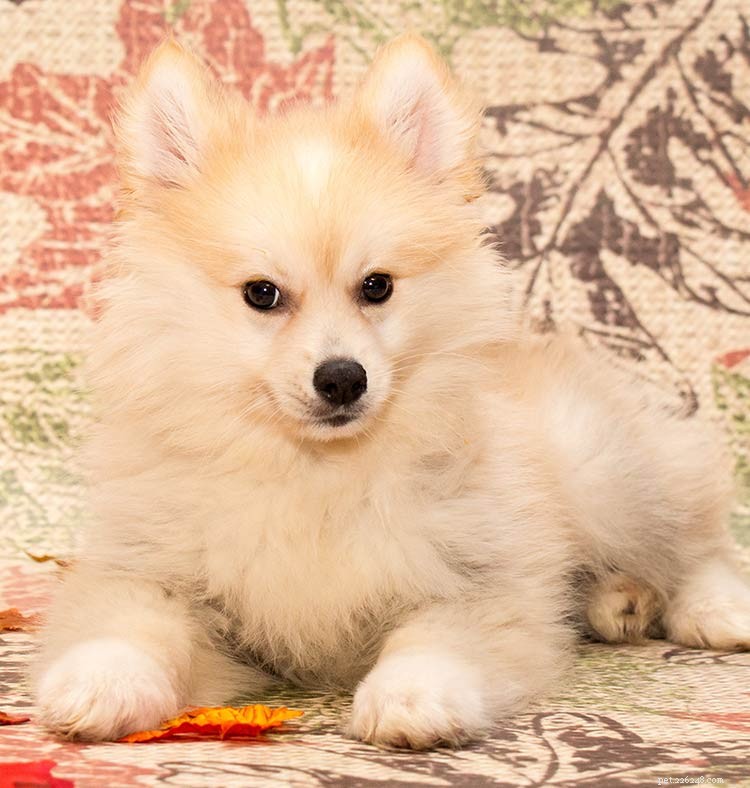
Pomeranian Husky mixes can come in a wide variety of colors – basically any that their parent breeds come in. So, shades can vary from a deep brown to a white Pomeranian Husky mix.
No matter what their color, your Pomsky’s coat will be quite high maintenance. These little dogs are not hypoallergenic. In fact, they are often quite high shedding.
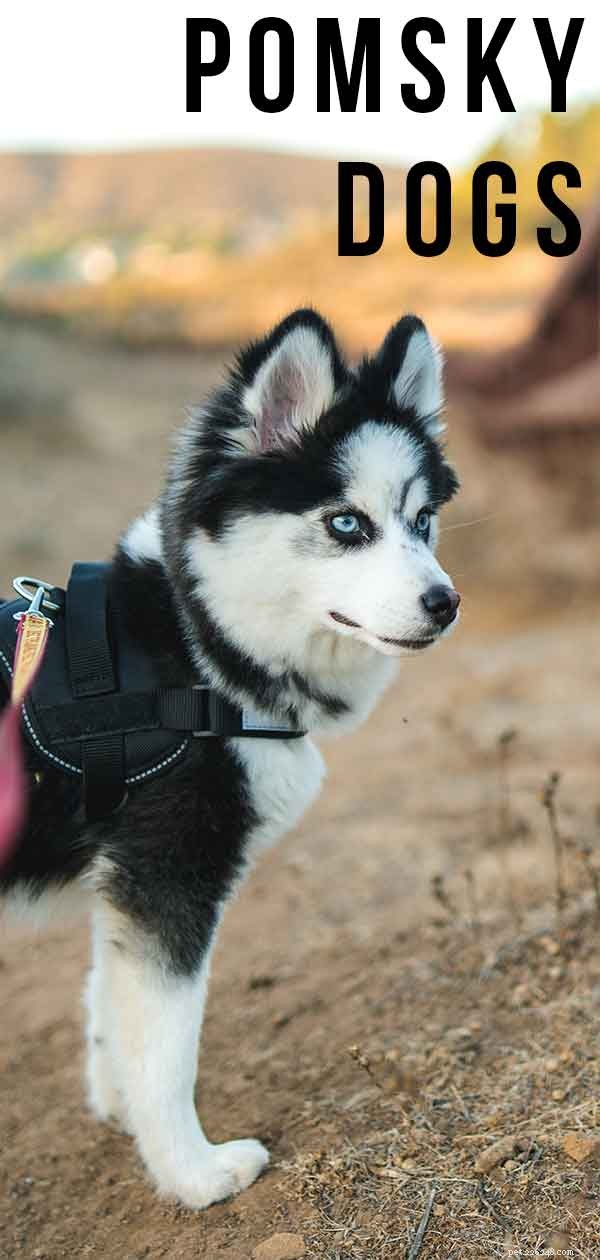
The Pomsky’s coat may be fluffier, like a Pomeranian. It may be thicker, like a Husky. Or it may be somewhere in the middle.
Either way, a Pomsky will need regular brushing to maintain a healthy coat.
Unpredictable Appearance
Some puppies look more like one parent than another. So, don’t be too disappointed if your full grown Pomsky doesn’t turn out how you expected.
You might get a dog that is mid-way in size. Half way between a Husky and a Pomeranian.
And with the best aspects of the temperaments of both dogs.
Or you could get a pretty large dog. A pup with the independence of the Husky.
If two of the same F1 cross breeds are bred to one another, the outcome can be even more varied.
This is why so-called designer dog breeders usually stick to creating a fresh F1 cross with each mating.
Pomsky Temperament
Just like appearance, temperament can be unpredictable in mixed breed puppies. A Pomsky could favor one parent over the other when it comes to temperament, so it’s important to be ready for any outcome.
Huskies are intelligent, friendly, and very active dogs. They are known to be quite independent, but often get along well with other dogs.
Particularly when they are properly socialized.
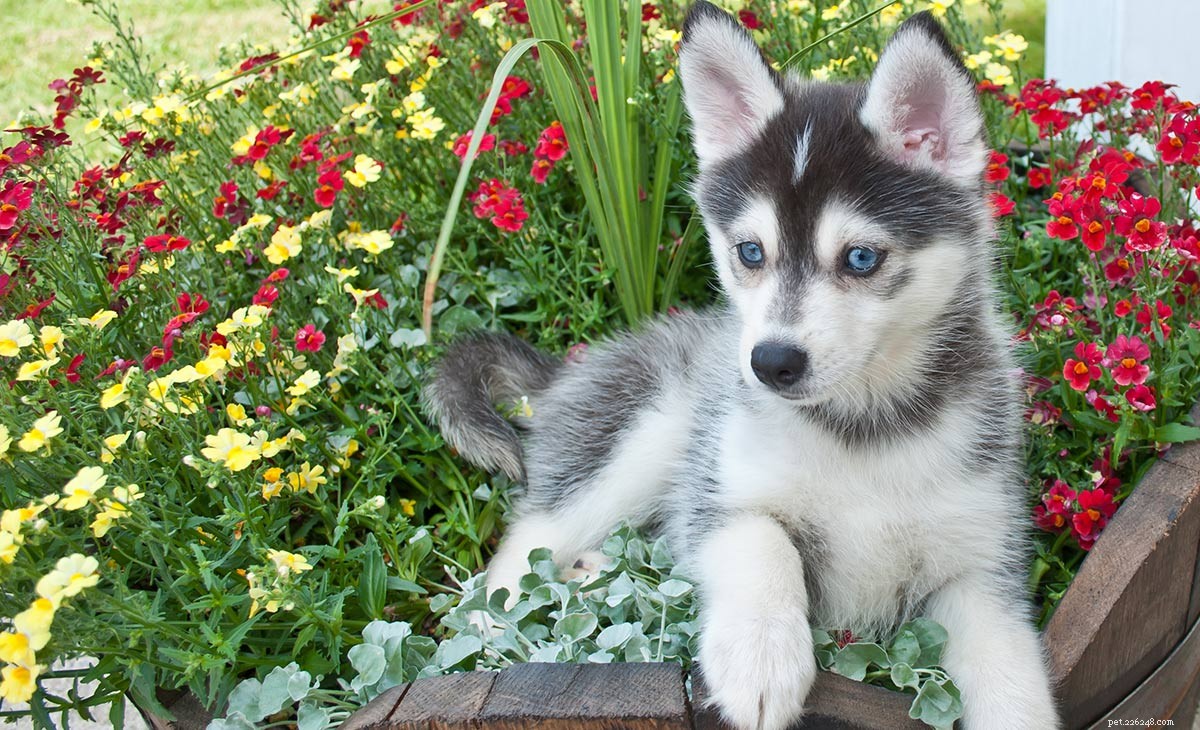
Pomeranians may be small, but they have big personalities. They can be just as bold, lively, and curious as the Husky!
If they are well socialized, they are likely to get along with most people and animals. But, both parent breeds may have chase and hunt instincts that make living with smaller pets unsuitable.
These instincts can be passed to the Pomsky mix.
Pomsky Barking
Both the Pomeranian and Husky parents are known for being quite vocal breeds. They will both be ready to alert you when someone unfamiliar is approaching your home, or if they’ve seen something they don’t like.
You can expect a Pomsky mix to bark quite a bit, especially if their needs are not being met.
These dogs may be quite small, but they need plenty of exercise and mental stimulation.
If they don’t receive this, they may display unwanted behaviors such as barking, howling, digging, chewing, and more.
Training and Exercising your Pomsky
Being adorable is not an excuse for bad behavior! Pomskies need proper training and plenty of exercise to be happy and healthy.
Pomskies are intelligent, but tend to be independent. Training an independent dog, like a Pomsky, can be challenging even for the most experienced owner.
Positive reinforcement, rather than punishment, is the best approach.
And, despite their small stature, it is important to socialize your Pomeranian Husky mix. Dogs of all sizes that are not socialized properly can be a burden, or even a danger, in public.
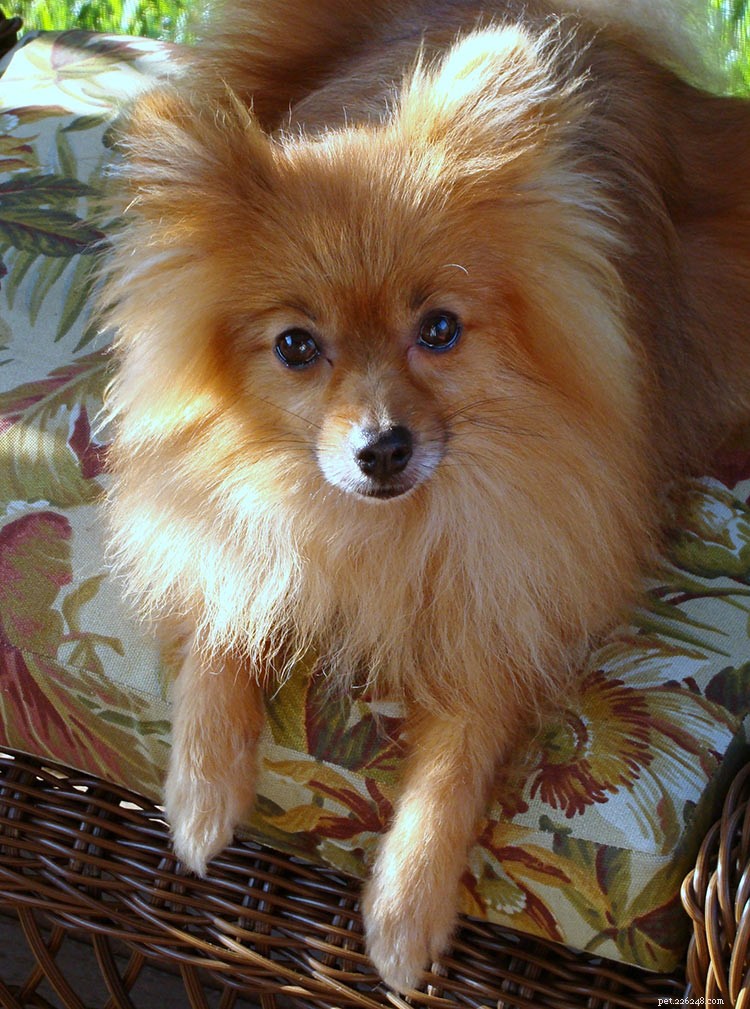
Training Resources
Training classes are beneficial to the dog and to the owner. Check with your breeder or local animal rescue for a list of classes near you.
Here are some other great resources to help you train your Pomsky:
- Puppy Potty Training
- Crate Training A Puppy
- 15 Top Dog Training Videos
Exercise Needs
These active dogs require daily exercise. They will enjoy the opportunity to roam around your yard, but be sure that it is secure, as Huskies and Pomeranians are prone to wander.
Exploring your yard also won’t be enough daily exercise for these little dogs.
Make sure to dedicate time every day to walks or another form of exercise, such as energetic games in a dog park.
Training will provide some exercise. But, these alert dogs need structured routines with the chance to burn off energy each day.
Pomsky Health and Care
Mixed breeds, like the Pomsky, often suffer fewer health problems than their pure bred counterparts. But, there’s no guarantee they won’t suffer from any issues.
It is difficult to predict which genes a Pomeranian Husky mix may inherit. Because they are a newer breed, it is especially hard to predict what health problems are most likely to occur.
Here are some common issues that the parent breeds face.
Heart:Congestive heart failureBrain:SeizuresEyes:Juvenile cataractsJoints:Hip dysplasia, luxating patellaOther:Hypothyroidism, collapsing trachea, alopecia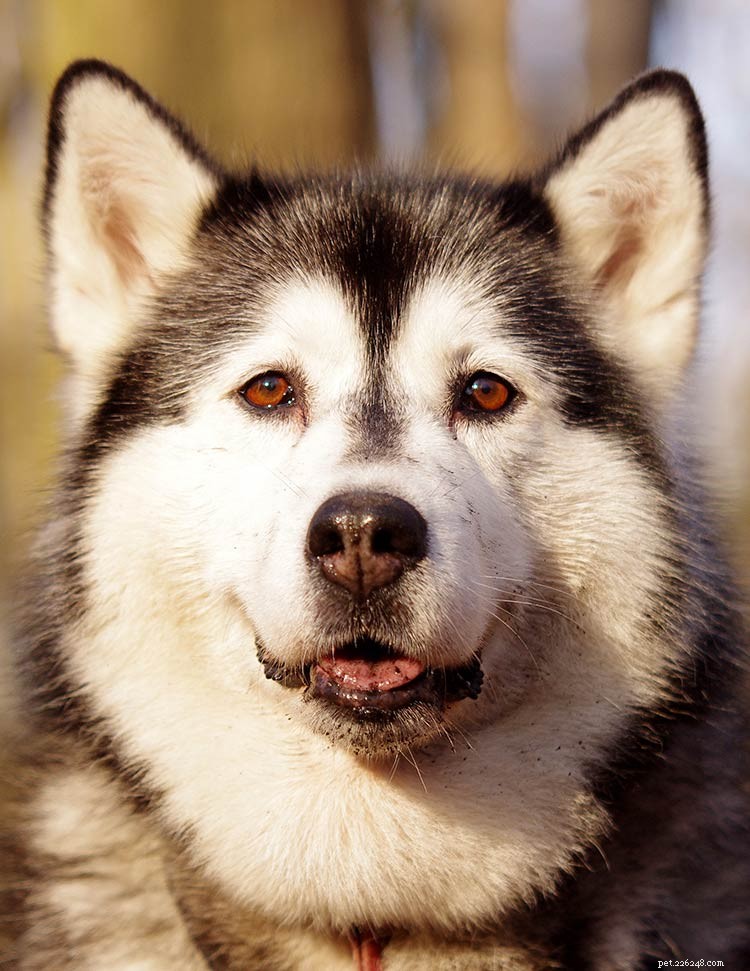
Congestive Heart Failure
Dogs with congestive heart failure may become tired more quickly than other dogs. They will usually have lower stamina levels, and won’t be able to play as energetically as they did in the past.
The most common sign of heart failure is coughing when at rest. Your veterinarian will be able to recommend a treatment regime if your dog is suffering with congestive heart failure.
Seizures
The most common cause of seizures in dogs is idiopathic epilepsy.
Seizures are a neurological condition which involves a temporary disturbance of brain function, often paired with uncontrollable muscle activity.
Your vet will often recommend treatment if your dog is having seizures frequently.
Juvenile Cataracts
Cataracts can happen to dogs of any age. This issue involves an opacity of your dog’s eye lens.
You may notice a cloudiness or grey tinge in your dog’s eye. If they seem to have trouble seeing, you should take them to the vet for a check up.
Hip dysplasia
Hip dysplasia involves a malformed joint at your dog’s hip. This can be a painful issue which can make movement and walking difficult.
If your dog is limping, lying down whenever possible, and is reluctant to stand, they may be experiencing hip dysplasia.
Luxating Patella
Luxating patella is also known as dislocated kneecap. This is another joint issue that is particularly common in smaller breeds.
Surgery is possible if this issue becomes severe.
Hypothyroidism
Hypothyroidism occurs when your dog has an underactive thyroid gland.
This issue can lead to lethargy, weight gain, and changes in your dog’s coat and skin quality.
It’s a health problem that will require lifelong treatment.
Collapsing Trachea
Tracheal collapse occurs when your dog’s windpipe weakens and collapses, obstructing airflow.
Dogs with this problem may experience a cough that gets worse when they are excited or when it is hot.
Alopecia
Alopecia is also known as hair loss.
Pomskies with alopecia may experience hair loss, patchiness in their coat, or just general dullness and poor fur quality.
Hair may be slow to regrow.
General Health of Cross Breeds
For the Husky parent, the AKC recommends that opthamologist screenings begin at 12 months of age, in addition to regular veterinary care.
For Pomeranian dogs, the AKC recommends cardiac and opthamologist screenings, as well as patella evaluations.
Both parent breeds should be properly health tested before being bred to create a Pomsky.
Choose a reputable breeder who can provide evidence of this health testing. Puppies from healthy parents will be less likely to experience the issues we’ve looked at above.
But, even then, there’s no guarantee that they will never experience problems.
Pomsky Care
Regular brushing with this mix is important to reduce shedding.
Be sure to give your Pomeranian Husky mix some extra attention during the warmer months, when shedding is at its peak.
You will also need to check their paws, teeth, ears, and nails during grooming sessions.
Keep nails short so that they’re less likely to break during exercise.
If you’re unsure about any part of the grooming process, you can speak to a professional groomer.
Coat Care
Since the Pomsky is quite an unpredictable dog, their coat type can vary.
Some individual dogs may have thinner coats, and others may have thick fluffy coats.
Work with a breeder to learn the best way to care for your dog’s unique coat.
What is the Pomsky Life Expectancy?
The expected lifespan of a Pomeranian Husky mix is 12 – 15 years.
This figure is based on the average age of the parent breeds.
But, if you choose a healthy puppy and make sure he’s happy and healthy throughout life, yours could live longer!
Do Pomskies Make Good Family Pets?
It can be hard to predict what personality characteristics a Pomeranian Husky mix will inherit.
Because of their independent nature, Pomskies are best suited for households made up of adults and older children.
Make sure to teach children exactly how to interact with the dog. Even though it might look like a teddy bear, it is definitely not one.
If you choose this breed, remember they will need a lot of time dedicated to their general care, such as grooming.
Due to their high energy level, Pomskies will be happiest with an active family who enjoy being outdoors and who have lots of time for play and training.
Pomskies are Unpredictable
Plus, it is difficult to determine what a Pomsky puppy may be like as he grows into an adult.
Some Pomskies grow larger than intended. They might need more exercise and training than expected.
Some Pomskies are fluffier than expected. They might shed more and need more grooming.
If you are prepared to take a gamble on how your puppy turns out, and don’t have an ethical objection to dogs being bred for sale, then a Pomsky puppy might be a great match for you.
Otherwise, finding a full grown Pomeranian Husky mix or looking for an alternative breed might suit you better.
Rescuing a Pomeranian Husky Mix
There’s a lot of guess work involved when you get a Pomsky puppy. Will he be playful, like his Husky parent? Or a lapdog, like his Pomeranian parent?
Choosing a slightly older rescue can be a great way to know a little more about your dog before you bring him home.

Plus, it gives an abandoned pup a second chance at finding a home.
Finding a Rescue Center
Rescue centers dedicated specifically to mixed breeds aren’t that common at the moment.
But you may find Pomskies in rescue centers dedicated to the parent breeds.
Alternatively, as this mix gains popularity, you may find them in general rescues. Or, you might even see the emergence of specific Pomsky rescues.
Pomsky Breed Rescues
USAPawsitively Pom, My Pomsky PuppyUKMany Tears Animal Rescue, Saints Sled Dog Rescue, SHARE Husky RescueCanadaCanadian PomskyAustraliaSecond Chance Animal RescueKnow of a great rescue organization? Please share it in the comments section!
Finding a Pomsky Puppy
There are quite a few breeders producing Pomsky puppies. Some of those breeding Pomeranian Husky mixes are doing it purely for profit.
Others are excited at the idea of being part of a movement to create a brand new breed of dog. They hope that the Pomsky will one day be a recognized breed in its own right.
Where to Avoid Pomsky Puppies
You need to find a breeder who has only used healthy parents for your puppy.
A breeder who has raised the litter well. Giving them the best chance at good health and great temperament.
The puppies should be raised with love, care, and exposure to everyday family life.
This will help to make sure they are comfortable with lots of sights and sounds.
If a breeder does not seem to be treating their animals well, or refuses to show you health certificates, go somewhere else.
Pomsky Price
As this mixed breed becomes more popular, Pomsky price is likely to rise with demand.
Generally, you can expect to pay upwards of $2000 for a Pomeranian Husky mix puppy from a reputable breeder.
Just remember that a high price isn’t necessarily a sign of better quality. Go to any breeder with a long list of questions.
Make sure to see health certificates, the mother dog, and where she and the puppies are being kept.
Raising a Pomsky Puppy
Caring for a vulnerable Pomsky puppy is a big responsibility. There are some great guides to help you with all aspects of puppy care and training.
You’ll find them listed on our puppy page.
Pomeranian Husky Mix Products and Accessories
Check out some of our favorite products for Pomskys:
- Indoor puppy playpens
- Best dog leashes
- Small dog beds
- Best Shampoo for Huskies
- Best Shampoo For Pomeranians
Similar Breeds
If you’ve decided this little hybrid isn’t for you, you’ll want to find something a little different.
Take a look at these similar breeds to see if one of these is a better fit for your home.
- Pomapoo
- Alaskan Klee Kai
- Pomimo
- Shih Tzu Husky Mix
The Pomsky Dog: Summary
The Pomeranian Husky mix is a small, energetic, and intelligent breed. They are quickly on the rise in America and across the world!
Do you have one of these fluffy hybrids at home? What’s your favorite thing about them?
Find Out More
- Siberian Husky
- Pembroke Welsh Corgi
- White Husky
- Pomeranian Names – Hundreds Of Unique Ideas
References And Resources
- Gough, A. (et al), ‘Breed Predispositions to Disease in Dogs and Cats’, Wiley Blackwell (2018)
- O’Neill (et al), ‘Longevity and Mortality of Owned Dogs in England’, The Veterinary Journal (2013)
- Adams, V. J. (et al), ‘Results of a Survey of UK Purebred Dogs’, Journal of Small Animal Practice (2010)
- Duffy, D. (et al), ‘Breed Differences in Canine Aggression’, Applied Animal Behavior Science (2008)
- Farrell, L. (et al), ‘The Challenges of Pedigree Dog Health: Approaches to Combating Inherited Disease’, Canine Genetics and Epidemiology (2015)
- Oberbauer, A. (et al), ‘Ten Inherited Disorders in Purebred Dogs by Functional Breed Groupings’, Canine Genetics and Epidemiology (2015)
- International Pomsky Association
- Pomsky Club of America
- Pet Behavior
- Pet Breeds
- Pet Names
- Pet Adoption
- Pet Training
- Pet Information
- Pet Health
- Adorable Pets
- Dogs
- Pomsky Dog Breed Guide: Pomeranian & Husky Mix Facts, Care, and Personality
- Siberian Husky Breed Guide: Facts, Care Tips & Stunning Photos
- Corgi-Labrador Mix (Corgidor): Your Comprehensive Guide to Temperament, Care, and Adoption
- Husky‑Lab Mix (Labsky) Dog: Complete Breed Guide & Tips
- Pomchi: Comprehensive Guide to the Pomeranian-Chihuahua Mix
- Yorkipoo Dogs: The Ultimate Guide to the Poodle‑Yorkshire Terrier Hybrid
- Pitbull‑Husky Mix (Pitsky) Guide: Traits, Care & Training