

The Pyrador: A Comprehensive Guide to the Great Pyrenees‑Labrador Mix
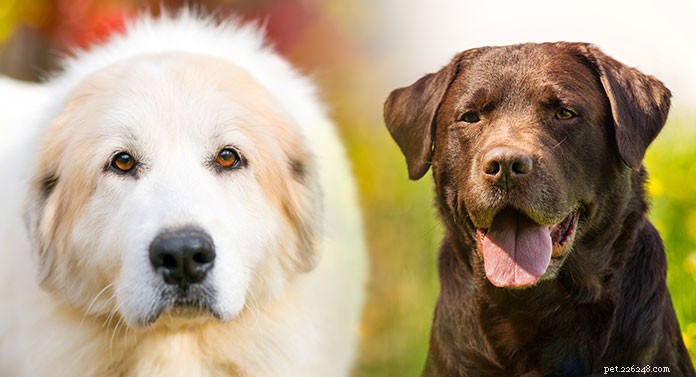
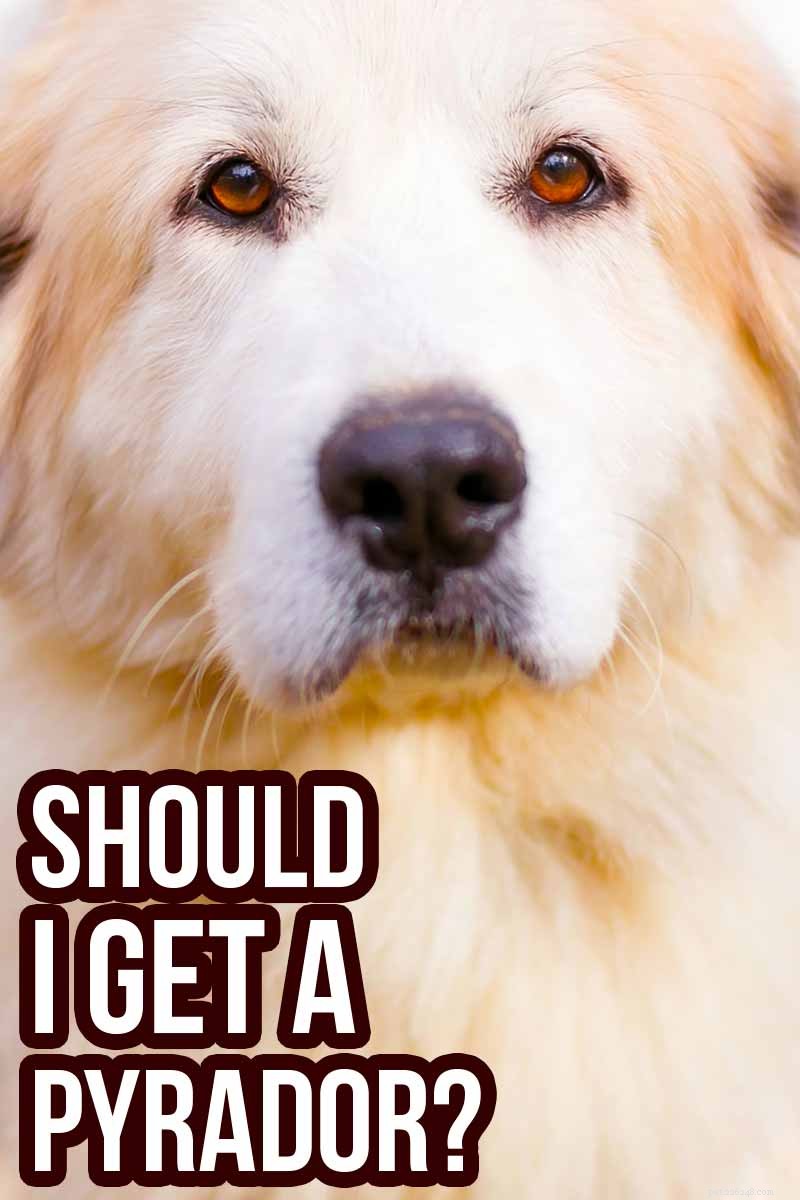
The Great Pyrenees Lab mix goes by many names, including: Pyrador, Lapyrenees, Pyrelab, or Labrenees.
Generally this mix is a large breed dog. It can fall anywhere between the sizes of its two parents.
You can expect a Great Pyrenees and Lab mix to be friendly and energetic, but they may have strong hunting instincts.
Are you ready to find out if the Pyrador is right for you?
What’s In This Guide
- Great Pyrenees Lab Mix At A Glance
- In-depth Breed Review
- Pyrador Training And Care
- Pros And Cons Of Getting A Pyrador Dog
Great Pyrenees Lab Mix FAQs
Here are some questions we often get asked about this interesting mixed breed.
- Are Great Pyrenees Lab mixes good family dogs?
- Are Pyradors aggressive?
- How much does a Pyrador cost?
Welcome to your complete guide to the Great Pyrenees Labrador Retriever mix, or Pyrador!
Pyrador Dog: Breed At A Glance
- Popularity: On the rise
- Purpose: Family companion
- Weight: 55 to 100+ pounds
- Temperament: Energetic, loyal, patient
Here’s a quick look at everything we’ll find out about this unique mix.
Great Pyrenees Lab Mix Breed Review: Contents
- History and original purpose
- Fun facts about Great Pyrenees Lab mixes
- Pyrador dog appearance
- Great Pyrenees and Lab mix temperament
- Training and exercising your Pyrador
- Great Pyrenees Lab mix health and care
- Do Pyradors make good family pets?
- Rescuing a Great Pyrenees Lab mix
- Finding a Pyrador puppy
- Raising a Great Pyrenees Lab mix puppy
- Pyrador products and accessories
Hybrids are sometimes referred to as “designer dogs” due to their unusual lineage and lack of purebred status. So, how do we find out more about their history?
History and Original Purpose
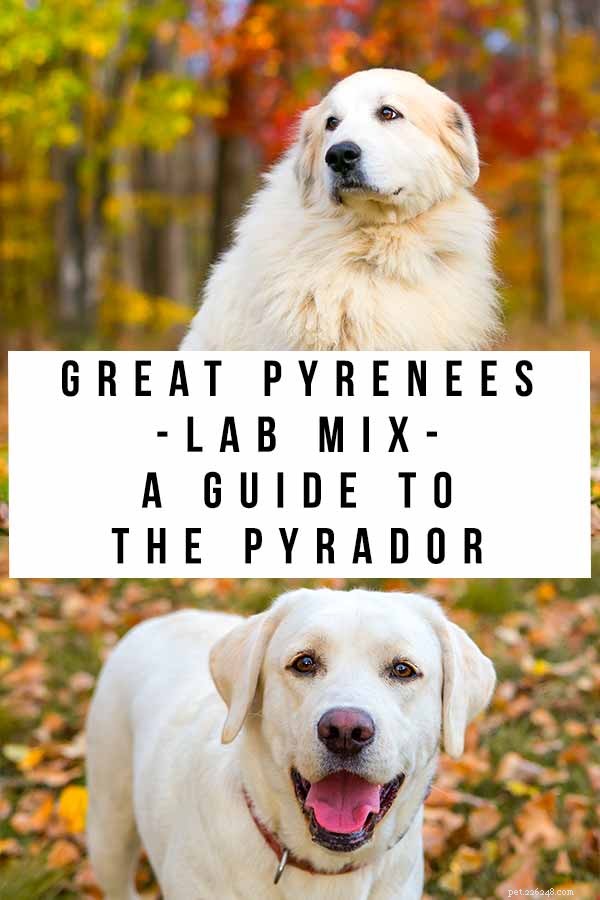
A Pyrador is a crossbreed dog that results from breeding a purebred Labrador Retriever with the “polar bear” dog, the large and majestic Great Pyrenees (also called the Pyrenean Mountain Dog in the UK).
The mix has been bred as a family companion, but its parent breeds once had quite different purposes.
Let’s take a closer look at each parent breed to find out a little more about where our new mix comes from.
Great Pyrenees Origins
As their name suggests, the Great Pyrenees dog was bred in the Pyrenees Mountains between France and Spain.
Evidence shows that these dogs may have been bred as early as 3,000 B.C.
Pyrenees dogs would guard their master’s sheep from wolves, bears, and other predators found in the mountains.
Sometimes, they would have to stay high in the cold mountains for days on end, but luckily, they had their signature white coats to keep them warm!
As predators in the mountains dwindled in number, the Great Pyrenees also dwindled in number.
In an effort to preserve the breed, a few dogs were brought to North America, where kennels slowly built the numbers back up.
The American Kennel Club (AKC) formally added the breed to its registry in 1933.
Labrador Retriever Origins
The Labrador Retriever comes from Newfoundland, Canada, where small dogs were trained to retrieve waterfowl.
Their ancestors were brought across to the UK, where the Labrador breed was eventually standardised.
In the UK, Labradors were used to retrieve game on land.
The American Kennel Club (AKC) accepted the Labrador Retriever as a member of the sporting group in 1917.
Today, Labradors still make excellent hunting dogs as well as service dogs, but they’re most popular as pets.
Hybrid History
Some people mistakenly believe that hybrids are achieved through inbreeding and/or are riddled with health issues due to them being a combination of breeds.
However, as long as breeders health test dogs they intend to breed from, and avoid inbreeding of any kind, their mixed breed puppies are just as healthy as purebred dogs.
If you’d like to learn more, this article explains how specific breed combinations and using dogs from separate families produces the healthiest hybrid offspring.
Purebred dogs are just as likely to have health problems as mutts.
It all comes down to the following:
- the health of the breeding stock that start and maintain the line
- the conditions in which the parents and offspring are kept
- whether or not inbreeding is used to produce second and older generations.
Health Should Always be a Priority
Continuing to breed dogs with known health issues always results in more dogs with health issues.
It doesn’t matter if they are a purebred or a mutt.
For additional information, check out our article on Purebred vs. Mutts.
Fun Facts About the Great Pyrenees and Lab Mix
The Pyrador dog is a very new and uncommon mixed breed. It hasn’t been established for long enough to gain much of a reputation.
But, its parent breeds have been around for much longer, so we know a lot more about them.
Great Pyrenees Lab mixes are each unique – every single one will be different depending on the traits they inherit from their parents.
So, some Pyradors will be more like their Great Pyrenees parents, and others more like the Labrador.
Because of this, you must be prepared for any outcome. Make sure you’re happy with all of the potential traits your puppy could inherit!
Great Pyrenees Lab Mix Appearance
As we know, this mix can inherit any traits from either parent breed. So, puppies can look like Labs, Great Pyrenees, or anything inbetween.
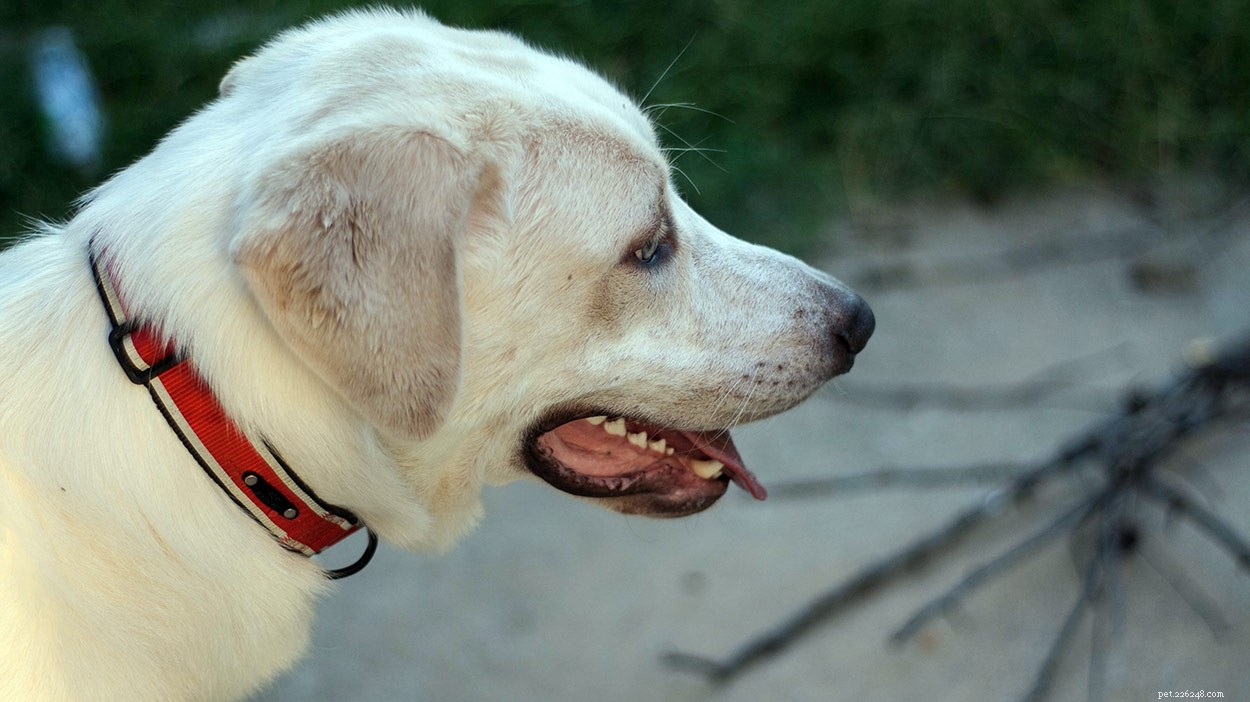
A Great Pyrenees and Lab mix will have a double-coat, which may be short like the Lab’s coat or long and thick like a Pyrenees’ coat.
A popular variety is the Great Pyrenees black Lab mix, to achieve that black coat. But, a Great Pyrenees black Lab mix will still have unpredictable fur lengths.
Depending on which parent a Lab and Pyrenees mix resembles, her coat may be solid yellow, black, or chocolate like a Labrador.
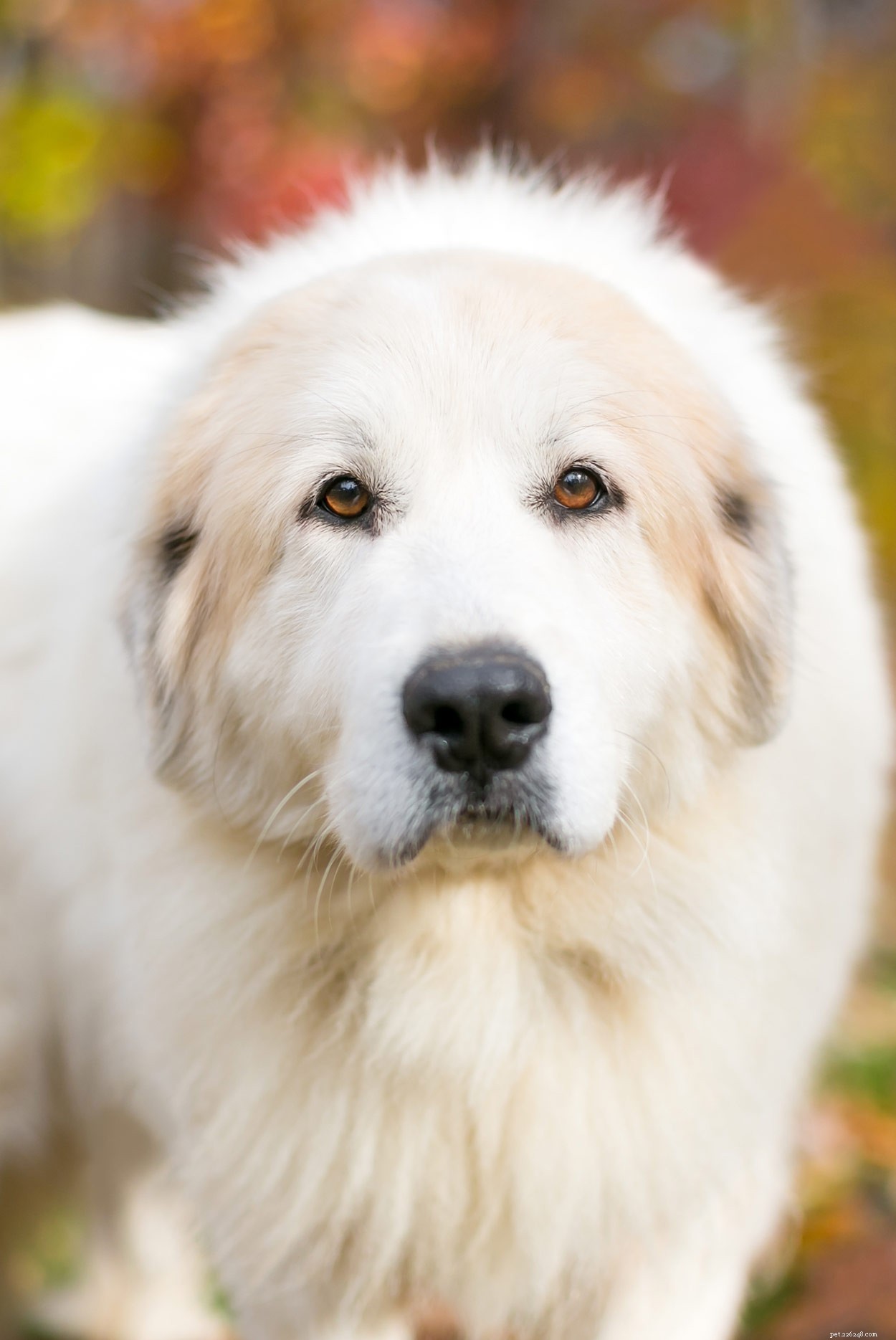
Or her coat may be white or off-white with badger, gray, tan, or reddish brown markings like a Great Pyrenees.
Height and Weight
With both parents being larger dogs, a Great Pyrenees and Lab mix definitely has some big shoes to fill.
According to Labrador and Pyrenees’ standard sizes, a Pyrador may reach anywhere from 21.5 to 32 inches tall at the shoulder.
Pyradors that take after the Lab parent’s size will be a bit smaller, while those which take after their Great Pyrenees parent will be the largest.
Generally speaking, females will be shorter and lighter than males.
Pyradors may weigh anywhere from 55 to 100+ pounds, but many do not reach full Pyrenees height and weight.
Great Pyrenees Lab Mix Temperament
Both parent breeds of this mix were once working dogs. Labradors are categorized now as sporting dogs, whereas the Great Pyrenees is categorized in the working group.
The mix can inherit the patience of the Pyrenees with just a little bit of playfulness from the Labrador. But, not all Pyradors have the temperament that we described above.
Mixed breeds can be an equal mix of both parents, or they make take after one parent more than the other.
So a Pyrador might be a mostly quiet and patient dog with a little bit of protective instinct, like his Great Pyrenees parent, or he might be a little more rambunctious with retrieving instincts, like his Labrador parent.
With all mixed breed dogs, especially first-generation mixes, you can only make an educated guess as to what the puppies will look and act like.
So, let’s take a closer look at the potential traits it could inherit from each parent.
Great Pyrenees Temperament
As we alluded to above, a dog with strong Great Pyrenees genes may have a tendency to herd or chase after other dogs, cats, or other small animals.
This could make them hard to keep in a multi-pet household.
Plus, they may exhibit guarding tendencies and be extremely loyal to their owners and property.
They may bark and growl at someone or something that they perceive to be a threat to their home.
So, a Pyrador who exhibits Great Pyrenees qualities will benefit from obedience training and socializing with other people and pets from a young age. We will look at this more in a moment.
Most Pyradors are great with children. But we do recommend that you supervise play between children and Pyradors, as the Pyrador’s large size may make play a little too rough with small children.
Labrador Temperament
On the flip side, Pyradors with stronger Labrador tendencies may be highly energetic and prone to mischief.
Unlike the Great Pyrenees, many Labs don’t know a stranger and will gladly lick someone to death instead of guarding their home from intruders.
Although, this doesn’t mean Labs don’t need socialization from a young age.
If a Pyrador acts more like a Lab, then they may have an issue with being left alone for extended periods of time.
Labs do not take kindly to solitude and need a friend. Have them let out by a dog walker a couple of times if you’re not able to be home.
Labs can also be quite destructive when they are upset or bored.
With their powerful jaws, they can chew through just about anything that’s not an indestructible dog toy.
Training and Exercising your Great Pyrenees Lab Mix
Crate training is often useful for many owners of this mix.
As Pyradors will often be very large, puppies must undergo obedience training from a very young age.
They may not know their own strength when they are fully grown, and the friendliest pup can easily hurt someone without meaning to. Training will help you avoid this scenario.
It can also help to reduce hunting instincts. Although, it may be best to avoid the risk, and choose a different breed if you have other small pets at home.
Exercise Needs
While both parent breeds were working dogs, Pyrenees mixes do not necessarily require a large yard to roam in. They are usually fine if they get at least one long walk in each day.
If they have a little more of the Lab’s energy, then they could use some extra play time.
You’ll need to keep a close eye on a Great Pyrenees Lab mix that’s off leash in an open area.
His old hunting instincts may lead him to follow his nose or a tasty-looking bunny!
If a Pyrador has English Lab in him, he may not inherit as strong of a hunting instinct. You can read our full article on the differences between American Labs and English Labs here.
Any Pyrador would do better with a fenced-in yard to keep them from wandering after a scent or running an “intruder” off.
Socialization
As well as training from a young age, this mixed breed will need to be well socialized as early as possible.
This means introducing your puppy to as many new environments, people, things, and animals as possible.
Socialization can help to reduce fear based aggression in puppies, and will help your dog grow up to be happy and confident in all situations.
Dogs with potential guarding tendencies should be socialized well to combat the risk of aggression as adults.
Given the protective instincts of the Great Pyrenees parent, and the sheer size of this mix, socialization is important for all new owners.
Great Pyrenees Lab Mix Health and Care
Pyradors may get any common canine ailments like hip dysplasia, eye diseases, allergies, and skin irritations.
As a hybrid, Pyradors are subject to genetic conditions which are passed from their parents.
Generally, Labrador Retrievers and Great Pyrenees are both prone to obesity, hip and elbow dysplasia, and progressive retinal atrophy (PRA).
To learn more about the diseases and health conditions that Labrador Retrievers are predisposed to, check out our article on Labrador Retrievers.
The Great Pyrenees Parent
The following are additional health conditions that are common in purebred Great Pyrenees or Pyrenees mix dogs:
- Panosteitis
- Bloat
- Wobbler syndrome
- Osteosarcoma (bone cancer)
- Chondrodysplasia
- Degenerative myelopathy (hind leg paralysis)
- Congenital deafness
- Fatal heat stroke
- Hypoadrenocorticism (Addison’s disease)
- Pericardial disease
- Atrioventricular Valve Dysplasia
- Type I Glanzmann’s Thrombasthenia
We cannot emphasize enough that you should purchase a Pyrador from a breeder that utilizes genetic testing.
Knowing the genes that breeding stock will pass to their offspring can prevent the passage of unwanted health conditions.
But, a healthy Pyrador can be expected to live for 10-12 years.
Grooming Needs
The Pyrenees sheds its entire undercoat seasonally, and the Lab also sheds pretty heavily seasonally. So, a half Lab half Great Pyrenees will definitely be a heavy shedder.
To combat all of the hair, especially if a Pyrador has a long outer coat, you’ll want to run a brush over their coat at least weekly.
The good news is, a Pyrador with a typical Great Pyrenees coat will not need much other grooming, as its coat will be tangle- and dirt-resistant.
Do Great Pyrenees Lab Mixes Make Good Family Pets?
For the right family, the Pyrador mix can be a great choice. Their exercise needs, temperament, and appearance will vary depending on the traits they inherit from each parent breed.
If they take after the Lab, they will be friendly, energetic, and playful. Those that take after the Great Pyrenees will be loyal, have guarding tendencies, and will need less exercise.
That doesn’t mean that a Pyrador will be happy in a small home or apartment, though. A large dog does need some room to move around while they’re inside, after all!
An enclosed area for a Pyrador to roam outside in is a good idea.
They may inherit the Lab’s love of sniffing out game. Or they might get the Pyrenees’ tendency to go after people, animals, or things which they perceive to be a threat to their home.
So, train and socialize this mix well from the time they come home as a puppy.
Although the Labrador is a fairly healthy dog, the Great Pyrenees may pass on one or more of the several health conditions common in their breed. So, choose the healthiest puppy possible. Or, consider rescuing an adult.
Rescuing a Great Pyrenees Lab Mix
You don’t have to buy a puppy from a breeder to get your very own Pyrador!
All too often, adult dogs from all walks of life end up in shelters or animal rescues. This can be because their owners could not keep them for one reason or another.
Due to the number of health issues this mix can inherit from the Great Pyrenees parent, adopting an older dog can be a good way to give an abandoned adult a second chance at life.
Some owners may give up their dogs as soon as they encounter costly health bills. So, you may find these mixes in rescues looking for loving homes.

As well as local, general dog rescues, take a look at those specifically for the parent breeds.
We have linked some at the end of this guide to help you get started on your search.
Finding a Great Pyrenees Lab Mix Puppy
Before buying a Pyrador, we recommend that you carefully research Pyrador breeders so that you only purchase from a responsible breeder.
Responsible breeders use genetic testing to prevent the passage of undesired traits or health conditions.
They also keep their breeding stock (and puppies) at a good weight and in clean conditions—always.
If a breeder does any of the following, then you might want to look for a puppy elsewhere:
- is unwilling to show you their entire facility
- has breeding stock or puppies that look ill
- does not use genetic testing
The price that you’ll pay for Great Pyrenees Lab mix puppies will vary based on how valuable the parents are to the breeder, the availability of puppies, and whether or not they’ve received various veterinary services (such as spaying, neutering, vaccines, etc.).
A Pyrenees Lab mix puppy may cost you anywhere from $500 depending on your location and the above factors.
Raising a Great Pyrenees Lab Mix Puppy
Raising any puppy can be challenging. Let alone one whose temperament and needs are as unpredictable as this.
But, you can find help in a number of places. We have plenty of guides to help you with all types of puppy care.
On top of this, take a look here for an online Puppy Parenting course.
This course can help first-time owners lay the foundations for a well behaved adult dog, and form a strong bond with their new puppy.
But, there’s a lot more to consider than just training!
Great Pyrenees Lab Mix Products and Accessories
Here are some guides that you’ll find useful if you’re preparing to bring a Pyrador puppy into your home.
- Indestructible Dog Toys
- Dog Bed for Chewers and Bed Eaters
- Best Dog Ramp For SUV And Large Vehicle Owners
Now, let’s recap.
Pros And Cons of Getting A Great Pyrenees Lab Mix
There’s a lot to take in when you’re first learning about the Pyrador mix. So, we’ve summarized the main points here.
Cons
- Unpredictable needs, temperament, and appearance
- Will shed a lot
- Can be a hard mix to find
- May have chase instincts and guarding tendencies
- Large size can hurt people unintentionally
Pros
- Each puppy will be unique
- Can be a patient, playful, and gentle breed
- Usually takes well to training
If this isn’t the right new dog for you, how about one of the following?
Similar Breeds
Here are some other breeds that share certain traits with the Great Pyrenees Labrador mix.
- Mastiff Lab Mix
- Bassador
- Pyrenean Mastiff
- Lab Pointer Mix
- More Pyrenees Mix Breeds
Now, if you’re considering a rescue dog, here are some links to get you started on your search.
Great Pyrenees Lab Mix Breed Rescues
As we mentioned earlier, a good place to look for this mix is at rescue centers dedicated to the parent breeds.
Many of these rescues will take in mixed breeds with either a Labrador or Great Pyrenees parent.
- National Pyr Rescue (USA)
- Scottish Pyrenean Rescue (UK)
- American Lab Rescue (USA)
- Labrador Retriever Rescue (UK)
If you know of any other rescues where this mix can be found, let us know in the comments.
Do You Have a Pyrador Dog?
If a large dog with a patient personality or a little playfulness is what you’re looking for, then a Pyrador might be for you!
Just be sure that you have enough room for a Pyrador and a fenced-in yard is also a good idea.
What’s your favorite thing about this large mixed breed?
References And Resources
- Borde, D. (et al), ‘Acquired Heart and Blood Vessel Disorders in Dogs’, Merck Veterinary Manual (2018)
- Bosak, J. ‘Heat Stroke in a Great Pyrenees Dog’, The Canadian Veterinary Journal (2004)
- Costa, R. ‘Wobbler Syndrome – Questions and Answers’, The Ohio State University College of Veterinary Medicine
- Decome, M. & Blais, M.C. ‘Prevalence and Clinical Features of Hypoadrenocorticism in Great Pyrenees Dogs in a Referred Population: 11 Cases’, The Canadian Veterinary Journal (2017)
- Downing, R. ‘Atrioventricular Valve Dysplasia in Dogs’, VCA Animal Hospitals
- Messonnier, S. ‘Degenerative Myelopathy and Excitotoxins – Bad News for Big Dogs’
- Modiano Lab of the University of Minnesota, ‘Osteosarcoma’,
- Strain, G. ‘Aetiology, Prevalence and Diagnosis of Deafness in Dogs and Cats’, British Veterinary Journal (1996)
- Yuill, C. ‘Panosteitis in Dogs’, VCA Animal Hospitals
- Pet Behavior
- Pet Breeds
- Pet Names
- Pet Adoption
- Pet Training
- Pet Information
- Pet Health
- Adorable Pets
- Dogs
- Corgi-Labrador Mix (Corgidor): Your Comprehensive Guide to Temperament, Care, and Adoption
- Weimaraner‑Labrador Mix (Labmaraner): Your Complete Guide
- Newfypoo: The Newfoundland‑Poodle Mix – Your Complete Breed Guide
- Black Labrador Retriever: Comprehensive Guide to Black Labs
- Border Collie-Lab Mix (Borador): Comprehensive Breed Guide
- Pitbull‑Husky Mix (Pitsky) Guide: Traits, Care & Training
- The Yellow Labrador Retriever: A Comprehensive Guide for Owners