

Key Factors to Evaluate Before Adopting a Border Collie
I have a “Collie” alert set on Craigslist, so I’ll get an email notification when one is posted in my area. (Not to get a 4th dog, but so I can tell my local Collie rescue if I see one in need of a home.) You know what I found? At least 95% of the time I get a “Collie” alert, it’s not for a Rough Collie, or even a Smooth Collie. It’s for a Border Collie.
Some of these ads are Border Collie puppies for sale (even though that’s not allowed, per Craigslist rules), but most of them are “rehoming my dog” ads. The majority of these dogs are just a year old or younger, and the reasons for rehoming them are invariably similar. Their owners will say things like: “This dog is too energetic,” or “I don’t have the time for this dog,” or “This dog needs a lot of attention.”

The great heartbreak of it all is, if these people had just taken the time to learn about the breed beforehand, they would have known that Borders have a lot of energy and require a great deal of time and attention. As sheepdogs, they were bred to work, to go all day if need be, and they excel at it.
A friend at an Internet Marketing company I’ve written for told me the phrase “Border Collie puppies” is searched an average of 30,000 times each month! Too many dogs in general, regardless of breed, are surrendered by their owners simply because too little was known before people decided to scroll through sale ads get a puppy.
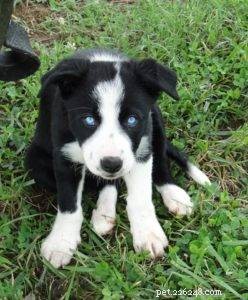
Many beautiful, whip-smart Border Collies are being given up through no fault of their own, but apparently they just weren’t what people were expecting. It was simply their misfortune to be sold by a breeder who wasn’t careful to place them in well-suited situations, to someone who knew only that Borders are cute and smart.
But you’re here, reading this. So that means you’re attempting to do your research. Good news! I’ve done my research, too. Before sitting down to write this post, I gathered information from a myriad of Border Collie owners, breeders, and rescue volunteers. I asked the questions I’d ask if I were considering getting a Border Collie, so I could pass their answers on to you.
What Owners Say
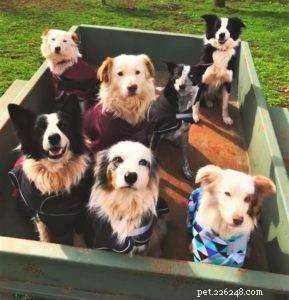
As a child, Donna Gagne grew up with a Border Collie, and she has had four more in her lifetime since. Here’s her take on the breed:

Donna’s female Border used to nip at the grandchildren when they were young. Figuring she was trying to herd them, Donna taught her how to herd ducks instead. “After she had her ducks and knew the commands, she never nipped at the kids again,” Donna said.
Another of Donna’s Borders was a gentleman named Pepe Le Pew who lived to the advanced age of fifteen. As a toddler, Donna’s grandson was constantly trying to climb up the stairs, making the adults chase after him to stop him. Before long, Pepe started blocking the stair access for them!
According to Donna, Border Collies “really are amazing dogs.” She currently has a rough coat Border Collie rescue named Radar who has come a long way since she got him.
Nikki Whittingham has three Border Collies, two of whom are rescues. Shadow, the family patriarch, is now 9 years old and retired from agility. Nikki describes him as innocent, independent, and the cleverest dog she has ever had.
Chase was rehomed at the age of 9 months by a family who had no time for and didn’t want him anymore. Now 3 years old, he is the most loving dog Nikki has ever owned, and he is very speedy at running through agility tunnels.
Her most recent rescue acquisition, Freddie, is only 6 months old. Nikki is still getting to know him, but says he is a typical puppy, though he has some fear and nerves to work through. Getting him past his apprehensions will take some effort, but his cute personality makes him well worth it.
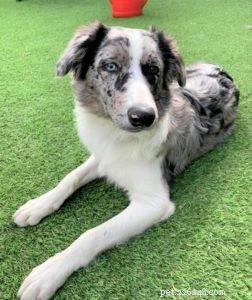
Another Border Collie owner I talked to is on her sixth BC now, and she warns potential owners that these dogs have “the intelligence level of a five-year-old human.” One of her Borders figured out how to open the fridge and get into the cabinets!
While at a local dog park, I met a gorgeous Border Collie named Finn who eagerly chased after a frisbee while his tired-looking owner sat on a bench and threw it repeatedly. Our dogs (2 Rough Collies and an Australian Shepherd mix) tried to engage Finn in play, but he would not be distracted from his chosen sport.
I struck up a conversation with Finn’s owner, asking him what it was like to have a BC while living in the city. “Well…” he responded. “We’re here, doing this, twice a day – morning and evening, for at least an hour each time. If we don’t, he’ll tear up the apartment.”
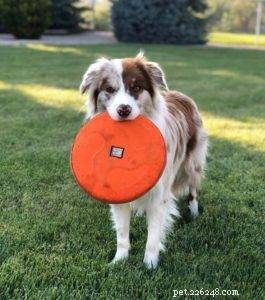
Michelle Dean lives in Pennsylvania, USA with 3 purebred Border Collies who train and compete in Conformation, Rally, Tricks, and Agility. She had this to say about her experience with Border Collies:

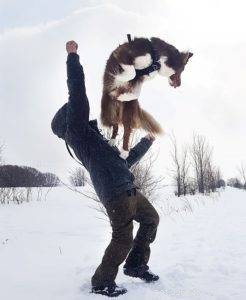
Marika Lg lives in Quebec, Canada and likes to get out and photograph Border Collies on the go. She said:
What Breeders Say
Dennis and Merry Lou Gumm of Nightshades Border Collies gave some excellent information (and cautions) for those considering bringing a Border Collie home:
Character: The Border Collie forms a close bond with its family and is extremely intelligent, determined, and brave. They are eager to work and play and are energetic and likable. Border Collies are extremely loyal and like to please their owners. They are sensitive, loving dogs.
Temperament: The Border Collie gets along quite well with other pets and children – provided it has plenty of activity to keep it occupied. It may get along more easily with dogs of the opposite sex. Border Collies should be socialized with small, non-canine pets when young to overcome the prey instinct.

Care: Border Collies can become destructive if ignored or insufficiently exercised, especially if left alone for long periods. They are like an active, inquisitive child: if you don’t provide something for them to do, they will create their own entertainment; and it may not be something you want them to do.
Training: The Border Collie’s tremendous intelligence and desire to please make training simple. They are very obedient and agile, and due to their high intelligence and desire to please can be taught almost anything. Border Collies are eager to learn and play sports and games.
Activity: Border Collies like to be busy. They are well-suited and make great pets for people with active lifestyles. They especially love sports such as Frisbee or playing ball, jogging, hiking, and other types of activity; but are just as happy playing and doing things with their owners. Having originated as a sheepdog and cattle-herder, the Border Collie has a natural instinct to herd, is highly work-focused, and most happy when given specific tasks on a regular basis. They are especially suited for and learn jobs quickly and well. If not given something to do, the Border Collie can become badly behaved. They are not suited to a sedentary lifestyle.
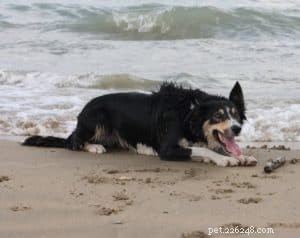
Angelae Finger of Top Notch Border Collies has a very particular home selection process for her puppies. As a dedicated breed mentor, she said:

What Rescue Workers Say
Donna Deal has been the New York state intake coordinator for Glen Highland Farm, Sweet Border Collie Rescue for 14 years and has adopted three of her dogs from GHF. She was kind enough to answer my questions in detail, based on her wealth of experience with the breed.
(The Getaway at Glen Higland Farm is a pet-friendly vacation resort whose revenue has supported Sweet Border Collie Rescue. As the focus of the rescue has recently changed to meeting the needs of senior Border Collies aged 10 and up, the rescue will be relocating to the warmer climate of Virginia, and the farm is now for sale.)
I would recommend:
- Spend as much time as possible around one in their home environment. (Many people meet Border Collies for the first time at events such as agility trials and fall in love with their intelligence and athleticism without realizing how much work goes into their training and conditioning, and how intense these dogs are – whether or not they are working.)
- Speak to owners about what their dogs’ daily routines are like.
- Be realistic about whether having a life which involves large amounts of dog-focused attention daily for many years is appealing.

A new owner must respect that these dogs have been bred for centuries to make decisions on their own about what to chase and whether to use force against another living creature. Border Collies are not generally aggressive dogs; but they do have a strong desire to control movement, and that may show itself as a tendency to chase, circle or nip at cars, lawn mowers, joggers, other dogs, and especially young children if they are not given proper supervision. With proper training, most Border Collies can learn that it is appropriate to chase the frisbee – but not the cat or the mailman. However, it is likely that they will try all of those things if left to their own devices!
If you don’t plan on doing something with a Border Collie that is physically and mentally stimulating on a daily basis, a young Border Collie might not be the best match for you. Many Border Collies come into rescue because they started to develop undesirable behaviors as a result of not having proper outlets for their energy and uses for their mind.

This is a sensitive, “thinking” breed which does not generally do well in chaotic situations. While individuals vary, many Border Collies are sound-sensitive and find it upsetting to live near gun ranges, with young children prone to outbursts of excitement or crying, or where loud vehicles such as motorcycles or snowmobiles are common.
Young Border Collies are often easiest to manage when they have at least one other young herding dog in the home who will understand and share their herding behaviors. Often they arrange their play such that while one fetches a ball, the other herds the ball-fetcher back to you.
They crave virtually any sort of person-involved work, whether that is something physically demanding like agility or sheep herding, or mentally challenging like obedience, tracking, or trick training. Border Collies are generally physically capable of being good running partners. If the dog has a strong recall, they greatly enjoy off-leash hiking and often swimming.
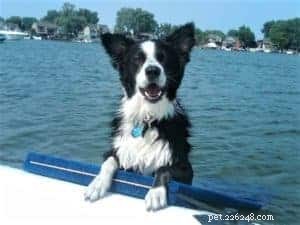
The Border Collie tends to be a healthy breed with a long life expectancy, and while dogs of 8+ have usually developed a good “off switch” and won’t pester a person for constant activity as a younger dog might, they are generally ready to accompany and participate in activities with their people any time you wish.
An ideal home for a mature Border Collie would be one where the dog’s people are around and able to include them in their comings and goings much of the day; where the dog knows and understands the people who regularly visit the home, especially any children; and often where the dog has respectful canine companionship.
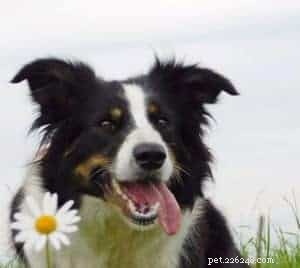
The answer varies greatly by the needs of the particular dog. Unlike many rescue organizations where approved adopters walk around in a shelter-like building and select any dog which appeals to them, Glen Highland considers the interests, skills, and life experiences of each dog and each adopter to see who can make a lifelong “match.”
It is not a criticism of either a dog or an adopter that not all who will be attracted to each other will be a good fit living together in a particular home environment. For instance, many dogs are in rescue because they were stressed and uncomfortable around small children. Such a dog is likely a much happier and safer companion in a home with no one younger than a teen, or in a rural setting rather than a stimulating suburban setting with noisy buses and young children regularly running past.
Some Border Collies rarely leave their person’s side, while others are dedicated escape artists for whom a securely-fenced yard is critical. While many young Border Collies greatly enjoy romping and running with other young dogs, senior Border Collies generally prefer a quieter home where they don’t have to compete for a person’s attention.

I attended a Scottish Festival where Scottish-origin dog breeds were on display, and had the wonderful opportunity to speak with a group of people affiliated with the Southeast Border Collie Rescue League about the differences and similarities between Border Collies, Rough Collies, and Smooth Collies – which all share origins.
Carl and Vicky Crosby had an accumulated 58 years of dog experience between them, having owned 5 Labrador Retrievers, 3 Border Collies, 2 Rough Collies, and a Lab/Rottweiler/Terrier mix. They said their Border Collies were extremely intelligent, while the Rough Collies were also smart – but more lazy and didn’t need a job as much. To them, Labrador Retrievers and Border Collies have similar energy levels in that they’re “boingy-boingy” even as adults; yet different in that the Labs calmed down somewhat after 2 years but the Border Collies did not.
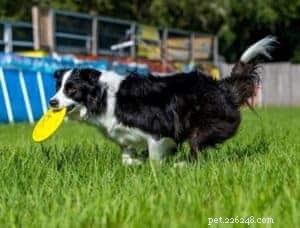
Their Borders loved playing with toys and interacting with humans or other animals. They needed a job or task every day, or even a puzzle box or treat dispensers. Soft, plush toys with squeakers were a waste since they were rapidly destroyed, and a “dead” toy wasn’t fun anymore. One of Carl’s and Vicky’s Border Collies would play with a red laser toy for 15 minutes, then he would get a treat, simulating the natural hunt-feed cycle of wolves in the wild. Similarly, a Border Collie’s herding behavior is a refined version of what wolves do when separating prey from a herd.
(Side note of caution on laser toys: some owners are against using them, since Borders have been known to obsessively “herd” naturally-occurring lights and shadows indoors after playing with laser lights. As Amanda McWilliams, dog mom to 3 Borders, said, “Some dogs may be perfectly fine with them but that one first time could be the start of something awful.” Emily Estes confirmed this: her roommate introduced her BC puppy to a laser pointer light while she was gone, which resulted in her having to hire an animal behaviorist to combat the compulsive shadow-chasing he developed.)
Carl stressed that even though we tend to speak of dog breeds in generalities, there are always variations. Some BC’s are very food-motivated, but a treat can also be love and praise, which helps to improve a bond. They had one Border Collie that didn’t like the Frisbee, because it hurt her soft mouth. Even full siblings can be totally different. Their high-strung adult, Quinn, and Mira’s much calmer puppy, Sybil, were good examples of that.

Then it was Mira’s turn to tell stories about her four-month-old Border Collie puppy, Sybil. While Mira was working in a horse barn one day, collecting and rolling up the protective bandages used to wrap the horses’ legs, Sybil sat nearby, watching intently. Then, with absolutely no direction, Sybil independently started collecting the wraps lying scattered around the barn and bringing them to Mira! Richard, a fellow volunteer, pointed out that she was doing what Borders were bred to do – reason things out for themselves.
Another time, Sybil proudly presented an astonished and delighted Mira with a windblown $20 bill. Laughing, Mira said, “She was just holding it in her mouth, staring at me like, ‘Did I do good?’ I praised her a lot and told her, ‘Please do that again!’ All I can think is, she must be aware that money is something I use regularly, therefore – helpful. I swear, she’s so young, and already all she wants in life is to help me out.”
Summary
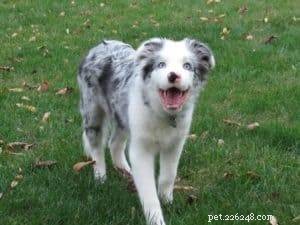
If you’re considering bringing a Border Collie puppy (or adult) home, remember that breed choice is always less a matter of looks and more a matter of lifestyle. If you are just wild about the look of a Border Collie but know you can’t give one the active life it needs, perhaps look into their more “lazy cousins,” the Rough Collies (or the short-haired versions, Smooth Collies) that over the years have been bred more for companionship than work. Even an Australian Shepherd – in some cases – might make a good alternative for a somewhat lower-energy dog.
If you can dedicate the necessary time and energy to give a pet Border Collie the kind of life it deserves, then by all means, go for it. The Border Collie has so much to offer!
If you enjoyed this post, get free updates by email.
If you have any questions or input about Border Collies or dogs in general, feel free to leave it in the comments below!
- Pet Behavior
- Pet Breeds
- Pet Names
- Pet Adoption
- Pet Training
- Pet Information
- Pet Health
- Adorable Pets
- Dogs
- Top Factors to Evaluate Before Bringing a Dog Home
- Before You Adopt a Dog: Key Factors to Consider for a Lifelong Commitment
- Choosing the Right Pet Bird: Key Factors to Consider
- Pepsi the Collie: Celebrating a Beautiful Soul
- Finn: From Heirloom Collie to Mountain Search & Rescue Champion
- 7 Essential Factors to Evaluate Before Bringing Home a Puppy
- 5 Key Considerations Before Rehoming a Dog