

Introducing Pexion: A Breakthrough Treatment for Canine Idiopathic Epilepsy
We recently wrote about canine idiopathic epilepsy, a form of epilepsy where the cause remains unknown. Today we are looking at a new treatment; Pexion.
The severity of epilepsy can vary greatly between individual sufferers. Some dogs may experience a single, isolated seizure, whilst other can experience multiple seizures every week.
Recently Boehringer Ingelheim has announced their latest product for the treatment of canine epilepsy, Pexion® (Pexion) an alternative to the traditional phenobarbital or potassium bromide treatments given to epileptic dogs.
Are you using Pexion?
If your dog has been prescribed Pexion, let us know how your dog is getting on in the comments below. Join the discussion and keep the community updated with your progress.
What Is Pexion?
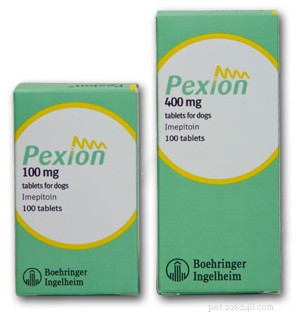 Unlike other treatments for canine epilepsy, Pexion contains the active ingredient Imepitoin. Imepitoin acts in a similar manner to previous anti-epileptic medicines, potassium bromide and phenobarbital, in that it works to suppress electrical activity in the brain.
Imepitoin partially activates GABA receptors, which are responsible for reducing electrical activity between nerve cells. This partial activation of the GABA receptors is believed to reduce electrical activity and help prevent seizures. Specifically, Imepitoin also has a weak blocking effect on calcium channels that allow electrical signals to be propagated along nerve cells.
See here for more information about Pexion
Does Pexion Work?
A study conducted on Pexion during its development compared it to the traditional anti-epileptic medicine phenobarbital. A 20 week study of 226 dogs taking the medications found Pexion matched phenobarbital in efficacy, reducing the occurence of seizures by around 50%.
Is Pexion a Better Alternative?
The Pexion study showed that it had an effectiveness equivalent to phenobarbital, however, Pexion may be considered a better alternative as it has less severe side effects.
Unlike phenobarbital, Pexion does not pose a hepatotoxicity risk (liver toxicity). This means the regular testing required to ensure that a dog’s liver remains healthy is not needed whilst being given Pexion.
Treating the Epileptic Dog
It is commonly cited that around 0.5 to 5% of dogs suffer from some form of epilepsy, the severity varying between breeds and individuals. In dogs where seizures occur infrequently owners may consider not using any medication at all, avoiding the side effects associated with anti-epileptic medications.
In dogs where seizures occur more freqently, such as once a month or more, treatment should be considered.
The introduction of Pexion gives owners and vets a greater choice when it comes to treatment, but does not replace phenobarbital and potassium bromide.
Owners should consult their vet and explore all the possibilities when dealing with an epileptic dog.
Seizure Types That Require Immediate Veterinary Assistance
Cluster seizures – When multiple seizures occur in one 24 hour period
Status epilepticus – A persistent epileptic state that lasts for longer than 5 minutes
For more information about epilepsy, such as the causes, what to do during a seizure and more, see this article.
Disclaimer: This article was written as a response to the release of Pexion and as a follow up to a previous article concerning idiopathic epilepsy. I am not affiliated with the product (Pexion) or the manufacturer (Boehringer).
Featured Image: Onkel_wart
- Pet Behavior
- Pet Breeds
- Pet Names
- Pet Adoption
- Pet Training
- Pet Information
- Pet Health
- Adorable Pets
- Dogs
- Spring Conditioning for Dogs: Acupressure Techniques to Boost Fitness & Reduce Injury
- Essential Steps to Welcome Your New Puppy Home
- Find the Perfect Forever Home for Carson, the Loving 10-Year-Old Terrier
- Comprehensive Guide to Treating Canine Heartworm Infections
- Revolutionary Surgery Offers Hope for Dogs with Pituitary-Dependent Cushing’s Disease
- Merial Announces Shortage of Immiticide, the Sole Dog Heartworm Treatment
- Effective Treatment Plans for Dog Lipomas: Safe & Proven Solutions