

EU Pet Passport Update 2026: What US & UK Owners Must Know
If you plan to travel to Europe with your dog, cat, or ferret, the 2026 EU pet travel rules overhaul is essential knowledge before booking your trip.
Effective April 22, 2026, the European Union introduced significant changes to the non‑commercial movement of pets. The revisions affect entry and movement within the EU, particularly for owners based outside the EU.
The most consequential shift: EU pet passports are now exclusively for residents of the EU. This change directly impacts pet owners in Great Britain and the United States who previously relied on EU passports to simplify repeat trips.
For owners in England, Scotland or Wales, travel to the EU now requires an Animal Health Certificate (AHC) for each journey. U.S. travelers must obtain an EU animal health certificate completed by a USDA‑accredited veterinarian and endorsed by USDA APHIS. Northern Ireland continues to follow EU rules, allowing residents to obtain a valid EU pet passport from participating veterinary practices.
Below we explain what changed, the document you need, validity rules, and what U.S. and U.K. pet owners should do before traveling to the EU with a dog, cat, or ferret.
Last updated: May 15, 2026. This article is for general planning purposes only. Always verify your exact route with official government sources, your veterinarian, and your airline or ferry operator before travel.
Quick answer: What changed with EU pet passport rules in 2026?
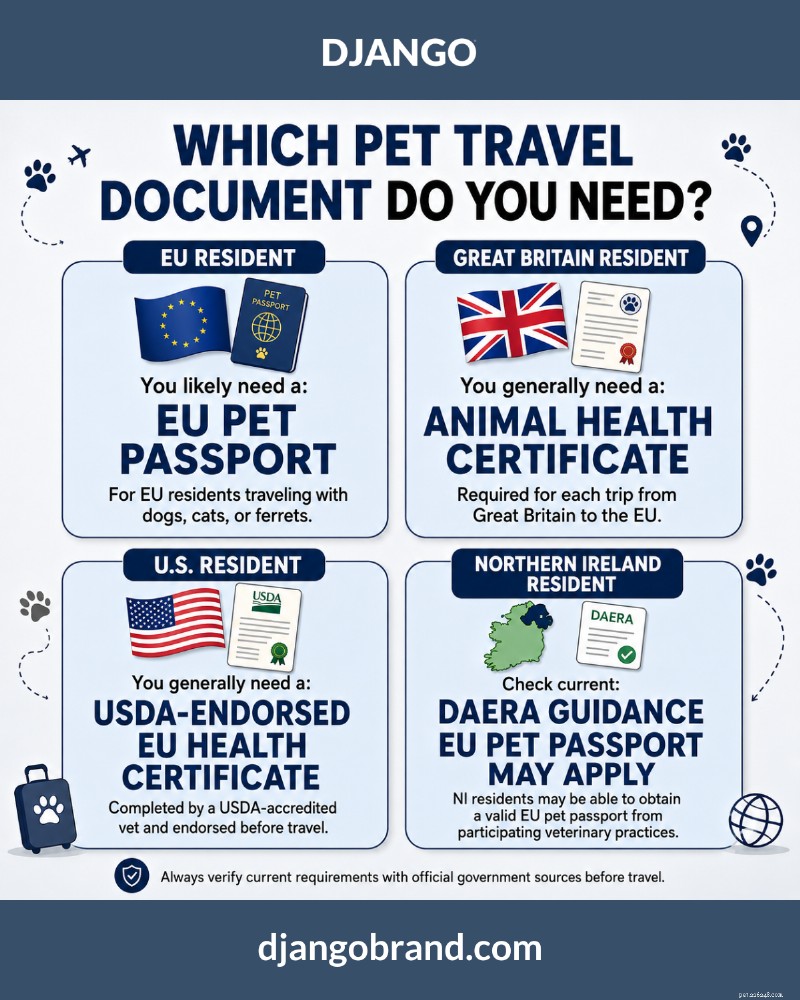
From April 22, 2026, EU pet passports are only issued to pet owners who reside within the EU. Great Britain residents must obtain an AHC for each trip to the EU, even if they previously held an EU passport. U.S. residents need a USDA‑endorsed EU health certificate. In short: EU residents use EU passports; Great Britain residents use AHCs; U.S. residents use USDA‑endorsed certificates.
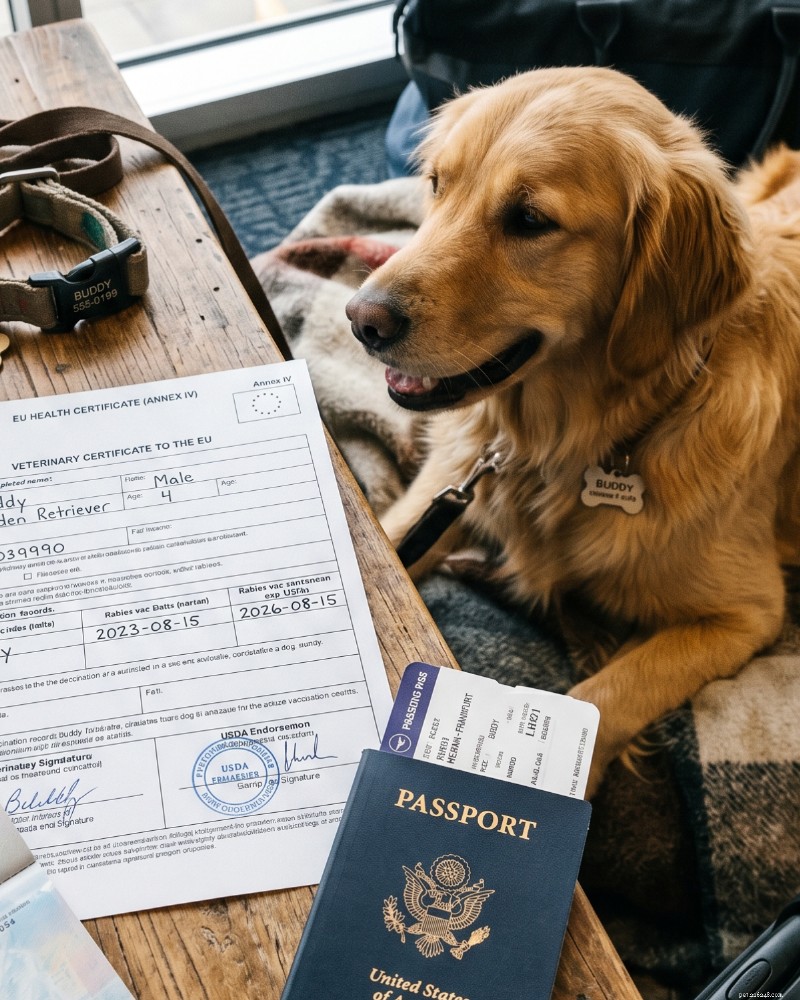
EU Pet Passports: What Changed on April 22, 2026?
The changes target non‑commercial pet movement—pets traveling with you or an authorized person, not for sale or transfer. Core health requirements remain: microchip, rabies vaccination, and the correct travel document. Some destinations still require tapeworm treatment for dogs.
Key 2026 EU pet travel changes:
- EU passports now only for EU residents. A European pet passport is an EU‑standard ID for dogs, cats, and ferrets, issued exclusively to EU residents.
- Great Britain residents cannot use EU passports. GOV.UK advises that pets from England, Scotland, or Wales must not use an EU passport when entering the EU; entry may be refused.
- GB Animal Health Certificates are single‑use but have extended validity. An AHC is valid for 10 days for EU entry, 6 months for onward travel within the EU, and 6 months for re‑entry to Great Britain, provided the rabies vaccination remains valid.
- U.S. travelers need a USDA‑endorsed EU health certificate. A USDA‑accredited vet completes the certificate, which is then endorsed by USDA APHIS.
- Extra paperwork if someone else transports your pet. If an authorized person carries the pet, the owner’s journey must occur within 5 days before or after the pet’s journey, and written authorization must accompany the pet’s document.
- The five‑pet limit clarified. Non‑commercial travel is limited to five pets, with limited exceptions for events such as competitions or exhibitions.
For most families traveling with one or two pets, the practical takeaway is simple: do not assume an EU passport is an option if you live outside the EU.
Which Pet Travel Document Do You Need?
The required document depends on your residency, departure country, first EU entry point, and the nature of your trip.
Great Britain (England, Scotland, Wales): Obtain an Animal Health Certificate (AHC) from a vet for each trip to the EU.
Northern Ireland: Residents may obtain a valid EU pet passport from participating veterinary practices, as Northern Ireland continues to follow EU rules.
United States: Secure a USDA‑endorsed EU animal health certificate before traveling to the EU.
EU residents: Use an EU pet passport for travel between EU countries, ensuring rabies vaccination and health information are up to date.
Important: “Europe” and “the EU” are not synonymous for pet travel rules. This guide focuses on EU regulations and related guidance for Great Britain, Northern Ireland, Norway, and U.S. travelers entering the EU. Always check the official rules for every country on your route.
Implications for Great Britain Pet Owners
Great Britain residents must obtain an Animal Health Certificate for each trip to the EU. Even if a pet already has an EU passport, using it for entry into the EU can result in refusal.
- Get an AHC from your vet before each trip.
- Microchip the pet before or at the same time as the rabies vaccination used for travel.
- Ensure the rabies vaccination is valid and observe the required waiting period (typically 21 days after a primary vaccination).
- Enter the EU within 10 days of the AHC issuance.
- Use the AHC for onward EU travel and re‑entry to Great Britain for up to 6 months, provided the rabies vaccination remains valid.
- Check if tapeworm treatment is required for your destination.
Validity of a GB Animal Health Certificate
- 10 days for entry into the EU.
- 6 months for onward travel within the EU.
- 6 months for re‑entry to Great Britain.
Each trip requires a new AHC; the certificate is single‑use for EU entry.
Using an EU Pet Passport for Return to Great Britain
While a valid EU pet passport can be used for re‑entry into Great Britain, it cannot be used for entry into the EU. GB residents must still use an AHC when traveling from Great Britain to an EU country.
Implications for Northern Ireland Pet Owners
Northern Ireland follows EU pet travel rules. Residents can obtain a valid EU pet passport from participating veterinary practices. Check DAERA’s current guidance before traveling, especially if your itinerary includes Great Britain, the Republic of Ireland, another EU country, or re‑entry to Northern Ireland.

Implications for U.S. Pet Owners Traveling to Europe
U.S. residents cannot obtain an EU pet passport. They must secure a USDA‑endorsed EU health certificate before each trip from the U.S. to an EU country.
The certificate must be completed by a USDA‑accredited veterinarian and endorsed by USDA APHIS. The original endorsed certificate must travel with your pet.
For detailed steps, refer to our guide: How to Take Your Dog to Europe From the U.S.
- Verify USDA APHIS requirements for your first EU entry point.
- Ensure a working microchip; for EU travel, the microchip must be implanted before or at the same time as the rabies vaccination.
- Confirm the rabies vaccination meets EU timing rules.
- Work with a USDA‑accredited vet to complete the EU health certificate.
- Obtain USDA APHIS endorsement within the required window.
- Enter the EU through an approved travelers’ point of entry.
- If returning to the U.S., check current CDC dog import rules.
Microchip and Rabies Timing
Microchip first, then rabies vaccination. If the rabies vaccine was given before the microchip, it may not count for EU travel.
USDA APHIS Endorsement Process
- Visit a USDA‑accredited veterinarian to confirm microchip, rabies status, travel dates, and destination.
- Vet completes the EU health certificate.
- Vet submits the certificate to USDA APHIS, often via the Veterinary Export Health Certification System (VEHCS).
- USDA APHIS endorses the certificate (ink‑sign and emboss).
- The endorsed hard copy travels with your pet.
APhIS endorsement must occur within 10 days of your pet’s arrival in the EU. Plan early to allow for vet appointments, endorsement, and any return shipping.
Traveling to Multiple EU Countries with One Document
After entry, a valid EU animal health certificate can cover onward travel within the EU for up to 6 months or until the rabies vaccination expires, whichever comes first.
Example: Fly from the U.S. to France, clear entry checks, then travel to Italy or Spain without a new certificate.
Dogs heading to Finland, Ireland, Malta, Norway, or Northern Ireland must receive tapeworm treatment (Echinococcus multilocularis) between 24 and 120 hours before entry. Cats and ferrets are exempt.
Simple Timeline for EU Pet Travel
| When | What to do |
|---|---|
| As soon as you start planning | Check official rules for departure country, first EU entry point, airline/ferry, and return route. Use GOV.UK for GB, USDA APHIS for U.S. |
| Before rabies vaccination | Microchip the pet before or at the same time as the vaccination. |
| At least 21 days before travel | Wait after a primary rabies vaccination. Booster coverage may allow a shorter window. |
| Before your certificate appointment | Confirm route, first EU entry, microchip number, rabies records, and any country‑specific requirements. |
| Within the certificate window | Obtain the correct AHC or EU health certificate and, for U.S. travelers, get USDA APHIS endorsement. |
| 24–120 hours before entering certain countries | Administer tapeworm treatment for dogs heading to Finland, Ireland, Malta, Norway, or Northern Ireland. |
| At EU entry | Show documents, microchip details, rabies record, and tapeworm treatment if required. |
| Before returning home | Check re‑entry rules for your home country. U.S. travelers should also verify CDC dog import rules. |

Official Pet Travel Resources to Bookmark
- GOV.UK: Taking your pet dog, cat or ferret abroad
- GOV.UK: New EU rules for pet travel for GB residents
- European Union: Travelling with pets and other animals in the EU
- European Commission: Bringing a pet into the EU from a non‑EU country
- USDA APHIS: Take a pet from the United States to another country
- USDA APHIS: Veterinary Export Health Certification System (VEHCS)
- DAERA: Travelling with pets from Northern Ireland
- CDC: Bringing a dog into the United States
Related DJANGO Pet Travel Guides
- How to Take Your Dog to Europe From the U.S.
- International Airline Pet Policies for In‑Cabin Travel
- Tips for Flying With Your Dog
Planning a dog‑friendly trip? International travel with a dog requires careful preparation, but with early planning, organized documents, and adherence to the latest guidance, it is entirely achievable.
Shop Pet Carriers | Read More Dog Travel Articles
FAQs
- Are EU pet passports still valid in 2026? Yes, but only for EU residents. They can remain valid for life if health information, including rabies vaccination, stays current.
- Can U.S. pet owners obtain an EU pet passport? No. U.S. residents must use a USDA‑endorsed EU health certificate.
- Do UK pet owners need an Animal Health Certificate for the EU? Yes for England, Scotland, or Wales. Northern Ireland residents may still obtain an EU pet passport.
- How long is an Animal Health Certificate valid? 10 days for EU entry, 6 months for onward travel within the EU, and 6 months for re‑entry to Great Britain, provided the rabies vaccination remains valid.
- Can I travel to multiple EU countries with one health certificate? Yes, after entry the certificate is valid for onward travel within the EU for up to 6 months or until the rabies vaccination expires.
- Do dogs need tapeworm treatment for EU travel? Dogs heading to Finland, Ireland, Malta, Norway, or Northern Ireland need treatment 24–120 hours before entry. Cats and ferrets are exempt.
- Must the microchip be implanted before the rabies vaccination? Yes, for EU travel the microchip must be implanted before or at the same time as the rabies vaccination.
- How does USDA APHIS endorsement work? A USDA‑accredited vet completes the EU health certificate, submits it to USDA APHIS for endorsement (ink‑sign and emboss), and the endorsed hard copy travels with the pet.
- Can someone else travel with my pet to the EU? Yes, but the owner’s journey must occur within 5 days before or after the pet’s journey, and written authorization must travel with the pet’s document.
- Can I travel to the EU with more than five pets? The standard limit is five pets for non‑commercial travel, with limited exceptions for events like competitions or exhibitions.
- How early should I start planning EU pet travel? Begin as early as possible—allow time for microchip implantation, rabies vaccination, booster documentation, tapeworm treatment, USDA‑endorsed certificate, airline or ferry requirements, and any route‑specific rules.
- Pet Behavior
- Pet Breeds
- Pet Names
- Pet Adoption
- Pet Training
- Pet Information
- Pet Health
- Adorable Pets
- Dogs
- Top 5 Fluffiest Cat Breeds for a Cuddly Home
- Understanding Chihuahua Vomiting: Causes, Symptoms, and What to Do
- What Dogs' Eyebrow Movements Reveal About Their Emotions
- Top Cat Puzzle Toys: Keep Your Feline Smart & Happy
- Proven Dog Ear Infection Treatment: Fast, Safe Relief for Your Pet
- Why Do Dogs Eat Cat Poop? Causes, Risks, and How to Stop It
- Why Dogs Sing: The Science Behind Their Howling and Musical Response