

2026 Guide to the Best Small‑Dog Harnesses: Features, Fit, and Top Recommendation
Choosing a harness for a small dog can feel like searching for a needle in a haystack. Many products claim to be sized for “small,” yet they lack the precision required for tiny frames, delicate necks, and unique body shapes.
When a harness gaps at the neck, twists mid‑walk, rubs behind the front legs, or feels stiff and bulky, the result is a frustrated dog and a tense owner. Small dogs deserve a harness that is secure, lightweight, and designed specifically for their proportions.
Below is an evidence‑based review of what makes a small‑dog harness truly effective, how to measure for the perfect fit, and why the DJANGO Adventure Dog Harness stands out as the best choice for most small and medium breeds up to 30 lbs.
Why Small Dogs Need a Purpose‑Built Harness
Small breeds have a distinct set of anatomical and behavioral characteristics that influence harness performance:
- Delicate necks and tracheas: Collars concentrate pressure on the throat—an area prone to collapse in breeds such as dachshunds, beagles, and French bulldogs. A harness distributes weight over the stronger sternum.
- High escape tendency: Many small dogs possess the agility and curiosity to slip out of ill‑fitted gear. Adjustable neck and chest straps reduce escape risk.
- Low tolerance for bulk: Heavy back panels or oversized buckles can overwhelm a petite frame, causing the dog to freeze, change stride, or even pull harder.
- Full shoulder and leg mobility: A harness that slides too close to the armpits or shifts during movement can restrict gait, especially in breeds prone to intervertebral disc disease.
- Varied body shapes: From the long‑backed dachshund to the round‑chested French bulldog, a one‑size‑fits‑all approach fails to accommodate the spectrum of small‑dog builds.
When a harness meets these criteria, owners experience safer walks, less training frustration, and a dog that moves naturally.
Key Features to Evaluate in a Small‑Dog Harness
Here’s a concise checklist of design elements that translate into real‑world comfort and security:
- Dual adjustability: Neck and chest straps should be adjustable independently.
- Chest‑focused pressure: The harness should sit below the throat, shifting leash tension to the sternum.
- Lightweight construction: Adequate structure without bulk—think flexible back panels and soft webbing.
- Soft, anti‑chafe materials: Smooth edges, padded contact points, and breathable mesh reduce irritation.
- Durable hardware: Brass buckles, solid D‑rings, and reinforced stitching hold up to active use.
- Easy on/off: Side‑release buckles or quick‑fit designs make routine dressing painless.
These attributes create a harness that feels secure, comfortable, and respectful of a small dog’s natural movement.
Common Pitfalls When Selecting a Harness
- Relying solely on weight—chest girth is equally critical.
- Leaving the neck opening too loose—this invites escape.
- Over‑tightening the chest—this can cause chafing or restrict breathing.
- Choosing a bulky model—small dogs freeze or walk awkwardly.
- Ignoring armpit rubbing—short legs mean less space between chest and front leg.
- Assuming one harness fits all—variability in body shape demands adjustability.
Measure carefully, adjust diligently, and observe how your dog moves with the harness in place.
How to Measure Your Small Dog for the Ideal Harness
- Chest girth: Measure the widest part behind the front legs using a flexible tape.
- Neck opening: Should sit below the throat and feel snug without tightness.
- Two‑finger rule: After fitting, two fingers should fit comfortably under the straps.
- Armpit area: Straps must not dig behind the front legs.
- Back‑out test: Attach a leash, allow a gentle backward step; the harness should stay in place.
Adjust straps as needed; a properly fitted harness feels secure yet free‑moving.
Top Pick: DJANGO Adventure Dog Harness
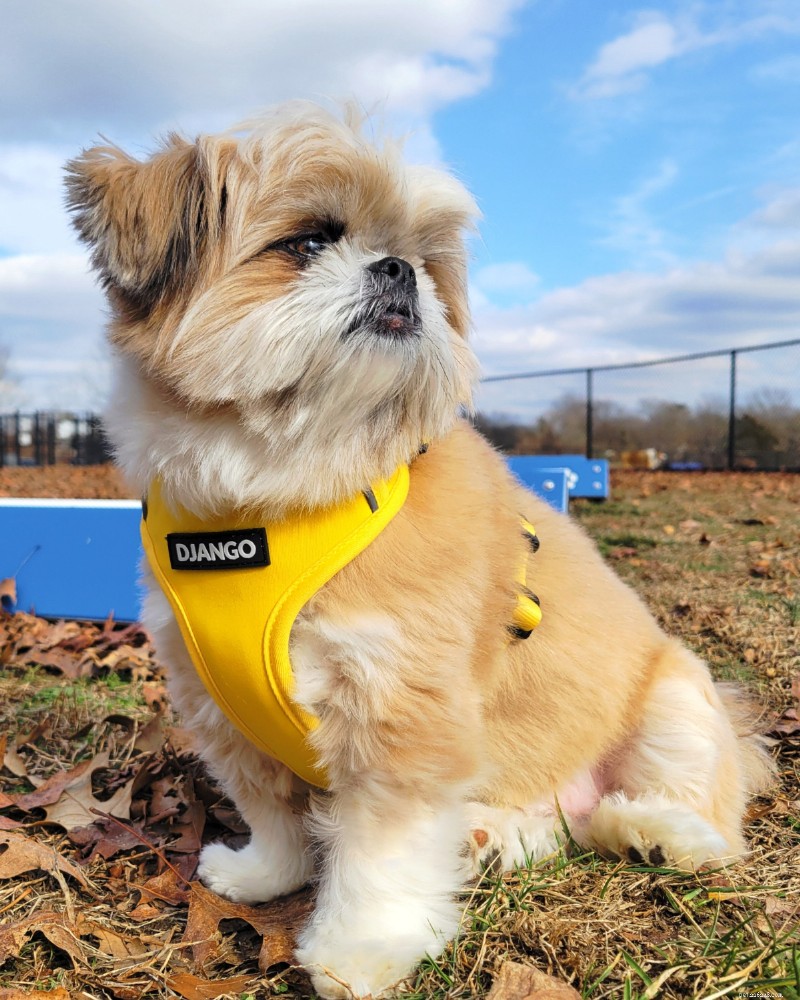
The DJANGO Adventure harness embodies the principles above. Designed for small and medium dogs up to 30 lbs, it offers:
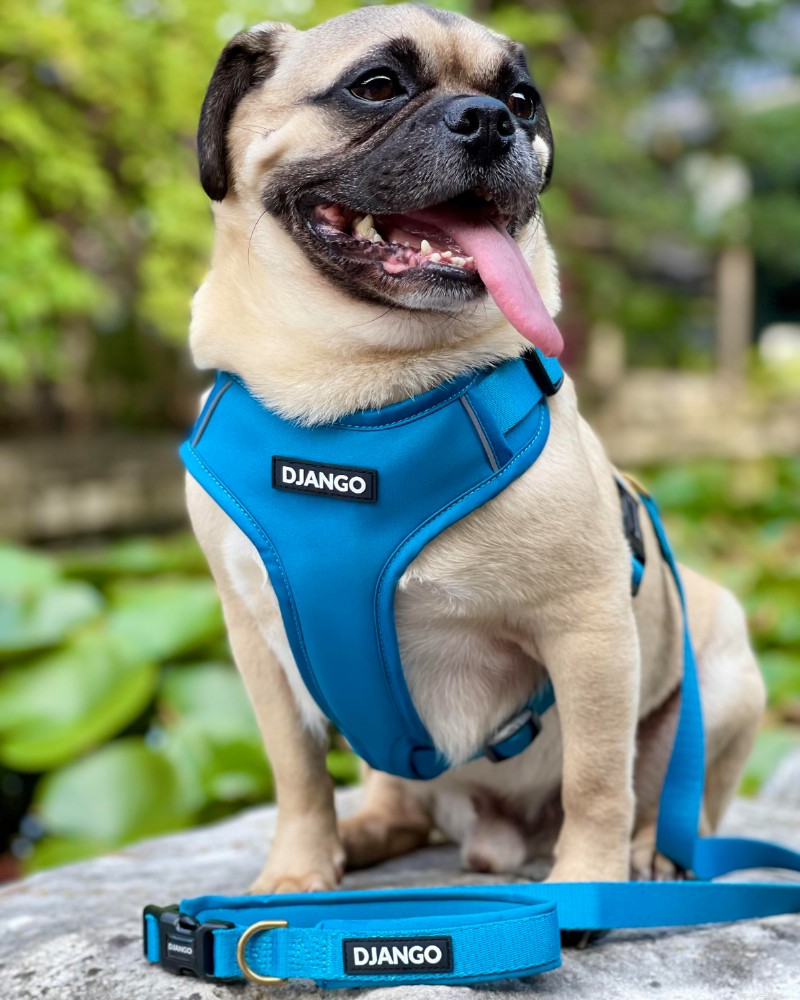
- Soft neoprene exterior with breathable mesh lining.
- Four adjustment points—two at the neck, two at the chest—for a custom fit.
- Lightweight, flexible back panel that reduces bulk.
- Deep, narrow chest panel to keep straps from rubbing behind the front legs.
- Side‑release buckles for easy on/off.
- Reflective piping for night‑time visibility.
- Durable brass hardware and color‑fast webbing.
Its chest‑focused design ensures leash pressure stays on the sternum, protecting delicate throats. The lightweight construction lets even the most active pups move freely.
Why Small‑Dog Owners Love It
- Light and non‑bulky.
- Secure and fully adjustable.
- Comfortable for everyday walks.
- Reduces armpit rubbing.
- Easy to put on and take off.
- Stylish enough for daily use and photos.
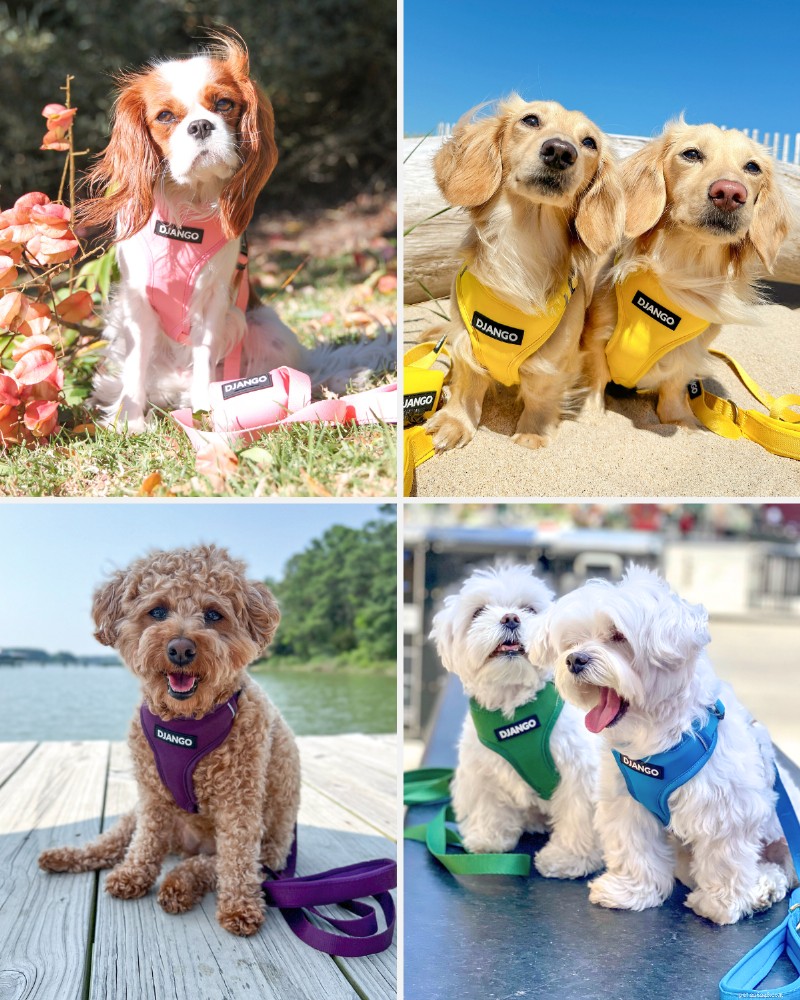
Suitable for a wide range of breeds—including dachshunds, French bulldogs, Chihuahuas, Yorkshire terriers, pugs, and many mixed breeds.
Comparing Harness Types for Small Dogs
| Harness type | Best for | What to watch for |
|---|---|---|
| Lightweight adjustable | Daily walks, travel, light hikes | Ensure neck & chest adjustability, soft padding, secure fit |
| Step‑in | Dogs that dislike overhead gear or have sensitive necks | Check for gaps, chest support, and potential shift |
| Vest | Calm dogs who enjoy a cozy feel | May be bulky; less adjustable; watch for fit on deep‑chested dogs |
| Front‑clip / no‑pull | Strong pullers or training support | Fit properly; avoid shoulder restriction |
| Heavy‑duty outdoor | Large dogs or adventure use | Often too stiff/large for small dogs |
Choosing Between DJANGO Adventure and Tahoe
The Adventure harness is ideal for most small dogs up to 30 lbs who value comfort and minimal bulk. The Tahoe No‑Pull model is better for:
- Strong pullers needing front‑clip control.
- Dogs larger than 10 lbs that may grow into L‑XXL.
- Owners who prefer a more structured padded back panel.
For most owners, the Adventure harness offers the optimal blend of fit, comfort, and security.
Veterinarian & Expert Resources
- VCA Hospitals: Collar and harness options for dogs
- VCA Hospitals: Tracheal collapse in dogs
- AKC: Dog harness vs. collar
- AKC: The importance of a well‑fitting dog harness
- AKC: Choosing the right dog harness
These sources provide deeper insight into harness safety, fit, and the impact on canine health.
Frequently Asked Questions
Are harnesses better than collars for small dogs?
For everyday walking, a properly fitted harness is superior because it distributes leash tension across the sternum rather than concentrating it on the throat.
What is the safest harness for a small dog?
One that fits well, stays secure, does not rub, and keeps pressure off the throat—features found in the DJANGO Adventure harness.
Can puppies wear the DJANGO Adventure Dog Harness?
Yes, puppies that fit the size range can use it. Adjust straps frequently and switch to a larger size as they grow.
What size DJANGO Adventure Dog Harness should I order?
Refer to the sizing chart: Small (8–18 lbs), Medium (18–30 lbs), Large (30–45 lbs). Measure chest girth and neck opening to choose the correct size.
For very small puppies, contact our support team with breed, weight, and chest girth for personalized advice.
Is a step‑in harness better for small dogs?
It depends on the dog's behavior and body shape. A step‑in harness can work well for dogs that dislike overhead gear, but it must fit snugly to prevent escape.
How tight should a small dog harness be?
Snug enough to stay in place, but you should be able to slide two fingers under the straps. Avoid gaps or tightness that restrict breathing or movement.
How do I prevent my small dog from slipping out of the harness?
Use a harness with neck and chest adjustability, ensure the neck opening is snug but not tight, and test the back‑out function after fitting.
Is the DJANGO Adventure Dog Harness good for dachshunds?
Yes. Its deep chest panel and adjustable fit make it popular among dachshund owners.
- Pet Behavior
- Pet Breeds
- Pet Names
- Pet Adoption
- Pet Training
- Pet Information
- Pet Health
- Adorable Pets
- Dogs
- Understanding the Concept of 'Broke' Horses: Training and History
- Basset Hound FAQs: Common Questions & Expert Answers
- Spotted Saddle Horse: Comprehensive Breed Profile & Adoption Guide
- Entlebucher Mountain Dog: Complete Breed Guide & Care Tips
- Budgeting for Your Pet: A Practical Guide to Keep Dogs and Cats Healthy
- Understanding Canine Jealousy: Why Dogs Feel Left Out When a New Baby Arrives
- Pregnancy Bleeding in Dogs: Recognize Symptoms & When to Seek Veterinary Care