

Why Dogs Pant: 6 Common Reasons Explained by Veterinarians
If you own a dog, you’ve probably noticed panting on a daily basis—whether it’s after a romp in the yard, during a hot afternoon, or even when a tasty treat is in sight. “Every dog pants, and most of the time it’s completely normal,” says Dr. Lindsay Butzer, DVM, a PetMeds partner. While panting is as ordinary as a dog’s zoomies or grass‑eating, it can also signal excitement, discomfort, or illness. Below we break down the most common reasons dogs pant and when the behavior warrants a veterinary call.
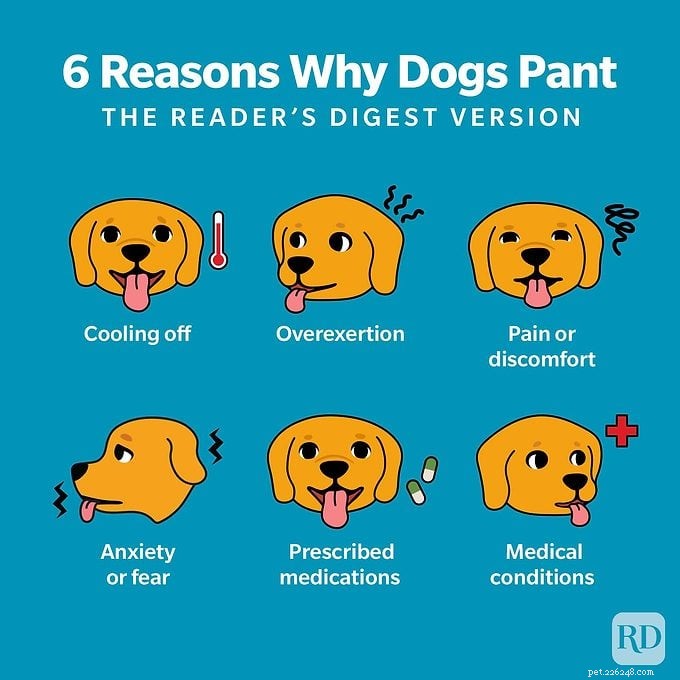
Photo credit: RD.com, Getty Images
What Is Panting?
Panting is rapid, shallow breathing where the chest moves only slightly while the mouth stays open and the tongue hangs out. Veterinarian Dr. Laura Greene explains that the dog moves air in and out quickly without the pronounced chest or belly motion seen in true respiratory distress.
Distinguishing panting from dyspnea (troubled breathing) is crucial, especially for short‑nosed breeds like Bulldogs or Pugs. Dogs in respiratory distress may breathe faster or slower, but they show marked chest and abdominal effort and often have discolored gums.
Why Do Dogs Pant?
Most panting is harmless and serves several normal functions. Here are the six most frequent causes.
1. To Cool Off
Dogs regulate body temperature primarily through evaporation. As moisture from the tongue and mouth evaporates, heat is released, cooling the blood that circulates throughout the body. Dr. Butzer warns that excessive panting with a wide‑open mouth can indicate heat stroke. In that case, cool the dog with lukewarm (not ice‑cold) water and contact a veterinarian immediately.
2. After Exertion
Physical activity—fetch, a long walk, or climbing stairs—raises a dog’s core temperature and uses energy. Heavy panting afterward is normal, but if the dog seems unusually fatigued, takes longer to retrieve a ball, or collapses, offer water and a rest period.
3. Pain
Pain can trigger panting even when the dog is at rest. Look for accompanying signs such as restlessness, reluctance to settle, loss of appetite, or focused licking of a painful spot. Dr. Greene notes that early arthritis or joint pain often presents with subtle panting before other symptoms appear.
4. Anxiety
Stressful situations—fireworks, vet visits, or a new pet—can cause a dog to pant, drool, pace, or hide. Behavioral training helps many anxious dogs, but some may benefit from anxiety‑relief products prescribed by a veterinarian.
5. Medication Side Effects
Corticosteroids (e.g., prednisolone), certain painkillers, and sedatives can increase panting. If your dog’s panting spikes after starting a new medication, inform your vet.
6. Underlying Medical Conditions
Serious health issues—heart failure, Cushing’s disease, laryngeal paralysis, respiratory infections, obesity, or toxin ingestion—can cause persistent, heavy panting. These conditions usually present with additional signs such as lethargy, coughing, or changes in appetite.
When Should You Worry?
Panting becomes an emergency if it’s linked to heat stroke or a medical problem that threatens oxygen intake. A quick test is to see if the dog will accept a treat: a healthy panting dog will be briefly distracted, whereas a dog in respiratory distress will be too focused on breathing to eat.
Check gum color. Bright pink gums are normal; pale, brown, muddy, or bluish gums suggest inadequate oxygenation and require immediate veterinary attention.
If panting is more frequent than usual but not extreme, schedule a vet appointment. Note the circumstances, duration, and any accompanying behaviors to help the veterinarian pinpoint the cause.
Sources:
- Lindsay Butzer, DVM, veterinarian and PetMeds partner
- Laura Greene, DVM, DACVIM, internal medicine specialist at Merck Animal Health
- Merck Veterinary Manual: “Corticosteroids in Animals”
- Pet Behavior
- Pet Breeds
- Pet Names
- Pet Adoption
- Pet Training
- Pet Information
- Pet Health
- Adorable Pets
- Dogs
- 25 Essential Winter Walking Tips for Your Dog’s Safety & Comfort
- Canine Babesia Infection: Signs, Causes, Diagnosis & Effective Treatment Guide
- Top 7 Pet Cremation Services & Columbariums in Singapore – Compassionate Farewells
- Do Dogs Experience Wind Chill? A Guide to Protecting Your Pet in Cold Weather
- Choosing the Right Allergy Treatment for Pets: Comparing Atopica, Apoquel, and Cytopoint
- When Is Dog Vomiting Normal or a Red Flag? Expert Guidance for Pet Owners
- Safeguard Your Pets Near Heaters, Radiators, and Other Warmers: Expert Safety Tips