

Protect Your Dogs from Poison Ivy, Oak, and Sumac: Essential Care Tips
It has been a week over at the Paw Print abode. We moved last week! Just to another rental house, so I guess it’s not that exciting, but it was a lot of work! The way the move worked out, we had to do the entire thing in just a single day. Since then we’ve been working hard to unpack and make the new place feel a bit more like home. Then I woke up last Sunday morning swollen and covered in poison ivy. If I never have to deal with poison ivy all over my eyes and lips again it will be too soon! But what does that have to do with dogs? Can dogs get poison ivy? Can they really spread it to humans too? Read on to find out!
Poison Ivy And Dogs?
So how did I get poison ivy all over my face? It’s not like I was outside rolling around in the stuff. I wasn’t…but my dog, Fenrir, was. Fenrir, being an honorary cat, likes to rub up against me, including in my face when we’re snuggling on the couch. I strongly suspect that Fen came into contact with poison ivy out in the new yard, then transferred the oils to me during our evening snuggle-fest.
How Poison Ivy, Oak, & Sumac Cause Rashes:
Poison ivy, oak, and sumac, are all known for causing red, swollen, itchie, blistery rashes in humans. Although the three plants are different, they all contain a odorless, colorless, sappy oil called urushiol. An estimated 85% of the human population is allergic to urushiol. If it comes into contact with their skin, the resulting rash is known as urushiol-induced contact dermatitis.
How strongly each individual reacts to urushiol can depend on their unique immune system, whether they’ve been exposed to urushiol before, medications they may be taking, what part of the body is exposed (thin skin of the face and genitals usually reacts more strongly), duration of exposure, and the amount of urushiol that came into contact with their skin. If you know you’ve been exposed to urushiol, there is a short window where it can be removed with either soap and water, or alcohol to either eliminate, or greatly reduce, the occurrence of a rash. Once it’s been absorbed into the skin you’re out of luck, assuming you’re part of the 85% of the population that reacts to urushiol.
Now Back To How This Relates To Dogs…
Coming into direct contact with a urushiol containing plant yourself isn’t the only route of exposure. Urushiol can also rub off plants onto surfaces like clothing, your dogs’ leash, shoes, and, yes, even fur. If it’s not thoroughly washed off, urushiol can remain on surfaces for an amazing 1 to 5 years. Basically, if your furry friend brushes against poison ivy the oil can sit on the surface of his/her fur where it can then be transferred to your skin the next time you touch them – or, you know, the next time they decide to go in for a face snuggle.
How To Prevent “Catching” Poison Ivy From Your Pet:
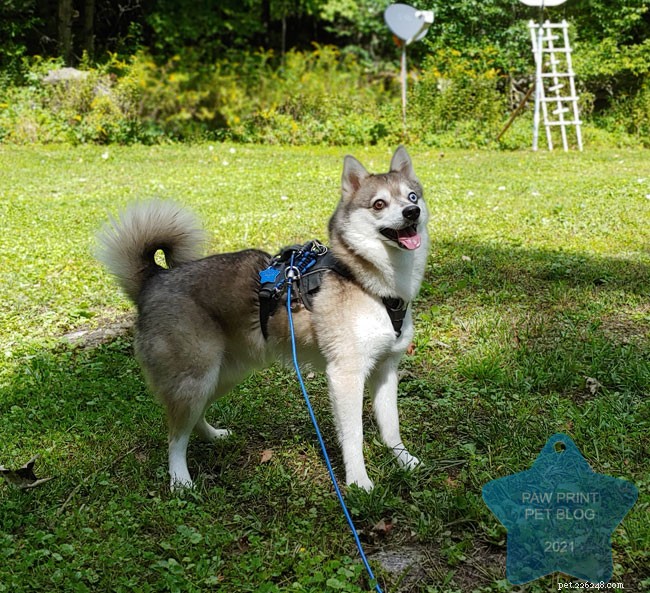
I’ll spare you any images of my gross swollen face, and instead share the adorable Mr.Fen playing in his new yard!
The most effective way to avoid transferring urushiol from your pet’s fur to your skin, barring just not coming into contact with urushiol in the first place, is to wash your pet. If you suspect, or know, that your furry friend has come into contact with poison ivy, oak, or sumac, step 1 is to avoid touching them as much as possible. Give him/her a bath as soon as you can, using soap because, remember, urushiol is an oil.
Dish soap isn’t something I commonly recommend using on pets, but it can be a good way to remove urushiol from fur due to it’s ability to effectively remove oils. It can be helpful to wipe down your dog after hikes or walks in the woods, even if you didn’t notice any poison ivy, just in case. Pay special attention to their paws, legs, and bellies as those are the areas most likely to come into contact with urushiol containing plants. Unless your dog is like my Fenrir, then wipe down the whole darned dog because he’s probably been rolling around all over everything. Sigh.
Don’t forget to also wash things like your pets’ leashes, collars, harnesses, and any clothing items they (and you) were wearing.
Did You Know That Dogs CAN Get Poison Ivy Too?
Cases of animals developing rashes from plants like poison ivy are not nearly as common as in humans, but they do happen. Urushiol can cause itchie, red rashes on dogs just like it does on people. However, for the most part dogs’ fur prevents the urushiol from reaching their skin. Dogs with no, or thin, fur, and dogs suffering from other skin conditions are more prone to urushiol reactions. Small dogs, especially if they have bare bellies, are more at risk. Poison ivy, oak, or sumac rashes on dogs will look very similar to those on humans. Watch out for patches of skin that appear red, swollen, itchie, with blisters that may ooze a clear or yellowish liquid before scabbing over.
Poison ivy, and related plants, are also toxic to dogs if ingested. It can cause symptoms of GI upset, such as vomiting and diarrhea, but, in rare cases, can cause more serious symptoms such as anaphylactic shock.
Conclusion:
Of course, as they say, when it comes to things like poison ivy, prevention is always the best ‘cure’. A bit too late at this point, but I’ve started keeping Kit and Fen away from the borders of our yard where the poison ivy is. Thankfully my face is getting a little less swollen everyday. Since I really don’t want to repeat this experience again anytime soon, I’ll be being much more careful when it comes to avoiding poison ivy (and making sure my dogs avoid it too) in the future.
Comment below! Are you allergic to poison ivy too? Did you know that other animals can (rarely) develop rashes from it like people can, or that they can pass on the oils from their fur?
- Pet Behavior
- Pet Breeds
- Pet Names
- Pet Adoption
- Pet Training
- Pet Information
- Pet Health
- Adorable Pets
- Dogs
- Can Dogs Contract Poison Ivy? Protect Your Pet from Rash and Blister
- Protect Your Dog: The Hidden Risks of Rat & Mouse Poisons
- Poison Ivy in Dogs: Symptoms, Prevention, and Care
- Removing Poison Ivy, Oak, and Sumac from Pets
- Poison Ivy Poisoning in Dogs: Causes, Symptoms, Diagnosis, and Treatment Guide
- How Rat Poison Threatens Your Dog: Symptoms & Prevention
- Poison Ivy: How It Affects Your Dog & What to Do