

Are Silica Gel Packets Safe for Dogs? Expert Guidance on Toxicity
What happens if dogs eat silica gel packets? Are they actually toxic to dogs? Now that my dogs are older, 12 and 5, you would think they’d be past the “eating things they’re not supposed too” stage. You’d be wrong, at least when it comes to Fenrir. He doesn’t so much eat things he’s not supposed too, to be fair. He mostly just chews up, or otherwise destroys things.
Earlier this week, if you can’t already tell by my blog title, Fen’s latest victim was a silica gel packet. You know, those little packets that come inside things you buy that are clearly labeled “Do not eat”.
Well, Dogs Can’t Read.
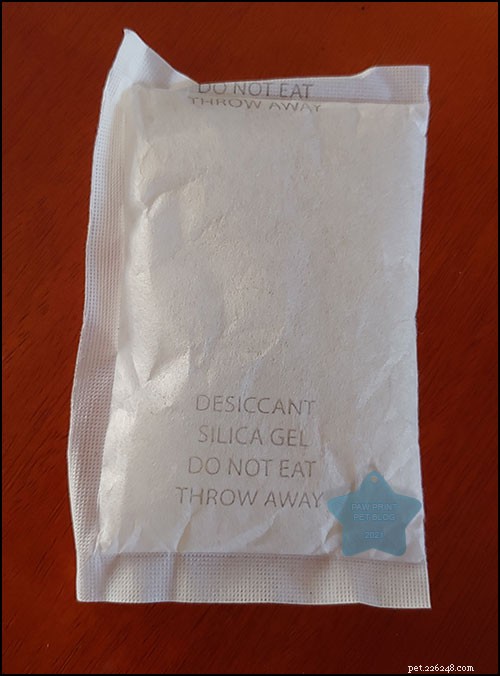 We had purchased some new pillows that were sealed up in plastic with silica packets inside the packaging. I didn’t notice that one of the silica packets had fallen down in between our couch and the computer desk. Fen didn’t have any trouble finding it, though.
I heard my partner calling me from the other room. I found him down on the floor, picking tiny little balls up off the rug. Oh no…what did Fen get into now!? Luckily silica packets are usually pretty clearly labeled, and Fen didn’t actually eat the packet, he just ripped it open.
Your dog possibly eating something with a bold label stating “Do not eat” is pretty concerning. Fen is just a little thing too. It would take less of a toxic substance to affect him than it would a much bigger dog. Knowing Fen, I was pretty sure his intentions were to destroy the packet and not to actually eat it. But there was no way for me to know for sure whether he had accidentally ingested any of the little silica balls or not.
What, Exactly, Is Inside Those Silica Packets?
Silica gel, in the form of little balls or beads inside silica packets, is silicon dioxide. Silicon dioxide in nature can be found in sand, glass, and quartz. Silica beads are usually clear or white. However, it’s common for the silicon dioxide to be mixed with a moisture indicator that may make the silica appear to be blue, pink, green, or orange.
Silica is commonly used inside product packaging because of its ability to absorb moisture. Each little bead can absorb about 30 percent of its weight in water, essentially helping to protect products from excess moisture and humidity.
Are Silica Packets Toxic?
Good news – silica itself is inert and non-toxic. You can basically think of it as man made sand. Silica absorbs moisture but the beads do not expand in size.
However, that’s not to say silica packets are 100% harmless. If the silica was mixed with a moisture indicator (typically cobalt (II) chloride or Methyl Violet), these ingredients can be problematic in large doses. You also have to pay attention to what type of product the silica packet was inside. If it was something harmless, such as pillows, then you generally don’t have much to worry about. However, if it came into contact with a non-pet friendly item, such as medication, chemicals, toxic food items, etc, then that’s cause for more concern; not because of the silica itself, but because the ingested silica may have contained trace amounts of the product it was packaged with.
In addition, the more silica that was ingested the higher the chance you’ll run into complications. It will heighten your pets exposure to potential toxins contained in the silica (moisture indicators), and potentially dangerous products the silica was packaged with. In large amounts silica can lead to dehydration. Large quantities of ingested foreign objects can also cause obstructions.
Believe It Or Not, It’s Not Usually The Silica Beads Themselves That Cause Problems. It’s The Packets They Come In.
Ingesting the porous packets that contain the silica beads can cause choking, or a blockage of the intestinal tract. Again, the risk level increases if larger amounts of a foreign material are ingested. Generally a single, small silica packet won’t do any major damage to your dog. But if they somehow gets more than one packet, the likelihood of negative symptoms increases.
Watch Out For Potential Symptoms.
Mild GI upset after consuming silica packets is not rare. However, it’s important to monitor your pet. Watch out specifically for symptoms of dehydration and/or intestinal obstructions. These include things like vomiting, diarrhea, lethargy, loss of appetite, excess panting, sunken or dry looking eyes, dry gums, and loss of skin elasticity.
It’s important to contact your veterinarian if your dog has eaten a silica packet and displays any symptoms of distress, if the silica gel in question is colored (indicating that it’s not pure silicon dioxide and may contain toxins), or if the silica was packaged inside a potentially dangerous product such as medication.
Fen Is Just Fine After His Silica Mishap!
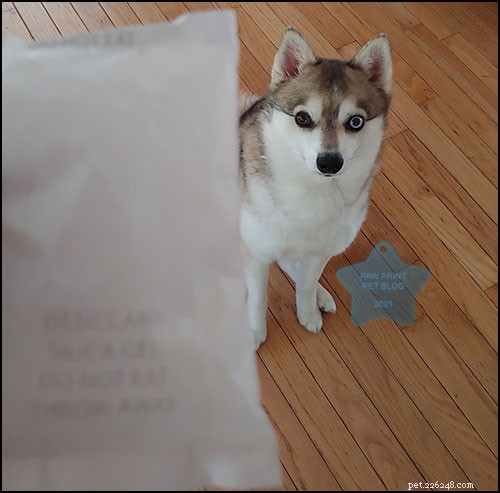 Silica gel packets are labeled “Do not eat” because they are often included inside food and pill packages. While silicon dioxide itself is not toxic, that doesn’t mean that consuming silica packets is without risks for our pets. It’s important to be vigilant and keep foreign objects away from curious pets.
This is a do as I say, not as I do, type of situation. I’m not convinced that Fenrir ate any of the silica beads he got into. I found the packet torn up on the living room rug. I think he just ripped the packet open. He really enjoys destroying things! Luckily Mr. Fen experienced no ill effects from his escapades. Going forward, I’ll be even more careful to ensure that all packaging makes it to the trash before my little trouble maker gets to it.
Accidents can happen to anyone, though. In the case of any potential medical emergencies, it’s important to stay as calm as possible. If your pet ingests a foreign material and you’re not sure whether or not it’s toxic, call your vet or the Animal Poison Control Hotline as soon as possible. While some commonly ingested foreign objects, like silica, are generally pretty harmless, others can be deadly. How quickly you get your pet the proper treatment can make all the difference.
- Pet Behavior
- Pet Breeds
- Pet Names
- Pet Adoption
- Pet Training
- Pet Information
- Pet Health
- Adorable Pets
- Dogs
- Are Marigolds Safe Around Pets? Risks to Cats and Dogs Explained
- English Ivy: Safe for Dogs? Understanding the Risks
- Are Rolaids Safe for Dogs? What You Need to Know
- Aloe Gel and Dogs: Safe or Harmful? A Clear Guide
- Grapes and Raisins: The Hidden Danger to Dogs – What You Must Know
- Common Household Plants That Are Toxic to Dogs – Protect Your Pet
- Tea Tree Oil Diffusers Pose Toxic Risks to Dogs—What You Need to Know