

National Pet Dental Health Month: Whimzees & Expert Tips for Healthy Smiles
 February is National Pet Dental Health Month! Now I know some of you might be thinking “but February is almost over!“, and wondering why I waited until the last day of the month to post this. You’ll have to believe me when I say it wasn’t an oversight. First of all, I’ve posted about National Pet Dental Health Month twice already (in 2015 then again in 2016), in addition to some general dental health care posts such as this article – How to Brush Your Dog’s Teeth. Second, and more importantly, is the fact that although I appreciate National Pet Dental Health Month and the awareness it brings to pet dental issues, I really believe that our pets’ dental health, as well as all other aspects of their health, should be something we take into account all year round.
I’ll tell you one thing – Kit, at 10 years old, wouldn’t have the amazingly healthy set of chompers he has today if his dental health wasn’t something I’ve taken seriously throughout his life. I’ve always been a bit proud of the condition of Kit’s teeth. Papillons, and other small dogs, can be more prone to developing tooth issues such as gum recession, tartar, and tooth loss. According to the AKC, smaller dogs are very likely to have lost at least half of their teeth by the time they are 12 years old.
Of course that doesn’t give big dog owners an out. While small dogs’ increase in teeth issues can stem from having smaller mouths and more crowded teeth, dogs of any size can suffer from painful tooth issues such as broken or chipped teeth, infected teeth, mouth cysts or tumors, misaligned teeth, and probably the most common one – periodontal disease. According to the American Veterinary Dental College, “Periodontal disease is the most common clinical condition occurring in adult dogs and cats, and is entirely preventable. By three years of age, most dogs and cats have some evidence of periodontal disease.”
It’s jarring to think that so many pets are being impacted by a disease that is “entirely preventable”! And periodontal disease is more than just tooth deep. You may not think it’s a huge deal if your dog looses a tooth or two, but bacteria associated with periodontal disease can cause a myriad of health issues – things like a weakened immune system, nasal discharge, jaw issues, bone infection, and even damage to organs such as the liver, kidneys, and heart.
 So what can you do to help prevent periodontal disease and other oral health issues? Maintain a good relationship with your vet. Although it’s important to do what you can at home, your vet should check the condition of your pets’ teeth at least yearly. Sometimes, try as we might to keep our pets’ teeth healthy on our own, for whatever reason our fuzzy friends may still require regular cleanings by the vet. Also, some oral health issues, such as tumors and broken teeth, aren’t entirely preventable and will require speedy vet treatment.
For 10+ years I’ve kept my Kitsune’s teeth in tip top shape with a combination of regular brushing and healthy chews. I’ve said this before and I’ll say it again, it’s a myth that hard kibble is enough to keep our pets’ teeth clean. Like in humans, brushing our pets’ teeth is usually the most effective way to keep their teeth and gums healthy. I understand, though, that brushing a pets’ teeth isn’t always easy. I was lucky to have been able to get both of my dogs used to a toothbrush when they were still puppies.
 It’s usually much easier to offer our pets healthy chews. Chews shouldn’t necessarily replace brushing, but they are for sure better than doing nothing. Raw meaty bones (RMBs) can be awesome for keeping teeth clean. For owners who are looking to use other chews in addition to RMBs, or for those who can’t, or don’t feel comfortable, feeding raw meat, there are luckily a wide array of pet chews available commercially.
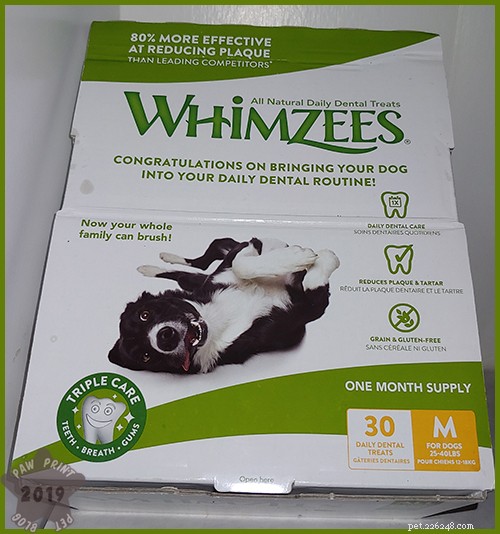
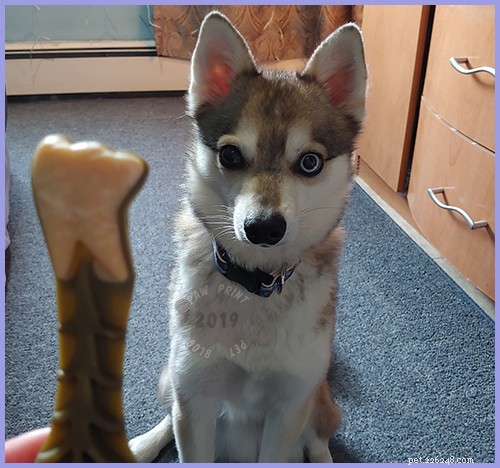
This past month my boys have been enjoying all natural dental treats by Whimzees. Whimzees treats can be awesome for dogs with allergies, as they contain limited, all natural ingredients. They contain no artificial colors, flavors, or preservatives, and are GMO, gluten, and grain free. Whimzees chews are covered in ridges that help to stimulate blood flow to the gums, as well as cleaning small spaces in between dogs’ teeth. They are supposed to be 80% more effective at reducing plaque when compared to leading competitors. Plus, look how adorable they are!
 We received a one month supply (30 treats) box of Whimzees, courtesy of Chewy.com, in exchange for our honest review. All opinions stated in this post, as always, are my own. Paw Print Pet Blog strives to share only products we feel our audience will be interested in, and those I feel comfortable using with my own pets. This post contains affiliate links. See our Disclaimer page for more information.
Whimzees brushes come in 3 different sizes (small, medium, and large). The brand also has other chew products as well. In fact, I have been buying my boys Whimzees hedgehog shaped chews off and on for around a year now. Both my boys enjoy Whimzees, but they don’t power through them like they do some other chews. I like that these last them a bit longer, and I like to think that some of the more unusual shaped chews available by the brand perhaps provide a bit of mental stimulation as well.
If you’d like to check out Whimzees for yourself, or look at lots of other pet treat/chew options, Chewy.com has a wide range of pet products including oral health care items!
So not just this month, but all year through, throw your dog a bone! They can help keep active dogs busy, prevent boredom, and yes – help maintain a healthy mouth.
Comment below! What are some things you do to help keep your pets’ teeth and gums healthy? Does your furry friend have a favorite type of chew?
- Pet Behavior
- Pet Breeds
- Pet Names
- Pet Adoption
- Pet Training
- Pet Information
- Pet Health
- Adorable Pets
- Dogs
- Expert Pet Dental Care Tips for a Healthy Smile
- February Marks National Pet Dental Health Month – Protect Your Pet’s Smile
- Celebrate February: Protect Your Pet’s Smile with Pet Dental Health Month
- February Marks National Pet Dental Health Month: Prioritize Your Pet’s Oral Care
- Celebrate National Pet Dental Health Month: Essential Dental Care Tips for Dogs & Cats
- Ultimate Guide to Pet Dental Care: Brushing, Prevention, and Professional Cleanings
- National Pet Dental Health Month: Expert Tips to Keep Your Pet’s Teeth Healthy