

Lawn Chemicals and Pet Cancer Risks: What You Need to Know
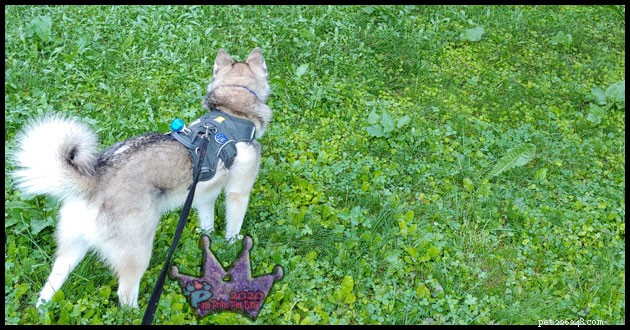
My dogs and I love spending time playing on our lawn. Every day Kit has to sniff just about ever inch of the yard, and, in typical Kitsune fashion – always thinking about eating, he’s been known to taste test the grass every now and then too. One of Fen’s favorite things is to play fetch out in the grass. When he’s done playing, he does adorably epic sploots and just relaxes out in the sun. We don’t use any kind of lawn or garden chemicals in our yard. That probably explains why it’s mostly comprised of weeds (see photo above). Most dog owners would probably like to think that the simple act of enjoying outside time with our pups does them, and us, nothing but good, but if you use lawn chemicals to treat your grass that, unfortunately, may not be the case.
A number of studies done over years have shown a connection between common lawn chemicals and cancer in dogs. A study published in 2012, (Abstract of Environmental Health 112(1): 171-6 (Jan. 2012), concluded that the “[a]fter adjustment for age, weight, and other factors, use of specific lawn care products was associated with greater risk of [Canine malignant lymphoma]. Specifically, the use of professionally applied pesticides was associated with a significant 70% higher risk of [Canine malignant lymphoma]…Risk was also higher in those reporting use of self-applied insect growth regulators.”
Another study, performed by the Department of Veterinary Clinical Sciences at Purdue University, linked common garden/lawn chemicals to the occurrence of bladder cancer in dogs. Traces of lawn chemicals were found in the urine of tested dogs, and unfortunately not only in dogs’ whose owners actually applied the chemicals to their yards. Researchers explained that wind can carry herbicides for distances up to 50 feet. Dogs may also come into contact with the chemicals during daily walks. Wherever the exposure takes place, herbicide chemicals can be carried on paws and fur, making it more likely that pet owners will be exposed as well.
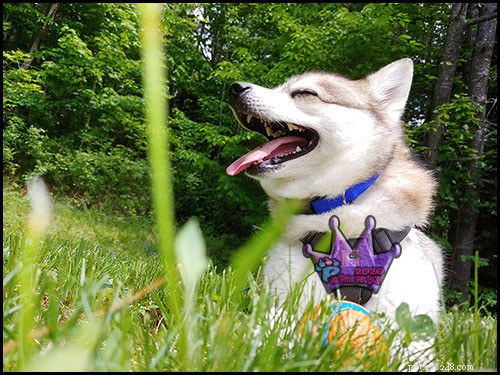
This study were conducted on dogs, but it’s very likely that other types of pets (and perhaps people?) could be impacted as well. Dog breeds who are already genetically predisposed to developing bladder cancers, breeds such as beagles, Scottish terriers, and wire hair fox terriers, are thought to be in increased risk to the effects of this type of chemical exposure. Dogs most commonly come into contact with the chemicals by licking or ingesting treated plants, licking their paws or fur after exposure, inhalation, and trans-dermal exposure.
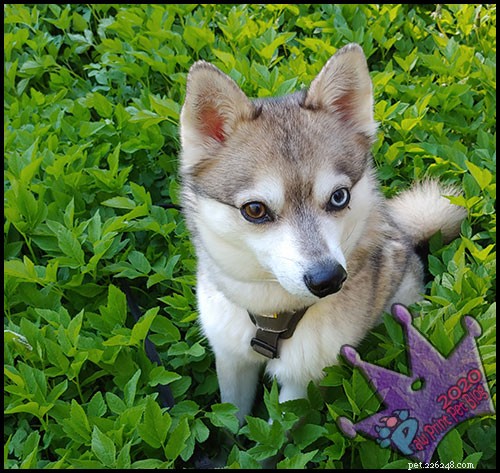 Of course this doesn’t mean we should stop walking our dogs. However, pet owners especially are encouraged to eliminate or reduce their use of herbicides. If you must use them, it’s very important to follow the manufactures directions carefully and do whatever you can to reduce your pets’ exposure.
These issues don’t only impact those of us with yards of our own. At least in our own direct environments we have some control over what, if any, products are being used. However, exposure to potentially dangerous chemicals can commonly take place while walking our dogs. This is one reason why it can be prudent to keep our pets out of neighbors’ yards. Exposure can also take place in public areas, such as parks, depending on how your local park management teams care for your park. It’s thought that upping hygiene measures, such as bathing your dog often and/or washing his/her paws after walks, may help reduce exposure. If your dog, like my Kitsune, likes to eat grass it’s also important not to allow them to do so in areas that could be treated with chemicals.
It stinks that, these days, we can’t even walk our dogs without risking exposure to dangerous chemicals. And what can we really do about them besides be aware of the dangers and of the potential ways to reduce our pets’ (and our own) exposure to them? What do you think? Comment below! Do you avoid areas if you don’t know whether or not they’ve been treated with chemicals? Do you wash your pets’ fur or paws after coming in from a walk? Do you just take your chances and hope for the best? It certainly seems like, these days, more and more things are being linked to cancer and, unfortunately, I think it would be impossible to avoid them all.
- Pet Behavior
- Pet Breeds
- Pet Names
- Pet Adoption
- Pet Training
- Pet Information
- Pet Health
- Adorable Pets
- Dogs
- Homeopathic Cancer Care for Pets: Gentle, Whole‑Body Support
- Safe, Pet-Friendly Alternatives to Traditional Lawn & Garden Chemicals
- How to Reduce Your Pet’s Cancer Risk: Evidence-Based Prevention Strategies
- Are Pet Microchips Safe? Examining Cancer Risks and Benefits
- Understanding Breast Cancer in Pets: Risks, Symptoms, and Care
- Pet Skin Cancer: Why Dogs & Cats Are at Risk
- Cancer in Pets: What You Need to Know