

Top Exercises for Effective Canine Conditioning
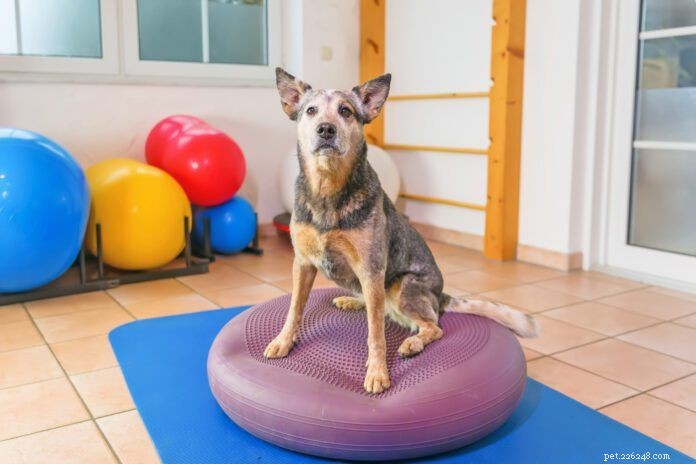
Balancing exercises for your dog build core strength and are fun for both you and your dog. Credit: Chris Mueller | Getty Images
All dogs can benefit from regular exercise, but canine conditioning takes fitness a step further. Whether your pet is a budding athlete, a senior couch‑potato, or a playful puppy, targeted conditioning can improve strength, mobility, and overall well‑being.
Last summer I helped a client keep her pup active during an intense heat wave. Pavement was too hot for walks, and a quick game of fetch in the yard wasn’t enough. That experience sparked my deep dive into canine conditioning, and I discovered a wealth of simple, effective exercises—much like those used by human athletes.
Important first step: Always get clearance from your veterinarian before starting any new exercise program, especially if your dog has arthritis, joint issues, or is still a puppy. Puppies should avoid high‑impact activities such as jumping or running on hard surfaces until their growth plates fully close.
Cardiovascular work—running, swimming, fetch, agility, or other dog sports—boosts lung capacity and endurance, but true conditioning also includes strength, balance, and flexibility training.
Fast‑twitch muscles are engaged during short, explosive actions like the “zoomies,” tug‑of‑war bursts, stair climbs, or quick directional changes. Conditioning programs aim to develop these muscles while also enhancing core stability.
For sport‑specific dogs, the SAID principle (Specific Adaptation to Imposed Demands) guides training. By repeatedly exposing muscles, tendons, ligaments, and bones to the exact patterns used in a sport, the body adapts and becomes stronger. The same concept applies to everyday conditioning.
Stretching Exercises for Dogs
Natural stretches: Capture moments when your dog stretches on its own—often after a sit‑to‑down transition or a play bow. Use a marker word or clicker to associate the behavior with a cue, then reinforce it with a treat.
Figure‑8 walks: Guiding your dog in a figure‑8 pattern, either with a treat or a target stick, gently stretches the hips and improves coordination. You can set up cones or poles to define the path.

Balancing Exercises for Dogs
Start by teaching your dog to place all four paws on a stable surface. Use a low platform or a sturdy pillow for smaller dogs, and a couch or large dog bed for bigger breeds. Begin with a simple "up" cue: hold a treat in your hand, move it horizontally from the dog’s nose toward the surface, and reward the moment all paws are on the platform. Once comfortable, introduce slightly unstable surfaces such as a wobble board, a cushion with a ball underneath, or a homemade balance pad.
Balancing forces the core muscles to engage, improving overall stability. Always ensure the dog feels secure before adding the cue, and keep sessions short to prevent fatigue.
Strengthening Exercises for Dogs
Puppy push‑ups: Also called “puppy aerobics,” this low‑impact move alternates sit‑down‑stand sequences. Begin with a sit, cue a down, then a stand, rewarding each step. It builds strength in the shoulders, hips, and core.
Agility‑style equipment: Many tools used in agility classes double as conditioning gear—wobble boards, low teeter‑totters, lowered A‑frames, weave poles, low jumps, and ladder walks. These devices teach body awareness and develop muscular endurance.
Not every dog needs high‑impact equipment. Puppies and senior dogs should avoid jumps or teeter‑totters that stress joints. For dogs that are wary of wobble boards, a firm cushion or a folded towel can provide a similar challenge.
Remember to keep each session fun, use high‑value treats as rewards, and never force your dog through movements they’re not ready for. Safety and enjoyment are the keys to lasting conditioning.

- Pet Behavior
- Pet Breeds
- Pet Names
- Pet Adoption
- Pet Training
- Pet Information
- Pet Health
- Adorable Pets
- Dogs
- How to Make Your Dog Take Medication: A Proven Guide
- Understanding Cat Pregnancy: Stages, Care, and Potential Complications
- Why Cats Meow: Decoding Excessive Yowling and How to Respond
- Create a Calming Cat Retreat: Reduce Stress & Anxiety in Your Feline Companion
- Georgia the Floppycat – Meet Our Charming Cat of the Week
- Revitalize Your Aquarium: Expert Guide to Cleaning and Rejuvenating Old Air Stones
- 10 Clear Indicators Your Cat Is Crying for Help