

Create a Safe Whelping Box for Your Small Dog: Step-by-Step Guide
Your dog is having puppies — congratulations! As a pet owner, part of your job is to create a safe, secure space where your pregnant dog feels comfortable birthing and caring for her puppies. You'll want to gather all of the supplies you're going to need for before, during, and after the birth. A whelping box is one of the most important things to provide for your dog. Luckily, it's very easy to make.
How to make a whelping box for small dogs
Step 1: Find a box
Choose a cardboard box to use for the whelping box. The cardboard box should be large enough that your dog can lie comfortably while stretched on her side but no larger. Ideally, the box should feel like a den, where she will feel enclosed and safe.
The exact dimensions of the box will vary from dog to dog. However, you can get a good idea of the size you'll need by measuring your dog while she is lying down.
Step 2: Cut a notch
Use a box cutter to cut a rectangular notch in one side of the box. This will serve as the dog's entrance and exit. The notch should be deep enough that your pregnant dog will not drag her belly over the edge as she enters but tall enough that the newborn pups can't get out. A good rule of thumb is that the notch should be about double the width of the dog's body.
Step 3: Line the box
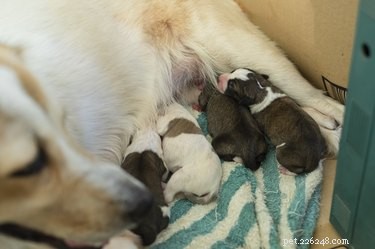
Line the interior of the box with contact paper or linoleum. This will make cleaning up after the birth much easier.
Cover the lining with newspaper. After the dog has her puppies, you can clean up by throwing away the newspaper and replacing it with old towels. You'll need to change these often, so make sure you have plenty of towels on hand.
Leave the top flaps of the cardboard box attached. Even if you don't close them, the shadows and the sense of enclosure will help your dog stay calm.
Step 4: Enjoy your new puppies
After your dog gives birth, expect the puppies to start venturing out of the whelping box around the age of four weeks. At that point, they're ready to start interacting with humans, and they can be moved to a larger confined area where they can begin to explore the world.
Things You'll Need
Cardboard box
Tape measure
Box cutter
Contact paper or linoleum
Newspaper
Old towels
- Pet Behavior
- Pet Breeds
- Pet Names
- Pet Adoption
- Pet Training
- Pet Information
- Pet Health
- Adorable Pets
- Dogs
- Transform Your Balcony Into a Safe, Stylish Dog-Friendly Retreat
- Crafting Durable Sled Dog Harnesses: A Step-by-Step Guide
- DIY Belly Band for Dogs: Easy Steps to Stop Indoor Accidents
- DIY Guide: Build a Secure Whelping Box for Your New Puppy
- DIY Lavender Calming Spray for Dogs: Easy Steps to Reduce Anxiety
- How to Safely Splint Your Dog’s Shoulder: A Step-by-Step Guide
- DIY Dog Ear Wash: Safe Homemade Cleaning Solution for Your Pet