

Cooper's Progress: A Success Story from His Second Reactive Dog Training Class
Last night was Cooper’s second (of four) reactive dog training classes. He did really well, overall. He had a short reaction that we were able to redirect when the trainer walked in carrying a tiny dog, and he did a defensive lunge at the dog in the cubby next to us when she was having a big reaction. Otherwise? He was fine… if by “fine” I mean trembling like a leaf with his tail tucked. The poor dear.
But today I’m not writing about the specifics of the class – it was the same as last week, but outside. Instead, I want to think a bit about what causes reactivity in dogs. Specifically, I need to confess: I caused Cooper’s reactivity.
Bear with me, here.
Backing up a bit, it helps to juxtapose, I think. Lucas is reactive to other dogs on leash. Seven years ago, it was horrific. Today, it’s manageable. He actually loves to play with other dogs – off leash. We suspect (of course, there’s no way to know) that he had zero socialization for the first six months of his life, since he was a street dog. He never learned how to give or read appropriate cues, so situations that should have been a breeze for most dogs were confusing and frightening to him. Our training with Lucas was more about making him feel safe in situations he didn’t understand.
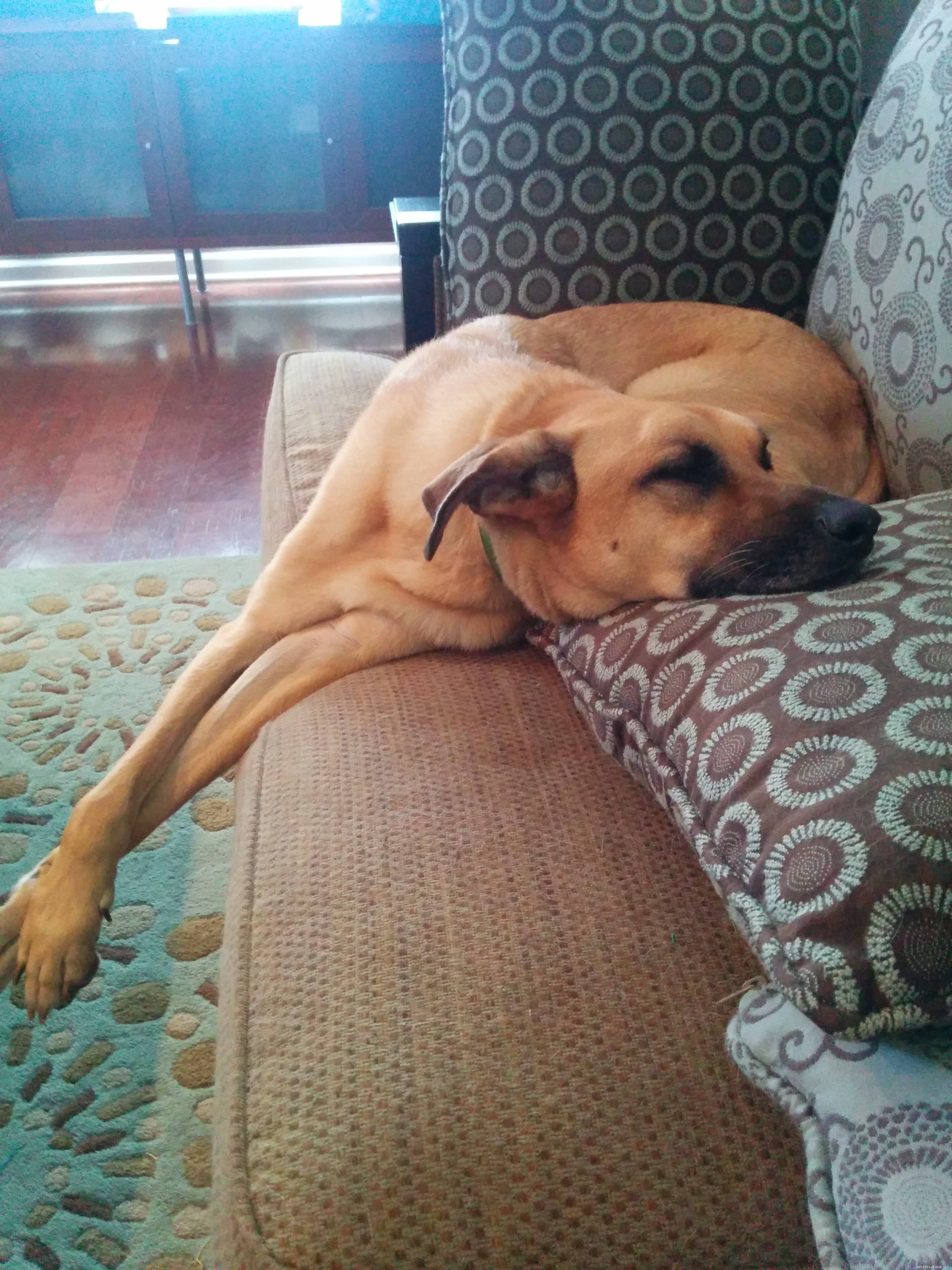
On the other hand, we got Cooper when he was only seven or eight weeks old. He had tons of positive experiences as a puppy and was doing phenomenally well. Heck, I was even taking him to the occasional therapy dog training class.
But we also know that Cooper has some wonky genetics. The boy’s health issues fill up an entire binder, for one thing. For another, we know that two dogs from his litter (of, I think, 11) have been put down for aggression. Their litter did not come from a stable gene pool, that’s for sure.
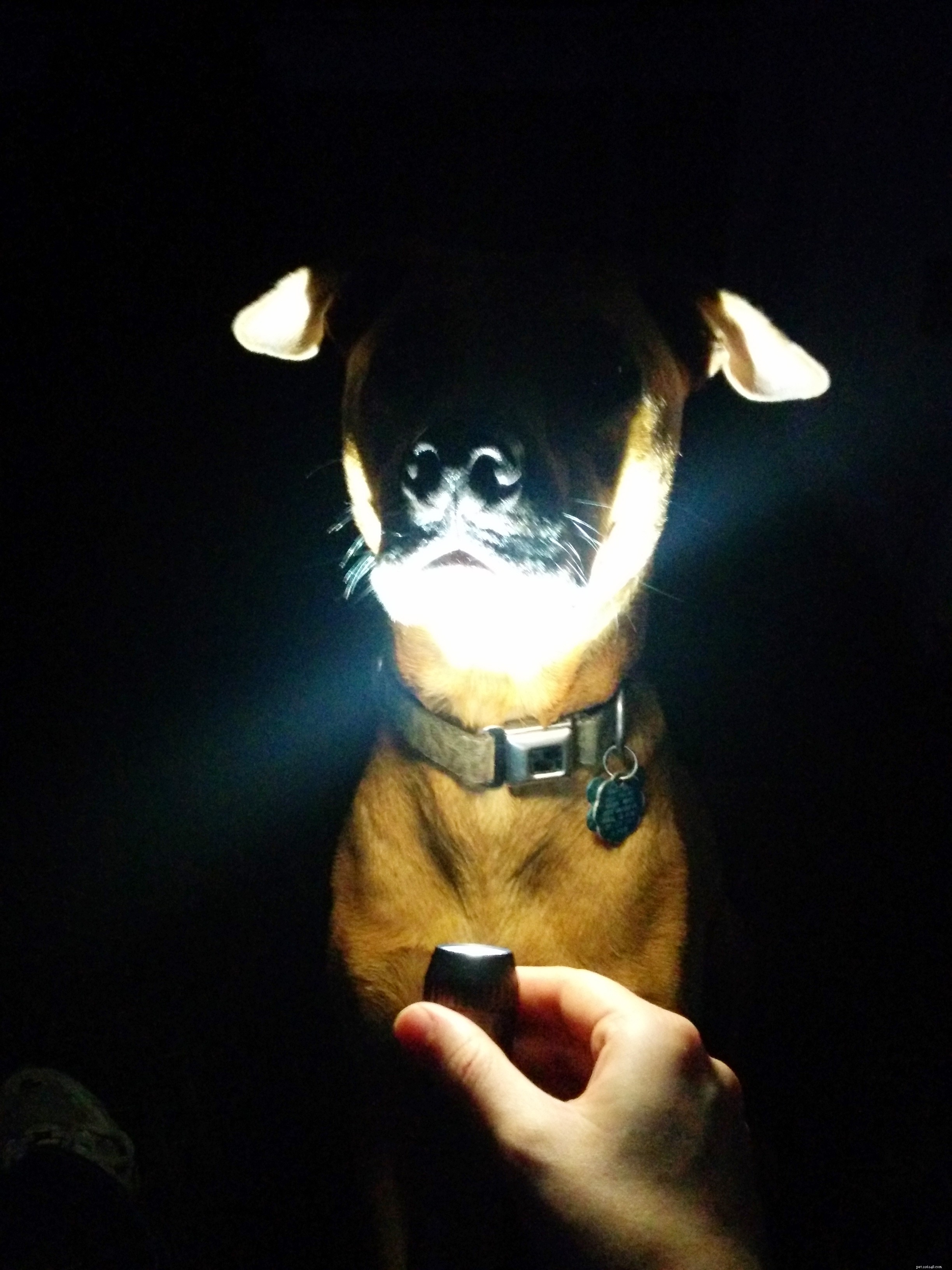
We also know that dogs go through several “fear periods,” though we most often focus on puppy stages. There’s another big one that, depending on breed, happens at the same time as maturity, usually between one-and-a-half to three. (I snapped this pic last night just because I thought it was funny, but it weirdly fits this post…)
Which was when I had cancer. And was in bed and sick and exhausted and not really walking/socializing/training with the dogs much. At all.
I suspect that where we are now with Cooper is because during that developmental fear period, he actually was afraid.
If you’ve been reading for a while, you might recall that Cooper was my defender during that time. When I’d come home from an infusion, he’d lay on my legs, keeping me warm, and keeping everyone away (he even growled at my dad). Cooper spent nearly a year protecting me, and it was during that year that he hit maturity.
I’m not saying this in an “OMG, I effed up my dog” kind of way, but we’ve been analyzing this situation closely, and that seems like a likely, logical explanation.
Especially when we compare it to how he “was.” I was having dinner with a dear friend recently, and she expressed surprise that we’re going through this with Cooper. “He wasn’t like that before,” she said.
Then John said something like, “Remember when I used to walk Cooper to Petco to get his nails trimmed?” Which we both gaped at for a minute because he did used to walk him the two-ish miles to the store, down a busy road, into the store, and into the grooming salon. Now? No way.
Of course, all this is theory. But. Still.
His reactivity is 100% “stranger danger.” The class is helping because it’s reminding me that he LOVES to work. He loves training. Having put a lot of thought (an obsessive amount?) into this, my goal is to keep up with classes – probably take reactive dog training 2 and perhaps agility with a different instructor – and to spend a little time each week sitting on a bench in the far corner of the park rewarding him like crazy for staying calm as people walk by.
So, that’s week two under our belts. I know many of you are working with fearful and reactive dogs. Have you spent much time theorizing about causes and treatments? Or are you more dog-like and able to focus on what’s going on in the moment?
- Pet Behavior
- Pet Breeds
- Pet Names
- Pet Adoption
- Pet Training
- Pet Information
- Pet Health
- Adorable Pets
- Dogs
- 6 Essential Steps to Prepare Your Reactive Dog for Successful Training
- Mastering Reactive Dog Training: Week 1 Guide
- Discovering Insightful Lessons in Reactive Dog Training
- How to Responsibly Care for a Reactive Dog
- 3 Proven Secrets for Positive Dog Training Success
- How to Set Your Reactive Dog Up for Success in Training Classes
- Overcoming Isolation in Group Training Sessions