

Operant Conditioning in Dog Training: A Complete Guide
Professional dog trainers rely on operant conditioning to shape a dog’s behavior. Though the term sounds scientific, the concept is straightforward: a behavior changes based on its consequences.
What Is Operant Conditioning?
Operant conditioning is a learning process in which an animal’s actions are modified by the outcomes that follow. When a dog receives a reward for a behavior, that behavior becomes more likely; when a dog receives a consequence that is unpleasant, the behavior becomes less likely.
Three key processes are involved:
- Reinforcement – strengthens a behavior.
- Punishment – weakens a behavior.
- Extinction – removes reinforcement or punishment, causing the behavior to fade.
All of these occur after the behavior, unlike classical conditioning, which pairs stimuli before the response.

Historical Background
B.F. Skinner is considered the father of operant conditioning. Building on earlier work by Pavlov and Thorndike, Skinner demonstrated that animals—including pigeons and dogs—learned by receiving rewards or punishments for their actions.
Operant vs. Classical Conditioning
Classical conditioning links two stimuli before a response (e.g., Pavlov’s dogs salivated at the sound of a bell). Operant conditioning, by contrast, links a behavior with its consequence (e.g., a dog receives a treat after sitting).
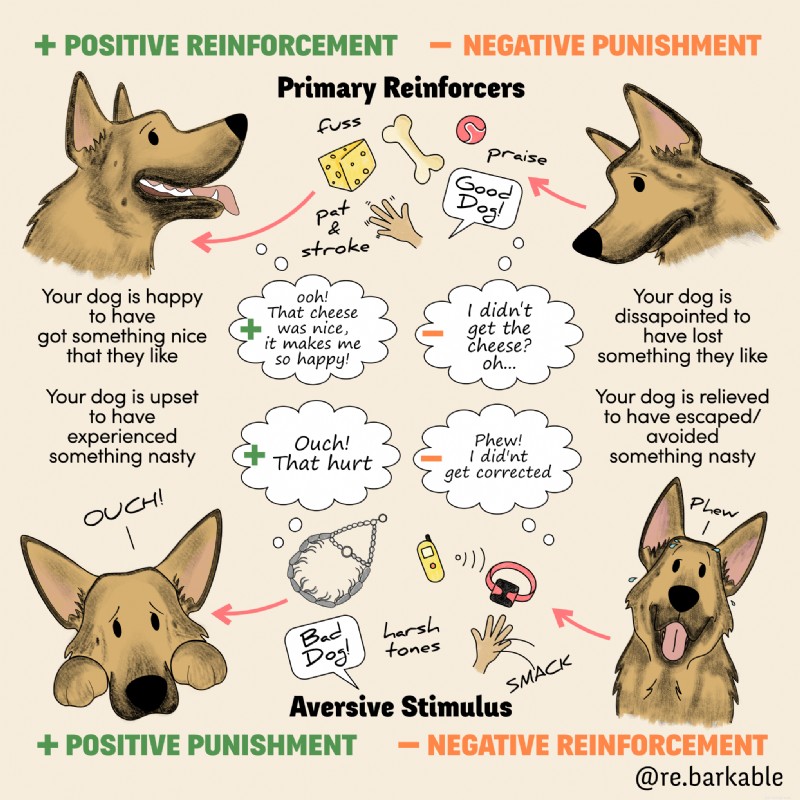
The Four Quadrants of Operant Conditioning
Each quadrant combines the dimensions of "positive/negative" (adding or removing a stimulus) and "reinforcement/punishment" (making a behavior more or less likely).
- Positive Reinforcement – Add a pleasant stimulus (e.g., treat) to increase a behavior.
- Negative Reinforcement – Remove an unpleasant stimulus (e.g., release pressure on a leash) to increase a behavior.
- Positive Punishment – Add an unpleasant stimulus (e.g., a sharp correction) to decrease a behavior.
- Negative Punishment – Remove a pleasant stimulus (e.g., stop play) to decrease a behavior.
Positive Reinforcement
When a dog sits and receives a treat or a clicker mark, the likelihood of sitting again rises. This method forms the basis of clicker training, "force‑free" and "fear‑free" approaches.
Positive Punishment
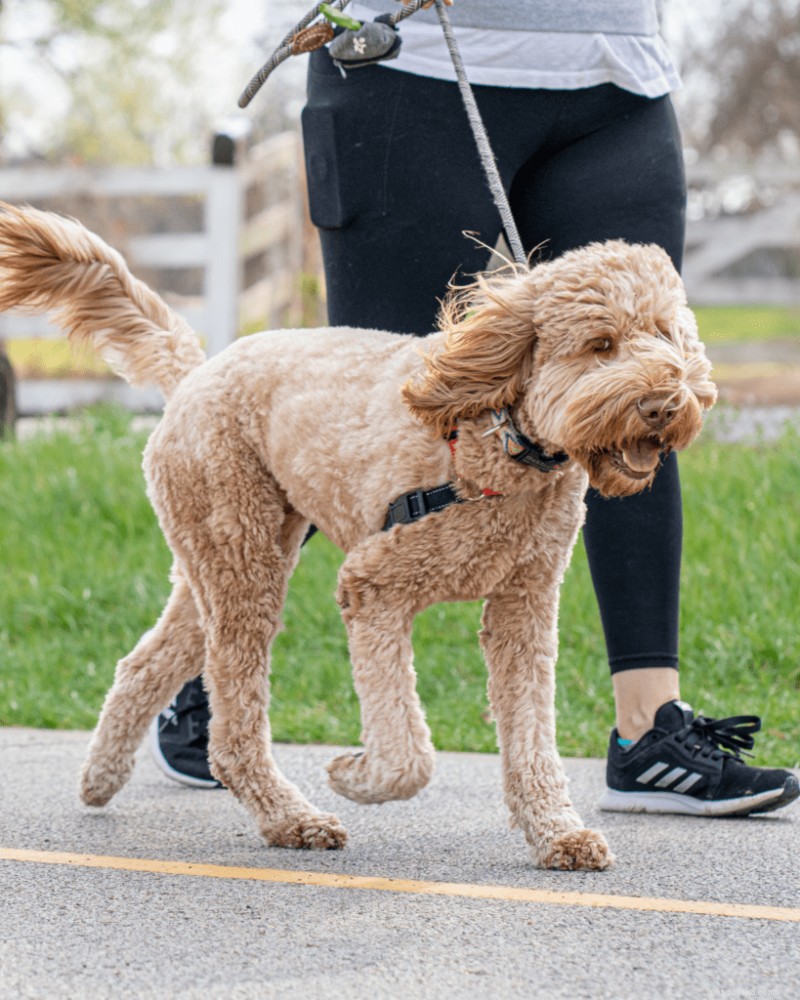
Positive punishment adds an aversive stimulus (e.g., a sharp leash correction). While it can stop an unwanted behavior, it may also increase fear or aggression and is generally discouraged for most dogs.
Negative Reinforcement
Negative reinforcement removes something unpleasant to encourage a behavior. For example, releasing pressure on a leash when the dog stops pulling teaches the dog that a loose leash ends the discomfort.

Negative Punishment
Negative punishment withdraws a pleasant item (e.g., ending play when the dog bites). This reduces the unwanted behavior without adding pain.
Choosing Effective Reinforcers
Reinforcers fall into two categories:
- Primary reinforcers – essential for survival (food, water).
- Secondary reinforcers – learned rewards such as praise, toys, or attention.
High‑value treats (e.g., chicken, cheese) are often the most powerful primary reinforcers, while games of tug or enthusiastic praise serve as secondary reinforcers.
Why Positive Reinforcement Is Preferred
Research consistently shows that positive reinforcement yields faster learning, stronger long‑term behavior change, and a healthier dog‑owner relationship. Punishment‑based methods can lead to fear, aggression, or learned helplessness.
Dr. Ian Dunbar famously said that effective training requires deep knowledge of canine behavior, learning theory, and precise timing – not painful tools.
Conclusion
Operant conditioning is the foundation of all modern dog‑training methods. When applied through positive reinforcement and, where appropriate, classical conditioning, it creates reliable, voluntary behaviors without compromising welfare. Reward‑based training is the future of humane, effective dog training.
References
- Arhant C, et al. Behaviour of smaller and larger dogs: Effects of training methods… Appl Anim Behav Sci. 2010.
- AVSAB Position Statement on Humane Dog Training. 2021. https://doi.org/...
- Blackwell EJ, et al. Use of electronic collars for training domestic dogs… BMC Vet Res. 2012.
- Brambell R. Report of the technical committee… 1965.
- British Small Animal Veterinary Association. Position Statement on Aversive Training Methods. 2012. https://www.bsava.com/Resources/…
- Burch M, Bailey J. How Dogs Learn. Wiley, 1999.
- Casey RA, et al. Human‑directed aggression in domestic dogs… Appl Anim Behav Sci. 2014.
- Casey RA, et al. Inter‑dog aggression in a UK owner survey… Vet Rec. 2013.
- de Castro ACV, et al. Carrots versus sticks: Training methods and dog‑owner attachment… 2019.
- China L, et al. Efficacy of Dog Training With and Without Remote Electronic Collars… Front Vet Sci. 2020.
- Cooper JJ, et al. Welfare consequences of training pet dogs with remote electronic collars… PLoS One. 2014.
- Deldalle S, Gaunet F. Effects of training methods on stress‑related behaviors… J Vet Behav. 2013.
- Fernandes J, et al. Do aversive‑based training methods compromise dog welfare?… Appl Anim Behav Sci. 2017.
- Haverbeke A, et al. Training methods of military dog handlers… Appl Anim Behav Sci. 2008.
- Herron ME, et al. Survey of confrontational vs. non‑confrontational training… Appl Anim Behav Sci. 2009.
- Hiby EF, et al. Dog training methods: use, effectiveness, and welfare… Anim Welf. 2004.
- Lieberman D. Learning – Behavior and Cognition. 2000.
- Makowska I. Review of dog training methods: welfare, learning ability, and standards… 2018.
- Masson S, et al. Use of different e‑collar types in France… J Vet Behav. 2018.
- Mormède P, et al. Hypothalamic–pituitary–adrenal function as a welfare tool… Physiol Behav. 2007.
- Overall K. Manual of Clinical Behavioral Medicine for Dogs and Cats. 2013.
- Reisner IR, et al. National survey of owner‑directed aggression in English Springer Spaniels… J Am Vet Med Assoc. 2005.
- Rooney NJ, Cowan S. Training methods and owner‑dog interactions… Appl Anim Behav Sci. 2011.
- Schilder M, Van der Borg J. Training dogs with shock collars: short and long term effects… Appl Anim Behav Sci. 2004.
- Vieira de Castro AC, et al. Does training method matter? Impact of aversive‑based methods… PLoS One. 2020.
- Ziv G. Effects of aversive training methods in dogs—A review… J Vet Behav Clin Appl Res. 2017.
- Pet Behavior
- Pet Breeds
- Pet Names
- Pet Adoption
- Pet Training
- Pet Information
- Pet Health
- Adorable Pets
- Dogs
- When Do Roosters Develop Spurs? A Comprehensive Guide
- Licensed Wildlife Rehabilitators: Expert Care for Injured Amphibians & Reptiles
- Easy DIY Guide: 5 Proven Ways to Safely Remove Cat Mats
- Top 5 Premium Guinea Pig Pellet Brands: Choose the Best Food for Your Pet
- 6 Human Foods That Are Toxic to Cats (and How to Keep Them Safe)
- Common Allergens That Trigger Dog Allergies – Signs, Diagnosis & Relief
- Protect Your Pets in Winter: Essential Tips for Keeping Them Safe in Cold Weather